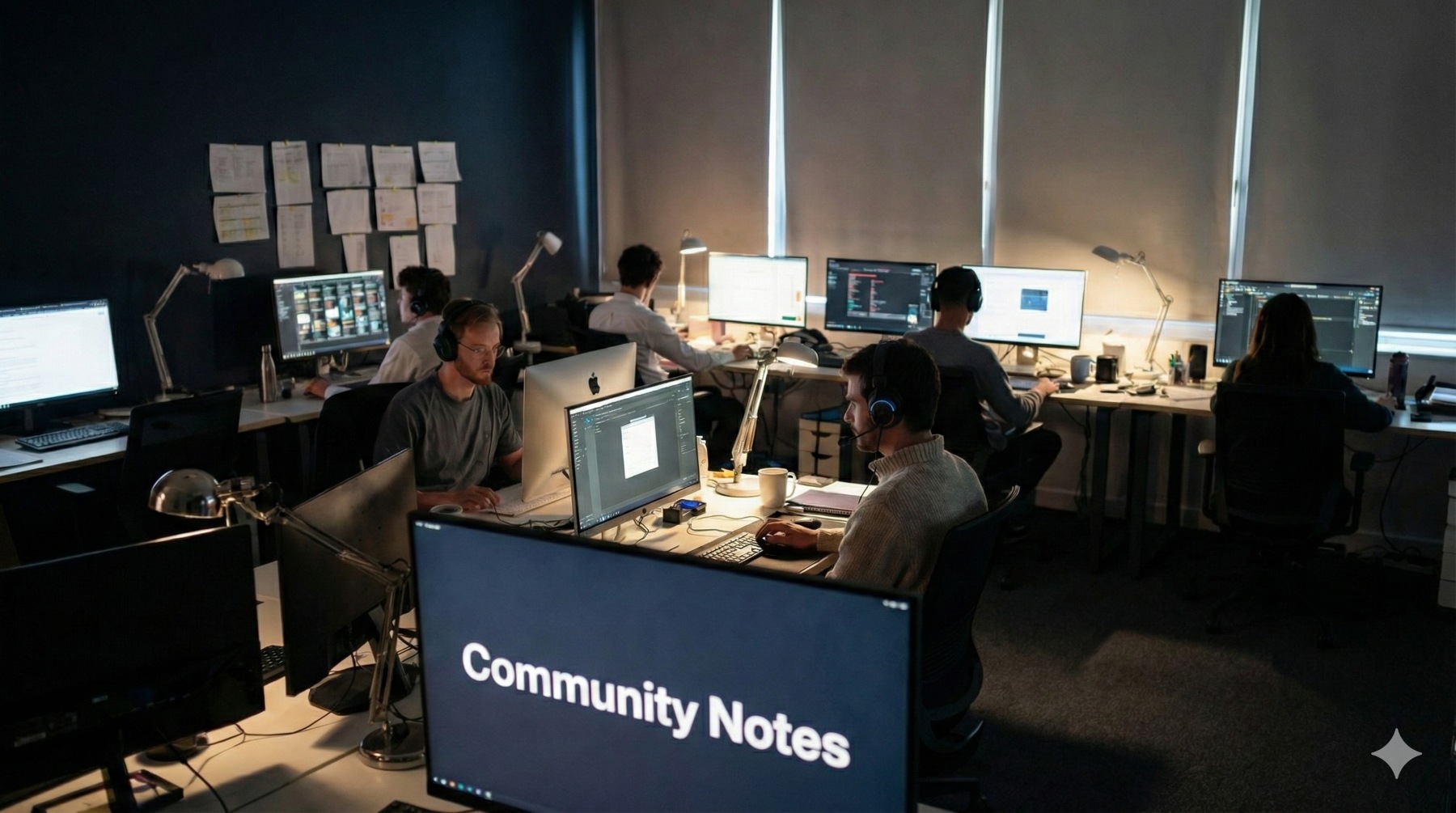
xAI pioneered the community review of posts for accuracy on their platform X (now owned by SpaceX) and is looking to bolster its crowd-sourced fact-checking tool, Community Notes.
The platform recently announced a change that will accelerate the process of addressing misinformation.
This is something I called out in January and it’s great to see xAI responding.
I’ve been a Community Notes member for a coupe of years now but the sheer volume of posts that need reviewing is relentless.
This update represents a significant change in how users interact with the platform’s safety features. By allowing contributors to work together, X hopes to reduce the time it takes for a note to reach a consensus. This new functionality aims to tilt that balance toward accuracy without sacrificing the real-time nature of the feed.
How collaborative notes work in practice
The core of the update revolves around the ability for contributors to build upon each other’s work. Previously, a contributor would write a note in isolation and wait for the community to rate it.
Now, users can see drafts and provide feedback or improvements before a note goes live to the general public. This iterative process is designed to iron out biases and ensure that the final product is as objective as possible.
The goal is to create a more robust “drafting room” where the collective intelligence of the user base can shine. It moves the platform away from a simple voting system and toward a more editorial model.
The mechanics of the new system
To participate in the collaborative process, users must be part of the Community Notes program. This ensures that those contributing have a track record of helpfulness and adherence to the platform’s guidelines.
When a note is in the drafting phase, other contributors can suggest specific edits or provide additional sources. This is particularly useful for complex topics where a single person might not have all the context required.
“Collaborative notes allow contributors to work together on a note before it’s shown to everyone on X.”
Community Notes, Official Account, X.
This quote highlights the shift toward a pre-publication vetting process. By the time a note is visible to the average scroller, it has already been through a gauntlet of peer review.
Why this matters for the platform
Misinformation is a constant battle for any social network, especially one that prides itself on being the world’s digital town square. X has leaned heavily into Community Notes as its primary weapon against fake news.
The collaborative approach reduces the burden on individual users to get everything right on the first try. It acknowledges that the best information often comes from a synthesis of different perspectives and data points.
If this system works as intended, it could significantly decrease the lifespan of viral hoaxes. The faster a correction can be appended to a post, the less damage that post can do to public discourse.
Improving accuracy through consensus
The algorithm behind Community Notes is famously complex, requiring people with differing viewpoints to agree on a note’s helpfulness. Collaborative drafting makes reaching that consensus easier by addressing concerns early.
If a draft is seen as leaning too far in one direction, a collaborator can suggest more neutral language. This helps the note appeal to a broader range of raters, increasing its chances of being published.
This focus on neutrality is a core pillar of the project. It isn’t about winning an argument, but about providing users with the necessary context to make up their own minds.
Challenges of the collaborative model
While the theory behind collaborative notes is sound, there are always risks when dealing with large-scale human interaction. The potential for “edit wars” or coordinated brigading remains a concern for many observers.
X has implemented safeguards to prevent one group from dominating the narrative. The reputation system for contributors remains the primary defense against bad actors looking to weaponise the tool.
If a contributor consistently tries to push inaccurate or biased edits, their rating will drop. This effectively sidelines them from the process, ensuring that the community remains focused on high-quality information.
The user experience and transparency
For the average user who isn’t a contributor, the experience remains relatively seamless. You will still see the helpful grey boxes under posts that require extra context or correction.
However, the quality of these boxes is expected to rise as a result of the collaboration. The links provided should be more relevant, and the explanations should be clearer and more concise.
Transparency is also a major factor here, as the history of a note is often available for review. This allows curious users to see how a particular correction came to be and what sources were used to justify it.
A step toward a self-governing internet
The move toward collaborative fact-checking is part of a broader trend of platform decentralisation. Rather than having a central team of moderators making calls, the power is handed to the users.
This approach is not without its critics, but it is certainly one of the most ambitious experiments in digital governance. It places a high level of trust in the community to act in good faith.
As the tool evolves, we are likely to see more features that encourage high-quality contributions. The success of X in this area will likely influence how other platforms handle moderation in the future.
Final thoughts on the update
X is clearly doubling down on the Community Notes model, and the collaborative update is a logical evolution. It moves the system from a series of individual voices into a more cohesive and professional fact-checking machine.
The success of this feature will depend entirely on the people using it. If the community embraces the spirit of cooperation, the platform will become a much more reliable source of information.
As always, the tech community will be watching closely to see how these changes impact the daily user experience. In an era of AI-generated content and deepfakes, these human-led initiatives are more important than ever.
For more information, head to https://communitynotes.x.com/guide/en/contributing/collaborative-notes
About the Author