A powerful winter storm sweeping across the eastern United States on 24 January forced the cancellation of more than 8,000 flights—including dozens on the busy Brazil–U.S. corridor—creating havoc for weekend business travel and air-cargo schedules.
At São Paulo/Guarulhos International Airport, operator GRU confirmed that at least 11 departures to New York (JFK), Boston (BOS) and Miami (MIA) were scrubbed between 06:00 and 14:00 local time after American airports issued ground-stop orders. Rio de Janeiro’s Galeão logged a further six cancellations, while Belo Horizonte and Brasília faced cascading delays as aircraft and crews fell out of position.
For travelers suddenly facing reroutes or longer layovers, keeping paperwork in order is critical. VisaHQ (https://www.visahq.com/brazil/) offers a quick, online way to verify entry requirements, renew passports or secure emergency visas, letting both corporate travel managers and individual passengers focus on rebooking flights rather than scrambling over documentation.
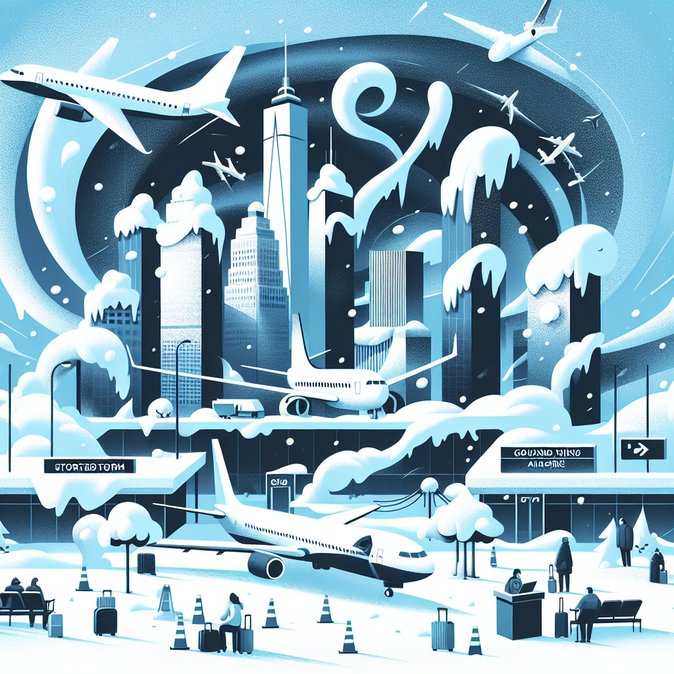
LATAM, American Airlines and Delta activated weather waivers allowing passengers booked between 24 and 26 January to rebook without fees or route surcharges, but travel-managers reported difficulty finding alternative seats because aircraft were already near capacity ahead of Carnival. Several multinationals with Monday board meetings in São Paulo scrambled to shift executives onto red-eye services via Mexico City and Panama. Air-cargo forwarders also felt the pinch: temperature-controlled pharmaceuticals bound for clinical trials were diverted through Atlanta, adding 24–48 hours to delivery timelines and triggering contingency cold-storage costs.
Industry analysts predict the disruption could shave up to R$ 60 million (US $ 12 million) off airline revenues for the week, though part of the hit may be offset by strong re-booking demand once the storm passes. Travel-risk specialists at International SOS advised companies to keep travellers updated via mobile alerts and to review Duty-of-Care obligations, particularly for staff stranded at U.S. hubs where hotel availability plummeted.
From a policy perspective, the episode underscores the lack of formal contingency protocols between Brazilian and U.S. aviation regulators for weather-related mass cancellations. The Brazilian Civil Aviation Agency (ANAC) said it will meet carriers next month to evaluate whether enhanced passenger-rights guarantees—similar to the EU-261 model—should apply when the primary cause of disruption lies outside Brazil.
About the Author