Unlock the White House Watch newsletter for free
Your guide to what Trump’s second term means for Washington, business and the world
US President Donald Trump has announced new tariffs on Nvidia and AMD as part of a novel scheme to enact a deal with the technology giants to take a 25 per cent cut of sales of their AI processors to China.
In December, the White House said it would allow Nvidia to start shipping its H200 chips to China, reversing a policy that prohibited the export of advanced AI hardware. However, it demanded a 25 per cent cut of the sales.
The new US tariffs on certain chips, announced on Wednesday, were designed to implement these payments and protect the unusual arrangement from legal challenges, according to several industry executives.
The move enacts the latest element of Trump’s transactional trade policy and allows the government to profit from a change to its export controls.
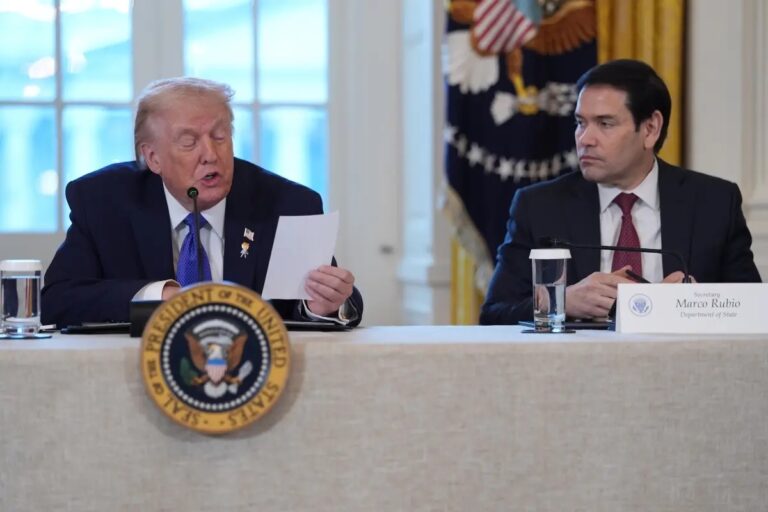
“We’re going to be making 25 per cent on the sale of those chips, basically. So we’re allowing them to do it, but the United States is getting 25 per cent of the chips in terms of the dollar value. And I think it’s a very good deal,” Trump said in the Oval Office on Wednesday.
A White House factsheet said the new tariff would apply to chips such as the H200 and rival AMD’s MI325X that were first imported into the US and “transshipped” back to customers around the world. It would also cover other US companies seeking to send AI chips abroad.
Nvidia and most of its US peers rely on Taiwan Semiconductor Manufacturing Company to manufacture the chips they design, including the H200, an advanced AI processor that belongs to an older generation of Nvidia hardware.
Chips that are imported to the US to build out the country’s domestic AI infrastructure would not be subjected to a levy, according to a presidential proclamation released on Wednesday.
The new duties are part of a sweeping national security probe launched by the Trump administration last year as the president kicked off a trade war against major US partners, roiling global markets.
These so-called Section 232 tariffs rely on a different legal basis from the emergency powers invoked by Trump to impose other global levies, which face a looming Supreme Court challenge.
However, Wednesday’s proclamation warned a second phase of the national security probe could result in “broader tariffs on imports of semiconductors and their derivative products”.
Trump has threatened to hit chips with tariffs of up to 100 per cent but over the past year has offered carve-outs and exemptions to companies that pledge to build more manufacturing capacity in the US.
Early last year, Nvidia committed to spending $500bn over the next four years on manufacturing its products in the US, while TSMC has been building facilities in Arizona as part of a $165bn investment project. The new TSMC plant started producing Nvidia’s most advanced Blackwell chips for the first time in October.
The vast majority of the world’s most advanced chips, however, are still manufactured in Taiwan before being shipped to other locations to be packaged or installed inside servers and devices.
Despite Trump’s decision to allow H200 exports, it remains unclear whether China will grant access. Beijing has been pushing tech companies to use domestic chips in a bid to achieve self-sufficiency in semiconductor production.
The FT previously reported that regulators were discussing ways to permit limited access to H200 chips, which tech giants such as Alibaba, ByteDance and Tencent prefer because of their higher performance and easier maintenance.
Two people with knowledge of the matter said Chinese customs officials had recently told logistics companies at the country’s ports not to submit clearing requests for H200 chips, though it was unclear whether the directive was temporary. China’s General Administration of Customs did not respond to a request for comment.
Nvidia on Wednesday welcomed the US move, saying Trump’s policy “strikes a thoughtful balance that is great for America”. AMD said it complied with all US export laws and policies.
The White House on Wednesday also unveiled the results of an investigation into critical minerals, concluding that US dependence on imports posed a national security threat.
Trump directed commerce secretary Howard Lutnick to negotiate deals with trading partners that included “trade-restricting measures”, such as price floors for metals including gallium, germanium and rare earths.
The order stopped short of imposing tariffs on the materials, which are broadly used in industries from technology to energy and defence. But the White House said the president might take other action to address the risks, including if deals were not done within 180 days.
China dominates the market for a host of critical minerals, including rare earths, an advantage it has leveraged in recent months by cutting off access.
About the Author