Vehicle manufacturing in America relies heavily on safety standards. The Federal Motor Vehicle Safety Standards (FMVSS) are U.S. federal regulations that specify design, construction, performance, and durability requirements for motor vehicles and safety-related components. Vehicle manufacturers must meet these standards as minimum safety performance requirements.
The FMVSS regulations appear in Title 49 of the Code of Federal Regulations, Part 571, Subpart B. These standards cover everything from fuel systems to brake hoses and head restraints. They fall into three categories: crash avoidance, crashworthiness, and post-crash survivability. The first standard, FMVSS No. 209, came into effect on March 1,1967, and continues to be updated periodically. Three new standards were announced in 2024, including Automatic Emergency Braking (FMVSS No. 127).
This piece explains FMVSS’s meaning, gets into the different categories of standards, and shows how they protect vehicle occupants while reducing injuries across America.
Crash Avoidance Standards in FMVSS
Federal Motor Vehicle Safety Standards’ 100-series focuses on crash avoidance by preventing accidents before they occur. These standards cover vital vehicle components that help drivers stay in control and remain aware of their surroundings.
FMVSS No. 101 sets specific requirements about vehicle controls and displays – where they should be placed, how they should be marked, and how they light up. Drivers can identify and use controls easily, which reduces mistakes and distractions while driving. Safety-critical features must meet specific lighting and color requirements. To cite an instance, drivers must be able to see telltales clearly both day and night.
FMVSS No. 105 defines how hydraulic and electric brake systems should perform. Vehicles must be able to stop even if part of the system fails. The standard requires heavy vehicles to stay in place with parking brakes on 20 percent grades, which prevents them from rolling away.
Electronic Stability Control (FMVSS No. 126) has shown remarkable results. It has cut fatal single-vehicle crashes by 55 percent for passenger cars and 50 percent for light trucks. The system detects wheel rotation rates and applies individual brake forces automatically to control wheel slip during braking.
FMVSS No. 138 makes Tire Pressure Monitoring Systems mandatory. These systems alert drivers within 20 minutes if tire pressure drops 25 percent below recommended levels. This alert system prevents tire failures and helps improve fuel efficiency while reducing accidents from underinflated tires.
Crashworthiness Standards to Protect Occupants
FMVSS 200-series crashworthiness standards aim to minimize occupant injuries in collisions. These standards tackle two vital aspects: they reduce rapid deceleration of the passenger compartment and prevent survival space crushing.
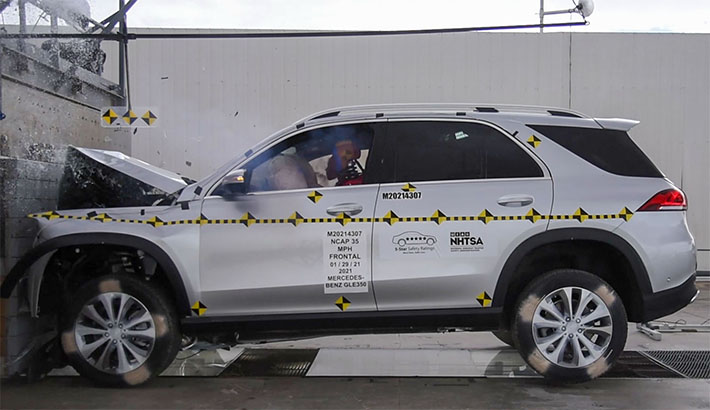
FMVSS 208, a vital standard for occupant protection, requires vehicles to clear frontal crash tests that measure passenger protection in serious collisions. Seat belts cut fatality risk by 55% in passenger cars and 74% in light trucks. The usage rate in rear seats (81.7%) remains lower than front seats (91.6%).
FMVSS 214’s side-impact protection rules specify door-crush resistance requirements. The first crush resistance needs to be at least 10,000 N (2,250 lb), and the peak resistance must reach three and one half times the vehicle’s curb weight or 53,378 N (12,000 lb), whichever is less.
FMVSS 216 controls roof strength by requiring roof structures to handle 1.5 times the unloaded vehicle weight without much deformation. The newer FMVSS 216a doubled this requirement to 3.0 times the strength-to-weight ratio for passenger cars.
Child restraint anchorage systems must meet FMVSS 225 requirements that ensure proper placement and strength for child seat security. FMVSS 209 defines strict standards for seat belt assemblies, including specific breaking strength and elongation limits.
Post-Crash Survivability and Miscellaneous FMVSS
FMVSS standards go beyond crash prevention and occupant protection. The 300-series standards ensure vehicles remain safe after a collision.
FMVSS 301 keeps fuel systems secure and limits fuel spillage to prevent fires. A vehicle can’t leak more than 28g of fuel right after impact and no more than 142g during the first five minutes after a crash. Electric vehicles are covered by FMVSS 305, which requires battery electrolyte containment to prevent spills and shock hazards. The standard requires electrical isolation of 500 ohms/volt for AC and 100 ohms/volt for DC sources.
Materials inside vehicles must meet FMVSS 302 flammability rules. They can’t burn faster than 102mm per minute. This rule helps prevent fires caused by cigarettes or matches.
The 400-series adds additional important rules, such as FMVSS 401. This standard requires cars to have interior trunk releases so trapped people can escape. These releases need lighting or phosphorescence to be visible in the dark.
Low-speed vehicles that can’t exceed 25mph must comply with FMVSS 500. Even with their speed limits, these vehicles still need basic safety equipment such as headlamps, mirrors, and seat belts.
These standards complete the FMVSS framework by covering post-crash safety and special vehicle types.
Conclusion
Federal Motor Vehicle Safety Standards are the backbone of automotive safety in the United States. This piece explores how these complete regulations protect drivers and passengers across America. FMVSS includes three key categories – crash avoidance (100-series), crashworthiness (200-series), and post-crash survivability (300-series). Each category tackles different parts of vehicle safety.
Crash avoidance standards help prevent accidents before they happen. They set requirements for braking systems, electronic stability control, and tire pressure monitoring. These proactive measures reduce accident rates by a lot and save countless lives every year.
Crashworthiness standards provide critical protection during collisions. They’re designed to help vehicles manage crash forces while preserving the occupant compartment. Seat belts, airbags, and side-impact protection work together to reduce serious injuries. Even so, airbag deployment can cause minor burn injuries in some cases. For example, you may sustain an airbag burn from the heat and friction created during rapid inflation.
Post-crash standards target secondary dangers after impact. They especially focus on fuel leakage, electrical hazards, and flammability issues. These requirements will give a better chance of survival after serious collisions.
FMVSS’s development since 1967 shows a steadfast dedication to public safety. New additions like Automatic Emergency Braking (FMVSS No. 127) show how these standards adapt to new technology and safety challenges.
FMVSS creates a unified safety framework that all vehicle manufacturers must meet, whatever their origin or price point. This system makes sure every vehicle on American roads meets minimum safety requirements, protecting all road users.
These regulations ended up creating a complete approach to vehicle safety. The system spans prevention, protection, and post-crash considerations – designed to reduce deaths and serious injuries on American roadways.
About the Author