You remember Mitch Kramer even if you don’t remember his name.
The skinny kid with the paddle looming over him. The awkward grin. The sense that this was his night, whether he wanted it or not. When Dazed and Confused drifted into cinemas in 1993, it didn’t announce a new star. It didn’t need to. Wiley Wiggins felt instantly familiar, like someone you already knew from school.
For a brief moment, he was everywhere without trying to be anywhere at all. Magazine spreads. Late-night quotes. That strange cultural echo that follows young actors who seem too real for the screen. Then, just as quietly, he vanished.
No meltdown. No scandal. No comeback tour teased and abandoned.
Just absence.
Search his name today and the same questions surface again and again: what happened to Wiley Wiggins, why did Wiley Wiggins quit acting, where is Wiley Wiggins now. The assumption baked into those searches is telling. Hollywood trains us to believe disappearance equals failure.
This case file tells a different story.
Because Wiggins didn’t flame out. He didn’t fall apart. He walked away — slowly, deliberately — from a system that never quite fit, and built a life most former teen actors never get the chance to choose.
🎬
Known For
Mitch Kramer in Dazed and Confused
📣
Director Association
Richard Linklater
⏳
Acting Period
1990s – Early 2010s
🌟
Key Later Works
Waking Life, Computer Chess
🚪
Exit from acting
Personal choice
🎨
Current focus
Media Art & Game Research
The Role That Froze Him in Time
When Wiley Wiggins was cast in Dazed and Confused, he wasn’t chasing a career. He was a sixteen-year-old Austin teenager spotted locally and ushered into Richard Linklater’s loose, sunburnt vision of 1976 Texas adolescence.
Wiley Wiggins as Mitch Kramer in Dazed and Confused (1993)
The role of Mitch Kramer is deceptively hard. Mitch isn’t loud. He isn’t a rebel. He’s a sponge — absorbing humiliation, curiosity, fear, and possibility over the course of one long night. Wiggins played him without polish or protection. No performance tics. No wink to the audience.
That naturalism locked him in amber.
Once a film like Dazed and Confused finds its audience, it stops belonging to the people who made it. It becomes memory. Ritual. Something passed down. Mitch Kramer wasn’t just a character — he was a rite of passage.
Wiggins became permanently sixteen in the public imagination.
There’s a quiet inevitability to what followed. Hollywood likes its young actors legible. It prefers clean arcs: breakout, escalation, franchise, reinvention. Wiggins didn’t offer that. He offered truth. And truth doesn’t always travel well through casting offices.
The film made him recognisable overnight. It also froze him there, forever standing on that football field, wondering what comes next.
A Career That Never Played by Studio Rules
If Hollywood expected Wiley Wiggins to capitalise aggressively, it misunderstood him from the start.
His post-Dazed and Confused choices skewed sideways. Instead of studio grooming, he gravitated toward strange edges and smaller rooms. Love and a .45 arrived in 1994, all grit and volatility. Boys followed in 1996, another uneasy snapshot of young masculinity.
These weren’t steps toward stardom. They were steps toward texture.
The clearest signal came with Waking Life in 2001. Linklater’s animated philosophical drift asked its actors to dissolve into ideas rather than dominate the frame. Wiggins fit naturally, his voice floating through debates about identity, consciousness, and meaning. It wasn’t a performance built for headlines. It was built for people who leaned in.
This wasn’t an accident. It was a pattern.
While his peers chased momentum, Wiggins chased curiosity. He never seemed interested in being the guy. He was more comfortable being a guy — one piece of a larger conversation.
That approach earned respect in indie circles but little traction in an industry driven by visibility. The absence of a breakout follow-up wasn’t a failure of talent. It was a refusal to play the game as written.
Wiley Wiggins is active as a media artist and educator, operating outside the mainstream Hollywood circuit.
He has pivoted from professional acting to focus on experimental games, digital art, and writing. While he maintains a low public profile, his influence remains in the indie creative scene.
When the Calls Slowed Down
There’s no clean break point in Wiley Wiggins’ acting career. No dramatic last role. No announcement. Just a thinning of appearances as the early 2000s rolled on.
This is where many teen actors stumble. The expectations are brutal. Audiences want continuity. Casting directors want reinvention. Studios want insurance. Indie films want availability without complications.
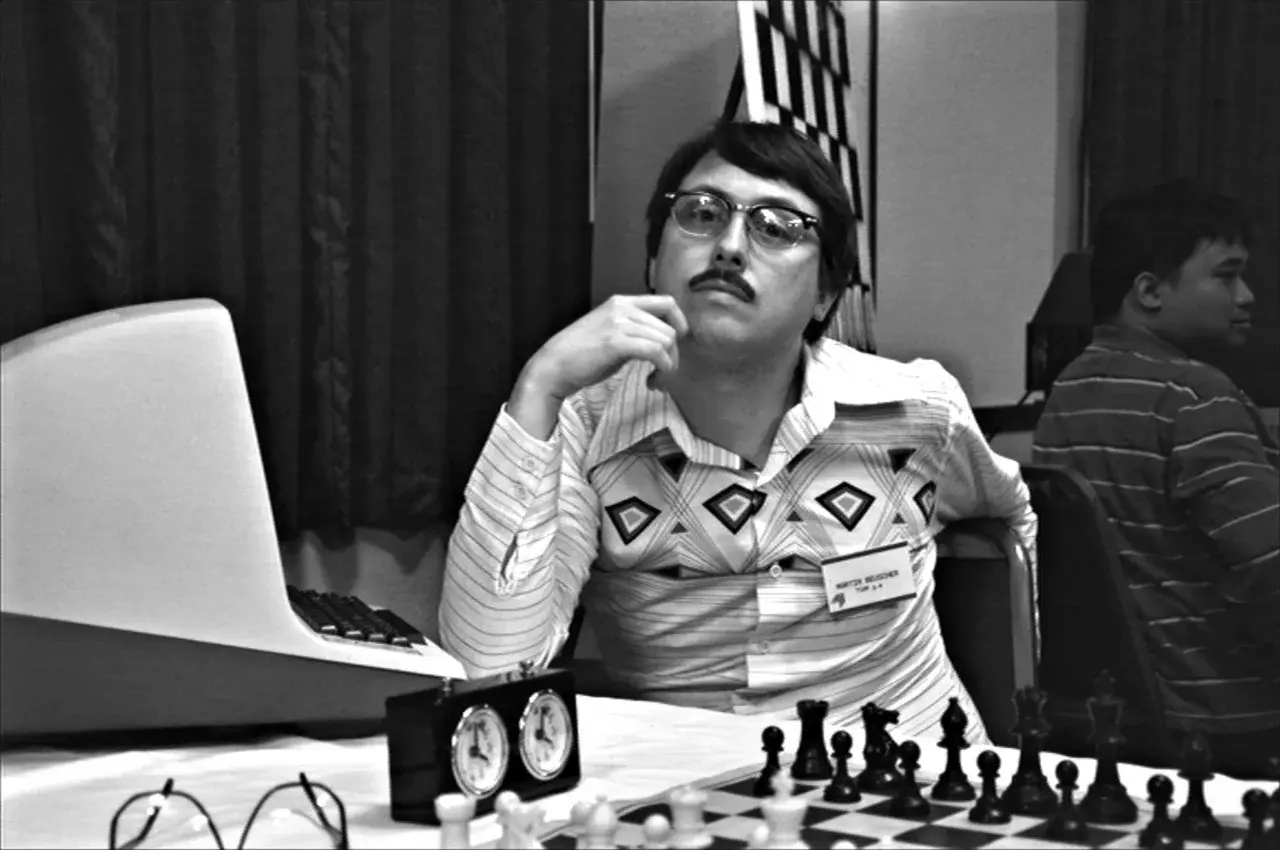
Wiggins’ filmography after Waking Life becomes intermittent. A role here. A project there. Goliath in 2008. Computer Chess in 2013, Andrew Bujalski’s deliberately awkward experiment in retro tech culture.
Nothing suggests a man scrambling for relevance.
Instead, it looks like someone refusing to beg.
The truth most profiles skip is simple: acting work didn’t stop overnight. It slowed. And as it slowed, Wiggins didn’t panic. He didn’t cling. He let it recede.
For Hollywood, that’s the unforgivable sin.
Hollywood Did Not Break Him — He Simply Opted Out
For readers still asking why did Wiley Wiggins quit acting, the answer is less dramatic than Hollywood mythology suggests.
This is the part where tabloids usually invent a villain.
There isn’t one.
There are no documented legal issues tied to Wiley Wiggins. No publicised breakdowns. No stories of bridges burned or agents fired in rage. The machinery didn’t chew him up and spit him out.
It failed to hold his interest.
Opting out rarely makes headlines because it doesn’t fit the cautionary tale template. We’re trained to read absence as damage. But sometimes it’s discernment.
Wiggins didn’t disappear because he couldn’t survive Hollywood. He disappeared because he didn’t want to live there.
That distinction matters.
The Years You Did Not See
While the screen went quiet, something else filled the space.
According to his own published CV and personal materials, Wiley Wiggins pivoted toward technology, games, and media art — fields where experimentation mattered more than exposure. From roughly 2012 to 2018, he was involved with Austin’s independent games scene, including leadership roles at the Fantastic Arcade festival, a hub for experimental and community-driven game design.
These details are largely self-reported, and should be treated as such. But the shape of the work is consistent.
Independent Games & Media Art
Active in Austin’s independent scene, including leadership involvement with the Fantastic Arcade festival.
AAS, Game Development
Completed formal technical training at Austin Community College, specializing in game systems and design.
BA, Design Media Arts
Earned a Bachelor’s degree from UCLA, focusing on the intersection of visual art and digital interactivity.
MFA, Media Arts
Completed a Master of Fine Arts at UCLA, specializing in advanced media research and creative technology.
In 2019, he completed an Associate of Applied Science in Game Development at Austin Community College. He later pursued formal study at UCLA, earning a Bachelor’s degree in Design Media Arts in 2021 and completing a Master of Fine Arts in Media Arts in 2023, according to his CV.
This wasn’t a vanity pivot. It was a rebuild.
Games and interactive art offer something acting rarely does: agency. Systems instead of scripts. Questions instead of answers. For someone who drifted so naturally into Linklater’s philosophical cinema, the transition feels less like reinvention and more like continuation.
He didn’t stop creating. He changed tools.
So Where Is Wiley Wiggins Now
Here’s the plain-language answer most readers want.
Wiley Wiggins is alive, working, and largely private.
Wiley Wiggins today is 49 years old and works primarily in media art, game research, and teaching, with acting no longer central to his professional life. His public presence centres on creative communities rather than celebrity culture, and while acting hasn’t vanished entirely, it is no longer the spine of his working life.
He is not waiting for a comeback.
He is doing the work he chose.
That featured-snippet truth holds: Wiley Wiggins is best known for playing Mitch Kramer in Dazed and Confused. After early success, he stepped away from acting, choosing a quieter life outside Hollywood. He later worked in technology and creative fields, occasionally appearing in indie projects, and remains largely private today.
As of 2026, there has been no announcement of a full-time return to acting, and Wiggins continues to keep a deliberately low public profile.
There’s no mystery left to solve. Just a misunderstanding to correct.
What His Absence Says About the Industry
Look at the cast of Dazed and Confused and the contrast sharpens.
Some stayed. Some ascended. Some burned fast and bright. Others faded quietly. The industry celebrates only one of those paths.
Wiggins represents the option rarely framed as success: leaving without wreckage.
Hollywood’s definition of winning is narrow. It rewards longevity only if it’s visible. It treats privacy as failure and contentment as a punchline. Within that logic, someone like Wiggins must be explained away.
But step back and the picture changes.
He avoided the long tail of typecasting. He sidestepped the pressure to perform adolescence forever. He chose education, community, and sustained creativity over applause.
That’s not disappearance. That’s escape.
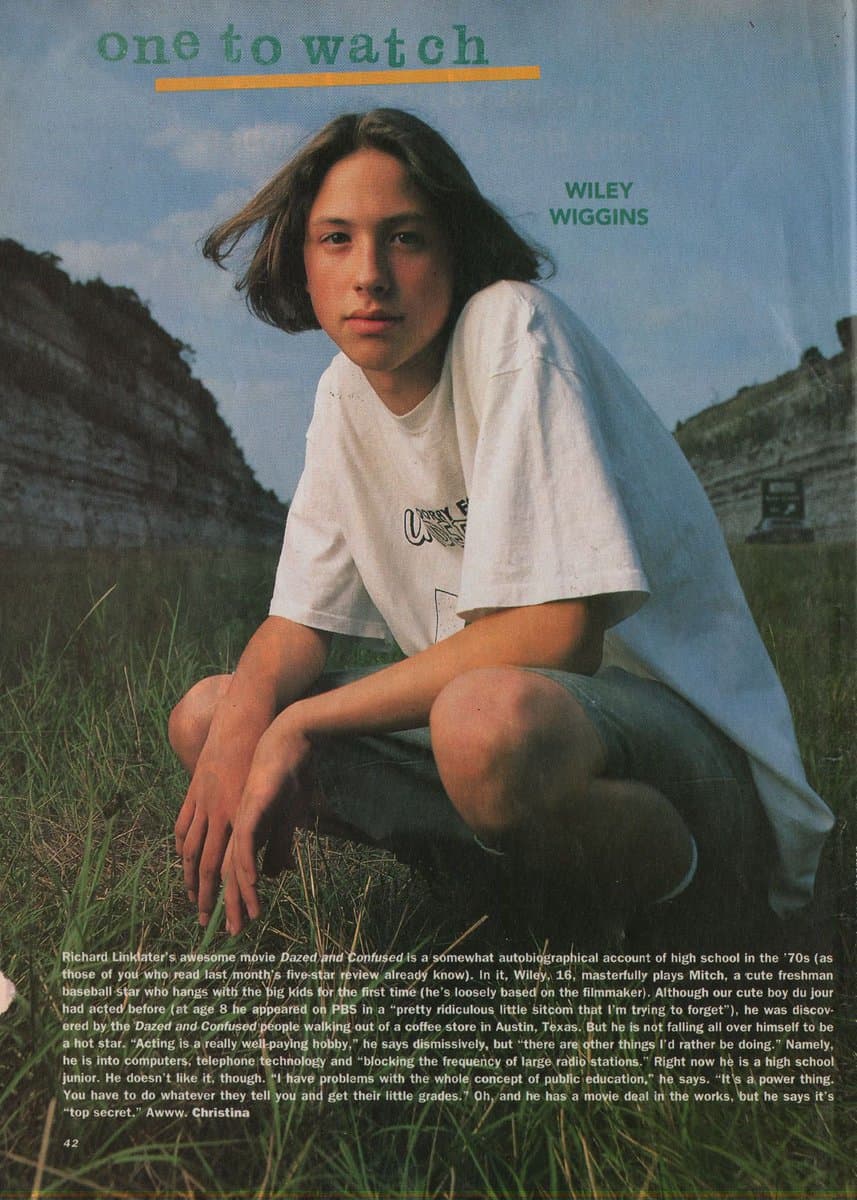
Wiley Wiggins, no longer frozen at sixteen, works in rooms where nobody asks him to be Mitch Kramer. He builds systems. He teaches. He writes. He contributes without being consumed.
Hollywood didn’t lose him.
It simply stopped owning him.
And somewhere far from a soundstage, that feels like exactly the point.
About the Author