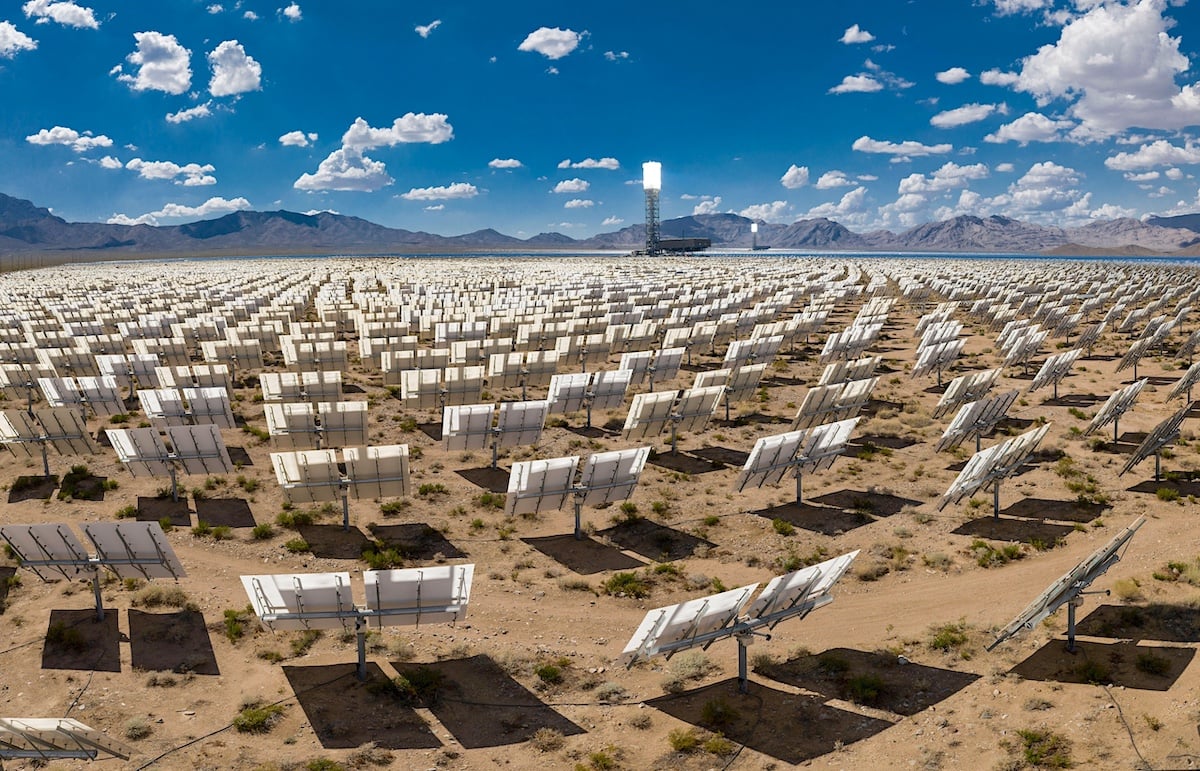
When California stopped using coal power late last year, the momentous departure was the culmination of long-term policy designed to transition the state to clean energy.
On climate action California has consistently maintained a cooperative stance with China, unlike the US federal government.
As China watches its partner make major progress towards an energy transition from fossil fuels, what lessons can it draw from the experience?
Coal’s historical role in California
In December 2025, the city of Los Angeles stopped importing coal-fired electricity from the Intermountain power plant in Utah. This cut the city’s, and California’s, final link to coal-fired generation.
Mayor Karen Bass described the move as a “defining moment” in Los Angeles’ clean energy transition and a “milestone” that will “accelerate our transition to 100% clean energy by 2035”.
Christine Shearer is project manager of the Global Coal Plant Tracker at Global Energy Monitor, a California-based NGO. She tells Dialogue Earth the state only had limited in-state coal generation to begin with, “which reduced some of the political and economic barriers seen elsewhere”.
According to state data, coal accounted for just 2% of the power mix in 2024, compared with 34% from natural gas, a share that itself is steadily declining.
Meanwhile, the share of renewable energy grew from 22% in 2015 to 41% in 2024.
“California’s political will in pursuing the energy transition has remained consistent, at least by American standards, through multiple administrations and governors,” says Li Shuo. He directs the China Climate Hub at the Asia Society Policy Institute, a nonprofit headquartered in New York City.
California has raised its renewable-energy targets several times since 2002, when it set the goal of 20% of electricity sales being served by renewables by 2017.
That goal later became 33% by 2020 and currently stands at 50% by 2030. By 2045, the aim is for renewables to supply 100% of retail sales of electricity to “end-use” customers, and 100% of state agencies’ power needs.
Shearer explains that California’s exit from coal followed “an incremental process” spanning two decades. Clear renewable targets and measures, multiple policies, and market developments all reduced coal’s role in California.
California, the federal government and China
The state’s path away from coal is quite distinct in the US context.
Yang Fuqiang is senior adviser on the Climate Change and Energy Transition Programme at the Beijing Rock Environment and Energy Institute. He tells Dialogue Earth: “Under the US constitution, states and the federal government exercise distinct powers. California can formulate its own coal-reduction policies and measures, but it cannot speak for the federal government.”
US president Donald Trump has described coal as “clean” and “beautiful” and his government has repeatedly extended the operation of ageing coal power plants.
At the end of 2025, the last coal-fired facility in Washington received an emergency order to continue burning coal for 90 days, despite plans to switch to gas-fired generation.
US energy secretary Chris Wright explained the decision resulted from increasing electricity demand and “accelerated retirement of generation facilities”. However, Dennis Wamsted, energy analyst at the Institute for Energy Economics and Financial Analysis, tells Dialogue Earth there was no “emergency situation” with the electricity supply.
“Historically, ‘emergency situations’ have only been used in truly imminent crises, like the grid might collapse tomorrow,” says Wansted. “Now the government is simply requiring plants to continue operating because there might be a problem in the future. This has never happened before.”
He says many of the plants ordered to remain online were too old to maintain cheaply, or already had replacement plans. Forcing consumers to pay twice – for active plants that were due to retire and new replacements sitting idle – does not make long-term sense, he adds.
A 63‑year‑old coal power plant in Michigan, for example, has received emergency orders twice, costing USD 113 million to continue operating. In December, the US court of appeals received an appellate brief to overturn that order.
Besides, Trump has disparaged renewables, fancifully calling wind the “most expensive energy ever conceived”, and falsely claiming that China exports wind turbines but barely uses them at home.
By contrast, California has embraced collaboration with China on clean technology. “California has long been a climate leader and aims to show differences when the federal government falls behind,” Li says.
Despite California-China collaboration “de-escalating” under Trump’s administration, the partnership has spanned three governors and developed a “muscle memory”, Li adds.
In 2019, former governor Jerry Brown established the California-China Climate Institute. In 2023, California’s current governor Gavin Newsom signed a memorandum of understanding on low-carbon collaboration with China’s National Development and Reform Commission. This included collaboration on carbon capture, utilisation and storage technologies, and regional cooperation with Guangdong and Hainan provinces.

Li believes that in renewing its partnership with California, China aimed to prevent a complete “decoupling” with the US. It even added subnational cooperation into the 2023 Sunnylands Statement.
Yang says both governments expect “bottom-up” initiatives. The ports of Shanghai and Los Angeles have launched a “green shipping corridor”, which involves expanding capacity to refill ships with sustainable fuel, among other measures. Meanwhile, the Chinese firm BYD operates in California, where its electric school buses started receiving state subsidies in 2024.
Coal’s future and lessons from the US
While coal’s story has ended in California, its decline is still ongoing in the rest of the US.
Data from Global Energy Monitor shows coal-fired capacity has dropped from a peak of 340 gigawatts (GW) in 2011 to 190 GW in 2025.
Former president Joe Biden set out a plan to eliminate emissions from the country’s power sector by 2035. Shearer says: “While that commitment currently faces challenges under the Trump administration, more than 60% of remaining US coal-fired capacity is still planned to retire over the coming decades.”
About 7 GW was retired in 2024 and that figure is likely to have been even larger in 2025.
“The main obstacle facing the US today is policy uncertainty,” says Shearer. “Over the longer term, however, the shift away from coal is clear, due to the advanced age of many US coal plants and the pressure from market forces and competing technologies.”
Many US coal plants were not permanently retired but converted to fuels like gas.
Wamsted says this was often done to lower costs rather than reduce emissions. “We do not favour doing that, because it still keeps fossil fuels in the system,” he adds. Gas emits less CO2 than coal when burned but it also comes with methane leakage risks. Methane has a much stronger short-term greenhouse effect than CO2, making its climate impact nearly as bad as coal over 20 years.
Wamsted believes replacing coal and gas with renewables and storage is the most direct approach – and this is precisely California’s method.
Since 2019, the state has added about 40 GW of renewable power and battery storage, with battery storage now 2.5 times its 2022 level, according to The Guardian.
Coal is neither the only nor the most effective way to ensure reliability
Christine Shearer, Global Energy Monitor project manager
“It is hard to have 1 v 1 lessons,” Li says, “but China can learn from California’s long-term planning – scaling up storage and renewable energy to accelerate the phase-out of coal. China’s energy transition boils down to coal reduction and phase-out. Large-scale energy storage is essential to enable mass and effective coal retirement.”
China still needs coal in the short term. Yang notes that Beijing municipality’s coal use has fallen from 30 million tonnes in 2000 to under 600,000 tonnes today. “I believe Beijing’s de-coalification is essentially complete. The remaining coal is mainly for heating in rural areas, which is dispersed and requires switching to electric, gas or developing renewable heating to reach carbon zero.”
China’s National Energy Administration pledged to secure coal supply for residential heating and electricity at a press conference late last year. The government approved at least 42 GW of coal projects in 2025, but coal consumption did not rise.
Yang explains: “These coal projects mainly address short-term, fluctuating demand growth and replace old coal plants. Thus, new approvals do not proportionally increase total carbon emissions.”
Wamsted says that in China, new coal replaces old coal, while in the US, ageing coal is kept as expensive power “insurance”.
Both nations’ concerns over grid reliability have kept coal in place, says Shearer, “but coal is neither the only nor the most effective way to ensure reliability”. Grid resilience can be built through battery storage, pumped hydro, as well as more flexible market rules.
According to Wamsted, Texas’s “energy-only market” proves renewables can scale in a free electricity market where buyers and sellers trade freely by need and price. As a result, the state’s renewable share in electricity generation has risen from 15% a decade ago to nearly 38% today.
About the Author