By :
Bashy Quraishy :Secretary General – EMISCO -European Muslim Initiative for Social Cohesion – Strasbourg
Thierry Valle :Coordination des Associations et des Particuliers pour la Liberté de Conscience
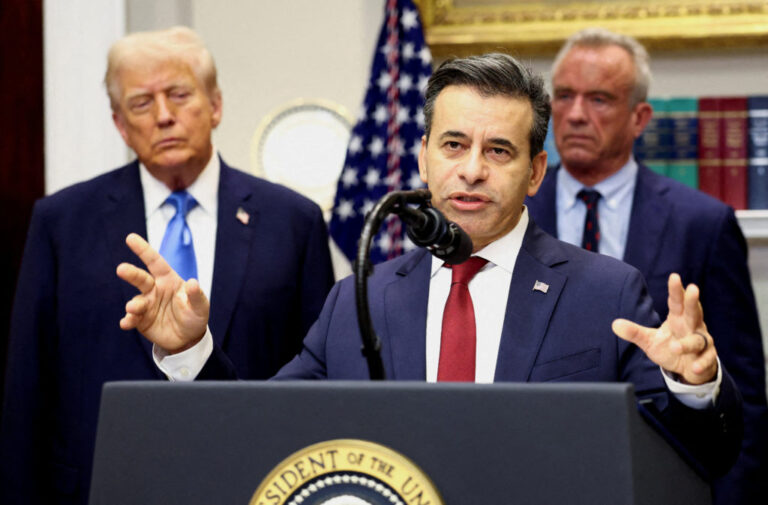
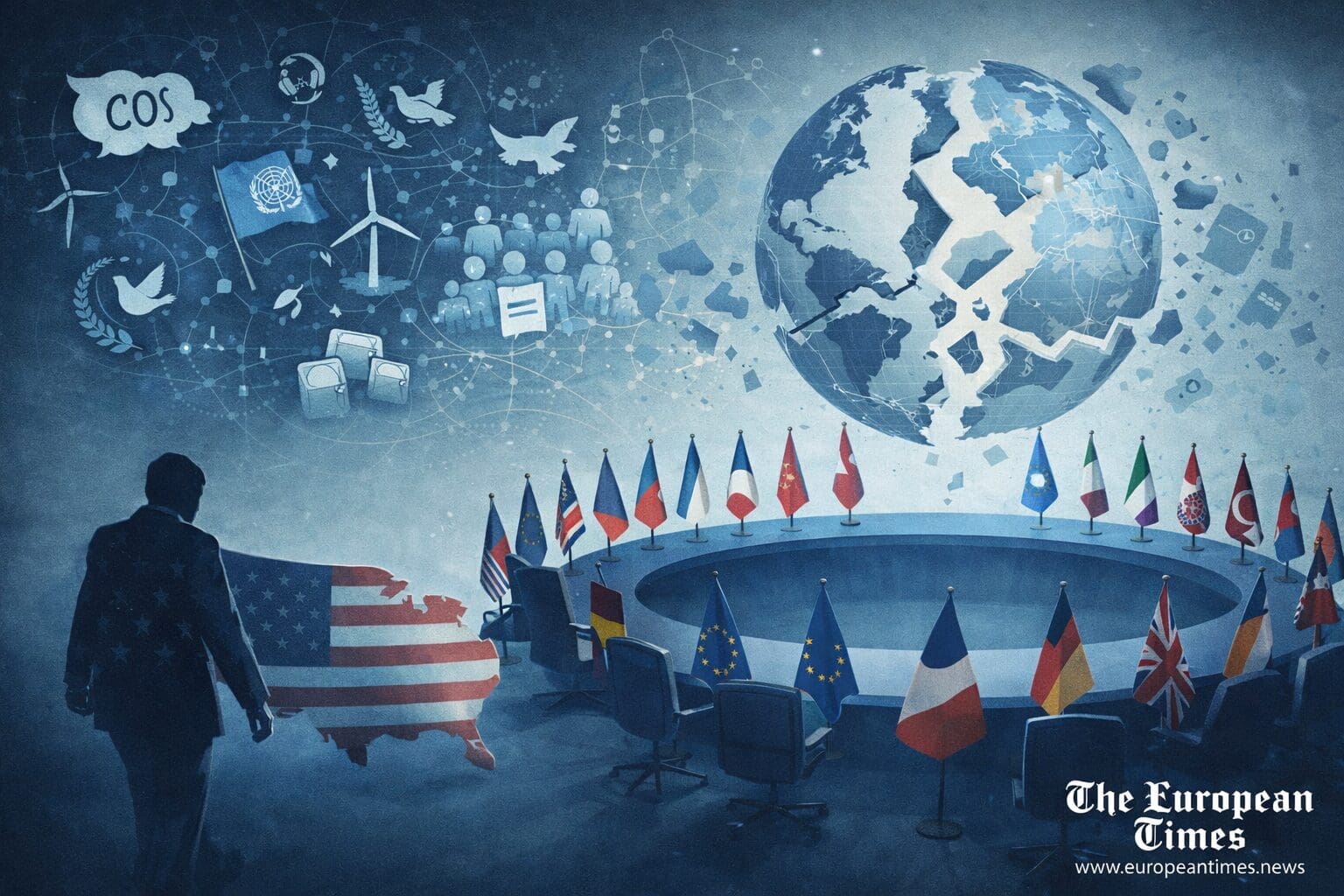
On January 7, 2026, US President Donald Trump signed a presidential memorandum directing the immediate withdrawal of the United States from 66 international organizations, including 31 United Nations entities and 35 non-UN organizations. This decision represents one of the largest rollbacks of US participation in multilateral institutions in modern history, raising concerns about the future of international cooperation at a time when global stability faces unprecedented threats.
The Scope of American Disengagement
According to the White House memorandum titled “Withdrawing the United States from International Organizations, Conventions, and Treaties that Are Contrary to the Interests of the United States,” the withdrawal encompasses organizations that the administration deems “contrary to the interests of the United States.” The directive orders all executive departments and agencies to “take immediate steps to effectuate the withdrawal” as soon as possible. For United Nations entities, this means ceasing both participation and funding to the extent permitted by law.
The 31 UN entities targeted for withdrawal include critical operational bodies such as the UN Population Fund, UN Entity for Gender Equality, and the Empowerment of Women (UN Women), the Office of the Special Representative of the Secretary-General for Children in Armed Conflict, the Peacebuilding Commission, and the UN Framework Convention on Climate Change. The list also encompasses five regional economic commissions under the Economic and Social Council, covering Africa, Latin America and the Caribbean, Asia and the Pacific, and Western Asia.
Among the 35 non-UN organizations, the withdrawal affects the Intergovernmental Panel on Climate Change, the International Renewable Energy Agency, the International Solar Alliance, the Global Counterterrorism Forum, the Science and Technology Center in Ukraine, and the International Institute for Democracy and Electoral Assistance. These organizations address issues ranging from climate change and renewable energy to counterterrorism, democracy promotion, and scientific cooperation.
United Nations Response: Legal Obligations Remain Binding
In response to the White House announcement, UN Secretary-General António Guterres issued a statement on January 8, 2026, expressing regret over the decision. UN Spokesman Stéphane Dujarric conveyed the Secretary-General’s position during the daily press briefing, emphasizing that “assessed contributions to the United Nations regular budget and the peacekeeping budget, as approved by the General Assembly, are a legal obligation under the UN Charter for all Member States, including the United States.”
The UN’s response underscored a fundamental legal principle: treaty obligations cannot be unilaterally discarded. Dujarric clearly stated that “contributions to the budget, the regular budget, and the peacekeeping budget are treaty obligations.
The operative word being obligations; it’s in the Charter. So, Member States who signed, who’ve joined this club have to pay the dues.”
The United Nations confirmed that the US did not pay its assessed contributions throughout 2025, creating significant financial strain on the organization. Despite this, Dujarric emphasized that “all United Nations entities will go on with the implementation of their mandates as given to us by Member States” and that “the United Nations has a responsibility to deliver for all those who depend on us, and we will continue to carry out our mandates with determination.”
When pressed about the implications of a permanent Security Council member disregarding legal obligations, Dujarric noted that UN Article 19 stipulates that those countries failing to pay dues for a certain period may lose voting rights in the General Assembly, though this provision does not extend to Security Council participation.
Financial and Operational Implications
The withdrawal creates immediate financial pressure on organizations that depend on US contributions. The UN Spokesman acknowledged that the organization has been managing under financial pressure for some time, noting that “the US didn’t pay last year. Other Member States paid later than they had we had expected.” He described the Secretary-General’s financial management responsibilities as requiring him to “juggle financial cash flow, that I think would make the head spin of any CEO or Head of Government.”
Beyond immediate funding concerns, the withdrawal threatens the operational capacity of entities focused on peacebuilding, humanitarian assistance, gender equality, and protection of vulnerable populations. The Peacebuilding Commission and Peacebuilding Fund, both on the withdrawal list, play essential roles in post-conflict recovery efforts. The Office of the Special Representative of the Secretary-General for Children in Armed Conflict and the Office of the Special Representative on Sexual Violence in Conflict address protection needs in war zones, including current conflicts in Ukraine, Gaza, and Syria.
The withdrawal from climate-related entities is particularly significant, given the global nature of climate change. The decision affects not only the Paris Agreement—from which the US previously withdrew and rejoined—but the foundational 1992 UN Framework Convention on Climate Change itself. By targeting this Senate-ratified treaty, the administration’s move is expected to face legal challenges regarding the president’s authority to unilaterally withdraw from such agreements.
Dangers to Peace in an Unstable World
The timing of this withdrawal raises acute concerns about international stability. The current global landscape is marked by active conflicts in Ukraine and Gaza, tensions surrounding Taiwan, ongoing instability in Syria, humanitarian crises in South Sudan and Yemen, and escalating climate emergencies. In this context, withdrawing from organizations designed to facilitate cooperation, prevent conflicts, and coordinate humanitarian responses potentially undermines the fragile balance that international institutions help maintain.
The Science and Technology Center in Ukraine appears on the withdrawal list at a moment when Ukraine faces continued attacks on its energy infrastructure. According to UN reports from January 8, 2026, recent strikes across Ukraine left nearly 2 million people without electricity in temperatures near freezing, with attacks described by Dnipro’s mayor as “among the largest combined attacks since the start of the full-scale war.” The center, which facilitates scientific cooperation related to non-proliferation and security, was established specifically to redirect former Soviet weapons scientists toward civilian research.
Similarly, the withdrawal from peacebuilding mechanisms occurs as the UN documents escalating conflicts. In South Sudan, renewed fighting since December 29, 2025, has displaced approximately 100,000 people, mostly women, children, and elderly individuals. In Syria, the UN Secretary-General expressed grave alarm about escalating hostilities in Aleppo, with tens of thousands displaced and mounting civilian casualties. These situations exemplify the contexts where UN peacebuilding entities work to prevent conflict escalation and support stabilization efforts.
The UN Democracy Fund and the International Institute for Democracy and Electoral Assistance, both targeted for withdrawal, support democratic institutions and electoral processes globally. Their absence from US support may weaken democratic resilience in countries facing authoritarian pressures or attempting post-conflict transitions.
International Reactions and Broader Context
International media coverage has highlighted the unprecedented scale of the withdrawal. Al Jazeera reported that many of the targeted organizations focus on climate, labor, migration, and other issues, the Trump administration has categorized as catering to diversity and “woke” initiatives. The Bulletin of the Atomic Scientists characterized the decision as turning “his back on science, facts, reason,” noting that the administration is moving beyond individual agreements to exit “the entire international framework for climate negotiations.”
The Press Pad analysis emphasized that the significant changes would lead the US to withdraw from key forums focused on climate change, peace, and democracy. Le Monde covered the decision as part of a broader pattern of American disengagement from multilateral frameworks, placing it in the context of previous withdrawals from the Paris Agreement, the Iran nuclear deal, and the World Health Organization.
During the UN press briefing, journalists questioned, whether this decision signals the death of multilateralism. Secretary-General Guterres, through his spokesperson refused to write such an obituary, stating that “António Guterres will not write it.” Instead, the UN emphasized that the Secretary-General “strongly believes that the challenges that we face today can only be solved through international cooperation.”
When asked whether the UN itself has become “à la carte,” Dujarric responded that “the UN is an organization of 193 Member States and two observer States. It is in the interest of all these Member States and the two observers to defend the principles that they themselves have created.”
Civil Society Under Pressure
The withdrawal directly impacts civil society organizations that partner with or receive support through UN entities. UN Women, which appears on the withdrawal list, coordinates with thousands of civil society organizations globally to advance gender equality and women’s empowerment. The UN Population Fund works with civil society partners on reproductive health, maternal health, and population data collection. The UN Democracy Fund provides direct grants to civil society organizations working on democratic governance, human rights, and civic participation.
The Office of the Special Representative on Violence Against Children collaborates with civil society networks to document abuse, advocate for protective policies, and support rehabilitation programs. Its removal from US support may reduce capacity to address child protection in conflict zones and humanitarian emergencies.
Environmental civil society organizations similarly face challenges with the US withdrawal from entities such as the Intergovernmental Science-Policy Platform on Biodiversity and Ecosystem Services, the International Union for Conservation of Nature, and the UN Collaborative Program on Reducing Emissions from Deforestation. These organizations facilitate scientific research, advocacy, and community-based conservation efforts that depend on international coordination and funding.
The Role of International Law and Treaty Obligations
A fundamental question raised by the withdrawal concerns the relationship between national sovereignty and international legal obligations. The UN Charter, which the United States signed and ratified in 1945, establishes specific financial obligations for member states. Article 19 of the Charter states that members in arrears may lose voting privileges in the General Assembly if arrears equal or exceed contributions due for the preceding two full years, unless the failure to pay is due to conditions beyond the member’s control.
The UN’s legal position is unambiguous: assessed contributions are not voluntary donations but legally binding obligations. The Secretary-General, as the chief administrative officer, lacks authority to waive these obligations or negotiate their reduction. Only the General Assembly, acting collectively, can modify the assessment scale or address non-payment issues.
The withdrawal from the UN Framework Convention on Climate Change presents additional legal complexity because it is a Senate-ratified treaty. Constitutional questions arise regarding whether the executive branch can unilaterally withdraw from treaties that received Senate advice and consent. Legal scholars note that while some treaties contain explicit withdrawal provisions, the constitutional distribution of treaty-making powers between the executive and legislative branches remains contested.
Implications for Global Governance
The withdrawal challenges the post-1945 international order built on multilateral institutions and shared governance frameworks. The United Nations system was designed to prevent the kind of unilateral action that led to World War II, creating mechanisms for collective decision-making, dispute resolution, and coordinated responses to transnational challenges.
By withdrawing from 31 UN entities, the United States signals a preference for bilateral relationships and ad hoc coalitions over standing multilateral institutions. This approach may offer flexibility but risks fragmenting global responses to problems that transcend national borders, including pandemics, climate change, nuclear proliferation, terrorism, and mass migration.
The withdrawal from regional economic commissions under ECOSOC affects technical cooperation on trade, infrastructure, and sustainable development. These commissions facilitate regional integration and coordinate development strategies among neighboring countries. The Economic and Social Commission for Western Asia, for instance, addresses reconstruction and development challenges in a region experiencing multiple conflicts and humanitarian crises.
The International Trade Centre, jointly operated with the World Trade Organization, supports developing countries’ integration into the global trading system. Its presence on the withdrawal list may reduce capacity-building assistance to small and medium enterprises in developing economies, potentially affecting trade diversification and economic resilience.
Alternative Paths and Future Scenarios
The UN has emphasized that its work will continue despite the US withdrawal. Secretary-General Guterres, according to his spokesman, “is determined as ever to continue his work and continuing to defend the Charter and continuing to defend this international institution.” The organization is exploring mechanisms to offset funding shortfalls, including increased contributions from other member states, expanded private sector partnerships, and efficiency improvements.
Several countries have indicated willingness to increase their support for affected UN entities. The European Union, China, and other major economies may expand their financial commitments to maintain operational capacity of programs deemed essential to international stability. However, the scale of US contributions means that full replacement would require substantial collective effort.
Civil society organizations are mobilizing to defend multilateral institutions and advocate for sustained funding. Amnesty International characterized the withdrawals as “a vindictive effort to tear apart global cooperation,” calling on other countries to strengthen their commitments to international organizations. Networks of environmental, human rights, and development organizations are working to maintain programmatic continuity through alternative funding sources and partnerships.
The withdrawal also creates opportunities for other countries to assume leadership roles in areas where the US has stepped back. India and France, as co-leaders of the International Solar Alliance, may deepen their engagement to sustain momentum on renewable energy deployment. Regional organizations may expand their mandates to address gaps left by reduced US participation in UN entities.
Conclusion: A Precarious Balance at Risk
The decision to withdraw from 66 international organizations represents a fundamental shift in US engagement with multilateral institutions at a moment of acute global instability. With active conflicts in Ukraine, Gaza, and multiple other regions, climate emergencies intensifying, and democratic institutions under pressure worldwide, the reduction of US support for coordinating mechanisms threatens to weaken international capacity to prevent conflicts, respond to humanitarian crises, and address transnational challenges.
The United Nations’ response—emphasizing legal obligations and determination to continue its mandates—reflects institutional resilience but also highlights the vulnerability of international cooperation to unilateral action by major powers. The organization’s ability to maintain operations depends on other member states fulfilling their commitments and, potentially, expanding their support to compensate for US withdrawal.
For civil society organizations worldwide, the withdrawal creates immediate challenges in funding, coordination, and political support. Organizations working on gender equality, child protection, peacebuilding, democratic governance, and environmental conservation face reduced resources and diminished international backing for their efforts.
The coming months will test whether the international community can maintain effective cooperation in the absence of full US participation, whether alternative leadership arrangements can emerge, and whether the multilateral system created after World War II can adapt to a more fragmented global landscape. What remains clear is that the challenges facing humanity—from climate change to armed conflict to humanitarian emergencies—require coordinated responses that transcend national borders and partisan politics. The withdrawal from 66 organizations makes such coordination more difficult precisely when it is most needed.
Sources
White House. (2026, January 7). Withdrawing the United States from International Organizations, Conventions, and Treaties that Are Contrary to the Interests of the United States. Presidential Memorandum. https://www.whitehouse.gov/presidential-actions/2026/01/withdrawing-the-united-states-from-international-organizations-conventions-and-treaties-that-are-contrary-to-the-interests-of-the-united-states/
United Nations. (2026, January 8). Daily Press Briefing by the Office of the Spokesperson for the Secretary-General. https://press.un.org/en/2026/db260108.doc.htm
Al Jazeera. (2026, January 8). Which are the 66 global organisations the US is leaving under Trump? https://www.aljazeera.com/news/2026/1/8/which-are-the-66-global-organisations-the-us-is-leaving-under-trump
The Press Pad. (2026, January 8). Why Has the US Withdrawn from 66 International Organisations? https://www.thepresspad.com/post/why-has-the-us-withdrawn-from-66-international-organisations
About the Author