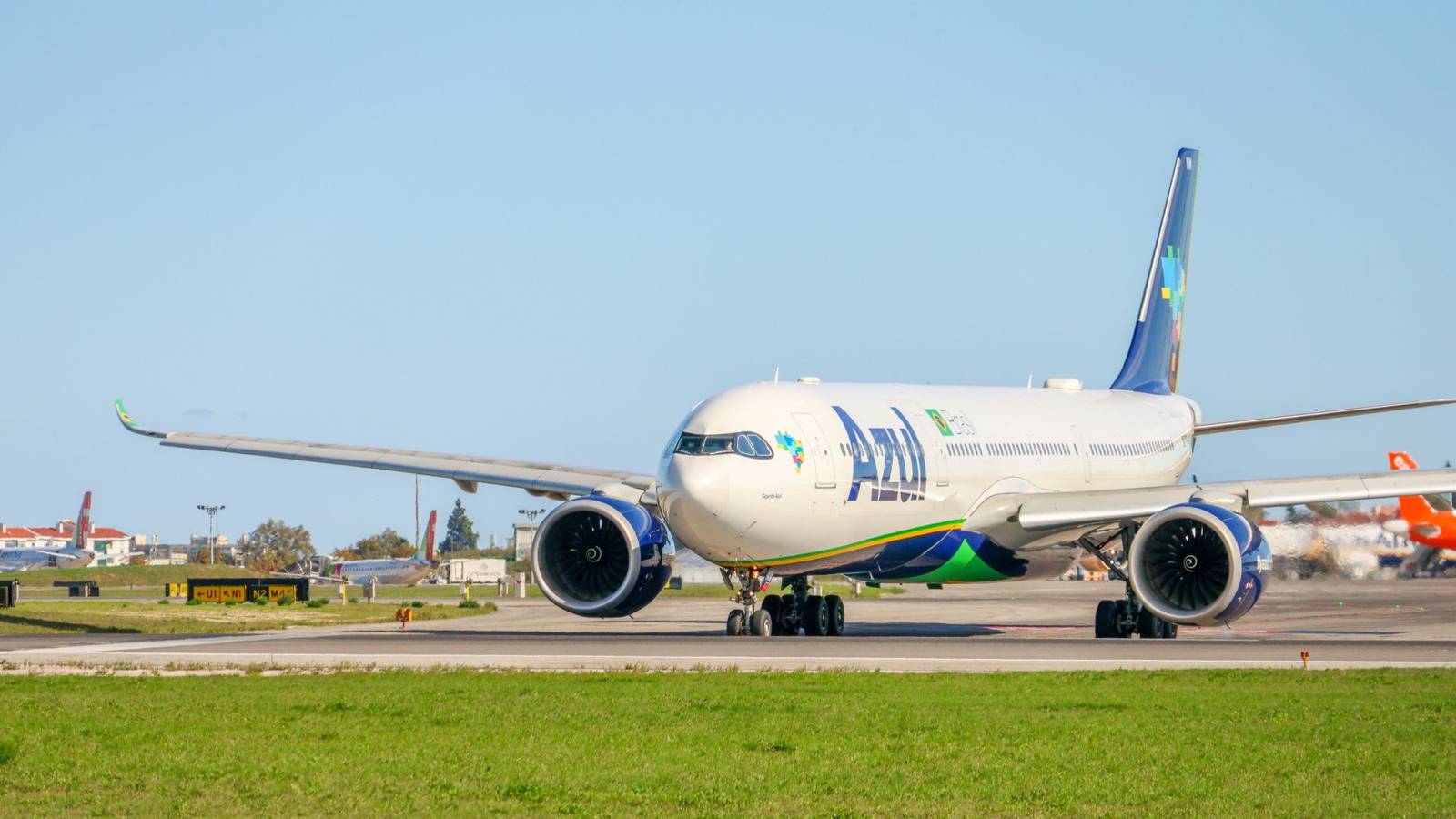
 United Airlines’ planned $100 million minority investment in Brazilian carrier Azul Linhas Aereas has hit an unexpected pause after Brazil’s antitrust regulator halted final approval of the deal, as reported by Brazilian Airlines news website. The decision was taken by CADE, Brazil’s Administrative Council for Economic Defense, in Brasília, weeks after the transaction initially appeared to be fully cleared. While the investment itself has not been rejected, regulators are now seeking deeper scrutiny into competitive impacts. The move introduces fresh uncertainty into a partnership United sees as strategically important for its Latin American growth.
The development represents an update to earlier optimism surrounding the deal, which had been widely reported as greenlit by the Brazilian authorities and previously covered by Simple Flying. United’s investment is part of a broader strategy to deepen commercial ties with Azul without pursuing a full merger or controlling stake. For Azul, the capital injection was expected to strengthen its balance sheet amid ongoing financial restructuring following bankruptcy proceedings. CADE’s pause does not undo previous approvals but signals that the review process is not yet complete.

CADE has formally suspended its final approval of United Airlines’ proposed investment in Azul, despite earlier indications that the transaction had cleared regulatory hurdles. The pause was initiated after one of CADE’s internal bodies requested that the case be reviewed by the agency’s tribunal, following a third-party consumer organization’s (Institute for Research and Studies of Society and Consumption — IPC Consumo) request to intervene in the process. This effectively elevates the deal to a higher level of scrutiny, delaying its completion. Until all parties reach a decision, United cannot finalize the investment.
The suspension creates uncertainty about the timing of United’s entry as a strategic minority investor in Azul. While the deal does not involve management control or board dominance, regulators seem eager to reconsider whether the partnership could impact competition on key Brazil– US routes. Both airlines already cooperate commercially, and CADE may be assessing whether deeper financial ties could strengthen United’s influence in the Brazilian market. For now, the transaction remains in regulatory limbo until the final deadline rather than being canceled outright.
Simple Flying translated what Gustavo Augusto Freitas de Lima, President of CADE, said to CNN Brasil, regarding the news:
“In view of this, (…) I grant an unextendable 15-day period from the publication of this order for the applicant (IPC Consumo) to present the documents and reports necessary to substantiate its claims (…) If the documentation is not submitted within the deadline, the request will be summarily rejected.”
Why CADE Is Reconsidering And What It Means For The Deal

CADE’s move reflects Brazil’s increasingly cautious stance on airline partnerships that could reshape market dynamics. Although United’s stake in Azul is non-controlling (currently about 2%, with plans to increase to 8%), regulators are reportedly focused on the cumulative effect of equity investments combined with commercial cooperation. United already maintains a strong presence in Brazil through its own services and partnerships. This review allows CADE to examine whether the deal could indirectly limit competition or influence pricing.
But what’s the United’s strategic rationale behind this move? For United, the Azul investment is less about consolidation and more about network reach. Azul operates an extensive domestic network across Brazil, feeding traffic from secondary cities into international gateways. Strengthening ties with Azul would enhance United’s connectivity beyond major hubs like São Paulo and Rio de Janeiro. This mirrors United’s approach elsewhere in Latin America, where it has favored equity partnerships over outright acquisitions.
And what’s Azul’s current financial position? Azul has been navigating a complex financial environment marked by high debt, currency volatility, and elevated operating costs. The proposed $100 million investment from United was seen as a vote of confidence from a major global carrier. Beyond the cash injection, the partnership also carries symbolic weight, potentially reassuring other investors and creditors. Any prolonged delay could complicate Azul’s efforts to stabilize its finances and execute longer-term strategic plans.

No-Go In Brazil: GOL-Azul Merger Talks End, Codeshare Discontinued
Both airlines abandoned the plan to create Brazil’s largest airline.
The Bigger Picture

This revision is about broader regulatory trends. The pause comes amid heightened global regulatory scrutiny of airline partnerships, particularly those involving cross-border equity stakes. Authorities worldwide have become more sensitive to alliances that stop short of mergers but still deepen coordination. In Brazil, CADE has historically taken a firm line on aviation competition, especially on lucrative international routes. The tribunal review aligns with this broader regulatory philosophy rather than signaling opposition to the deal itself.
What happens next? After receiving documentation from IPC Consumo within 15 days, CADE’s tribunal will evaluate the transaction and decide whether conditions, remedies, or full approval are needed. This process isn’t on a set timeline, so delays could last for months. United and Azul might be asked to provide more data or agree to behavioral commitments to address competition concerns. Until a final decision is made, both airlines must keep operating under their current arrangements.
Despite the setback, neither United nor Azul has indicated an intention to abandon the deal. The pause highlights the delicate balance regulators must strike between encouraging foreign investment and preserving competitive markets. For United, Latin America remains a key growth region, and Azul remains a strategically attractive partner. The outcome of CADE’s final review will determine whether this partnership can move forward as planned or emerge in a modified form.
About the Author