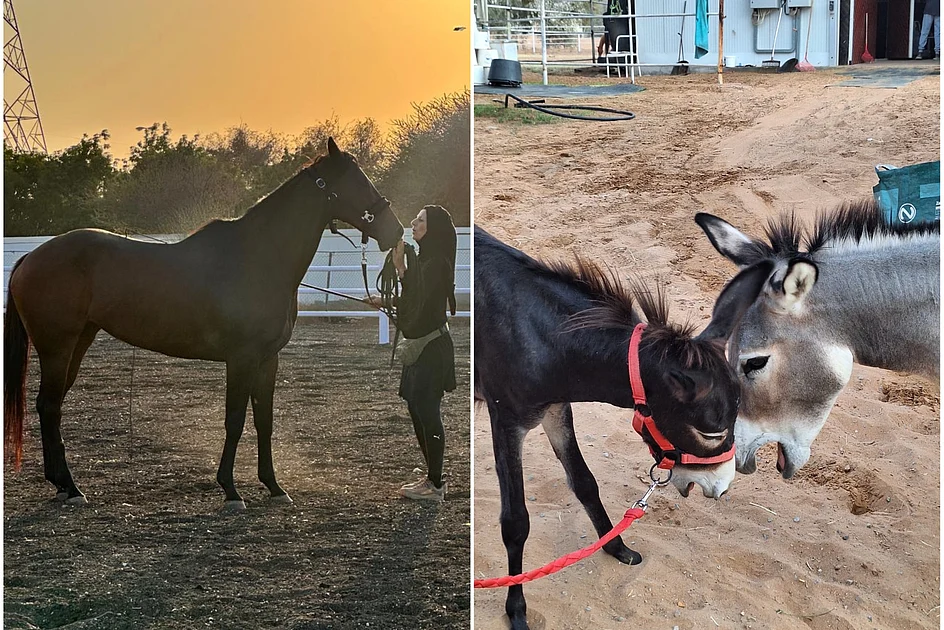
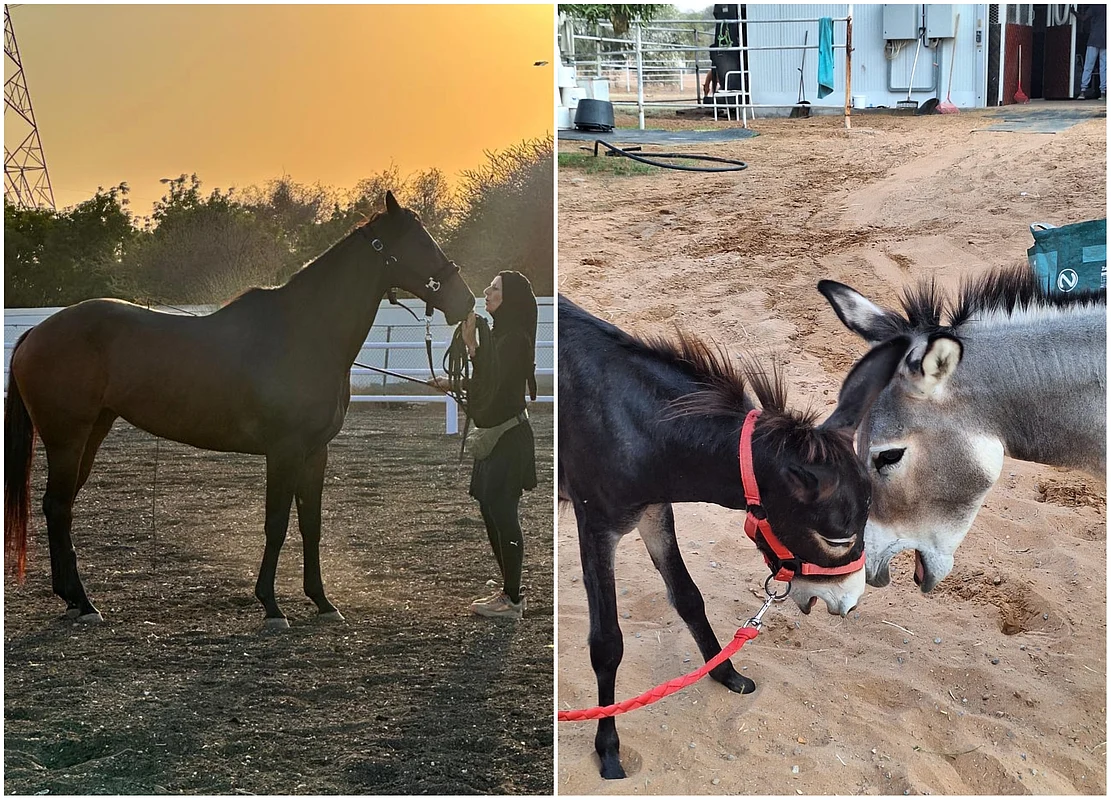
Tucked away in Ras Al Khaimah, a small equine sanctuary is offering abandoned and retired horses and donkeys something many never experienced before: time, space, and care without expectation. At ‘Ride to Rescue’, animals that can no longer work due to age, injury, or past abuse are not pushed to perform, but allowed to recover, roam, and live on their own terms.
Alongside rehabilitation, the shelter offers visitors a chance to spend time with the animals in a quiet, controlled way. Rather than riding or training, experiences focus on gentle companionship, from walking alongside the horses to guided hikes in the surrounding landscape, giving the animals company without pressure or demands.

Yasmin Syed, who runs the sanctuary, said this interaction is just as important for the horses as it is for people. “These animals spent their whole lives being used,” she said. “Here, the relationship changes. They are not expected to give anything back, but they still enjoy connection, calm energy, and presence.”
Stay up to date with the latest news. Follow KT on WhatsApp Channels.
Yasmin has lived in the UAE for more than two decades, arriving in 2004 and working across several emirates before settling in Ras Al Khaimah. Her early years were spent in Dubai, where she worked as an endurance rider for nearly a decade before injuries forced her to step away from professional riding.
After a brief shift into fashion design, Syed returned to horses, not through competition, but through rescue.
“I didn’t plan to start a shelter,” she said. “It started with one horse.”
That horse had been abandoned by its owners after developing motor neurone disease, a severe neurological condition in horses comparable to multiple sclerosis in humans. Vets advised euthanasia, a common outcome for such cases, but Syed chose otherwise.
“He didn’t want pity,” she said. “He wanted someone to go through it with him.”
Against medical odds and without financial backing, she took the horse in. Support followed unexpectedly, from individuals offering small donations to feed suppliers contributing monthly assistance. The horse lived another 12 years and passed away only recently, in September.
“That was when people started trusting me,” Yasmin said. “They saw that the horse survived, that he had dignity.”
What began as a single rescue gradually evolved into Ride to Rescue, now home to around 30 horses and several donkeys. Some arrive elderly, others barely three years old. “There is no age for retirement,” Yasmin explained. “We get very young horses that are already broken physically or mentally. People overuse them early and don’t realise the damage.”
Unlike traditional stables, the sanctuary does not treat horses as assets or riding tools. Many are never ridden at all. “We respect the horse’s choice,” she said. “Some horses look perfect, but panic when they see a saddle. Others have long-term mobility issues, but when they see the bridle, their eyes light up, and they want to go.”
The shelter is not open to the public, and all visits are by appointment. Riding, when allowed, is limited and closely supervised.
“This is not a business or entertainment,” Yasmin said. “What comes to us stays with us. These horses are not for sale.” Most of the animals spend their days outdoors, moving freely between large paddocks rather than being confined to stalls. The approach prioritises mental wellbeing alongside physical recovery.
“In most places, horses live a box life,” Yasmin said. “Here, they walk, they rest under trees, they go to the mountains. We try to give them an authentic horse life.” The sanctuary is also home to several donkeys, including one local favourite who appeared on his own and never left.
“He comes exactly at feeding time and disappears again,” Yasmin said “We call him Don Romano.”
For Yasmin, public support is about understanding the responsibility that comes with animal ownership.
“These animals didn’t choose this life,” she said. “Supporting places like this means taking responsibility even after the work is over.”
The sanctuary relies entirely on public support to sustain daily operations, including feed, veterinary care, and maintenance. Guided walks and hikes with the horses and donkeys help cover these ongoing costs, allowing visitors to support the animals through calm, structured interaction rather than performance or display. Yasmin said this model ensures care remains focused on the animals’ wellbeing while giving the public a responsible way to contribute.

Waad Barakat
Staff Writer


Waad Barakat is a Special Correspondent covering security topics, from law enforcement to local courts. With a keen eye for human interest stories, she hopes to blend it all with unique Gen Z-inspired content.
About the Author