This is the Feb. 9, 2026, edition of “The Tea, Spilled by Morning Joe” newsletter. Subscribe hereto get it delivered straight to your inbox every Monday through Friday.
Bad Bunny’s Super Bowl performance was a jolt of Latino pride coursing through a country whose greatest strength, as Ronald Reagan once said, is its immigrants.
At the start of his electrifying show, Bad Bunny quietly handed his Grammy to a young Hispanic boy. It was a small gesture that spoke volumes.
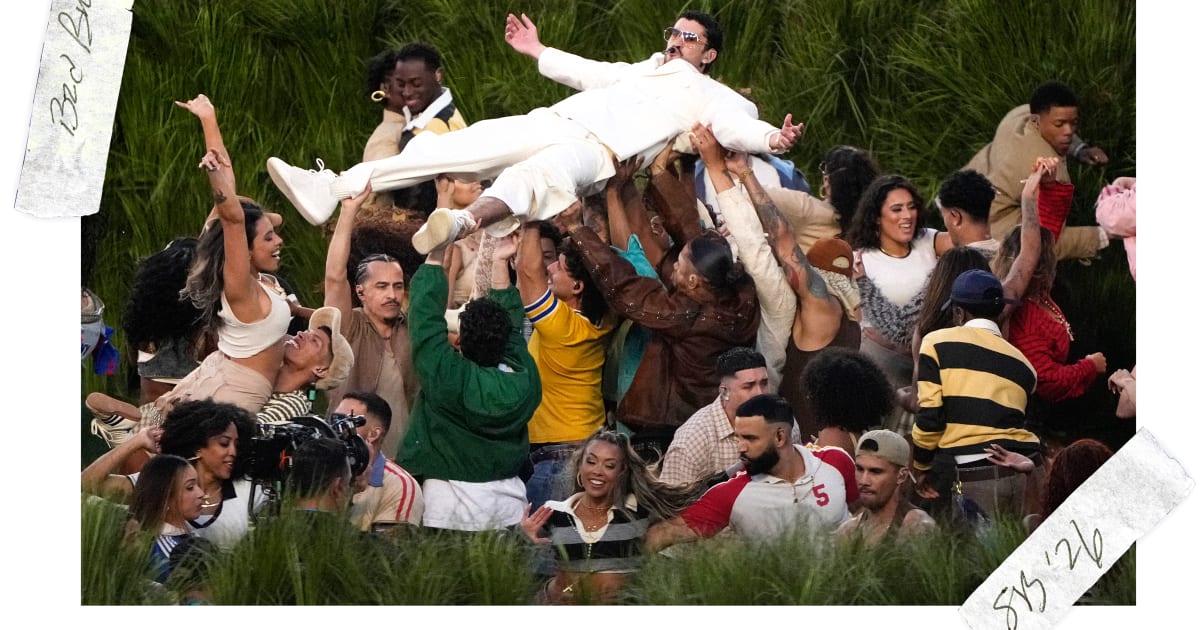
Then came the explosion of vivid colors and cultural references — a celebration of Latino American life. Families dancing together, generations working side by side, communities building their own American dream.
Unlike the hyperchoreographed spectacle of a J.Lo show, this was an authentic snapshot of people rejoicing in who they are — children and seniors alike filling the stage with joy, energy, and love.
The performance was a testament to the diverse spirit of the Americas, stretching from Canada’s Arctic Circle to the tip of Chile.
More than 130 million viewers saw the vastness and depth of Latino culture choreographed in a big, brilliant, romantic way.
Elsewhere, the contrast could not have been sharper.
An alternative Super Bowl halftime show featured performers like Kid Rock lip-synching trite, audience-specific lyrics for a preening crowd. The event was organized by self-righteous elites who chose a performer whose career has included songs glorifying the exploitation of girls and women — even lyrics celebrating his fondness for underage girls.
Lines that read as if they were torn straight from the pages of the Epstein files.
Back on the main stage, Bad Bunny offered something entirely different — a cultural marker in the age of Trump that transcended language and politics.
“The only thing more powerful than hate is love.”
In his closing moments, Bad Bunny looked straight into the camera and said he reached this stage by never losing faith.
Believe. Believe. Believe.
And you can get here, too.
“This is the Epstein class ruling our country. They are the elites they pretend to hate.”
— Sen. Jon Ossoff, D-Ga., campaigning for re-election in Atlanta on Saturday


BAD DAY FOR THE PATRIOTS

It was a rough day at the office for the Patriots’ QB, Drake Maye. The 2nd year standout felt the crush of Seattle’s pass rush. The Seahawks won Super Bowl LX 29-13.
A CONVERSATION ABOUT BAD BUNNY
The Super Bowl halftime show drew more than 130 million viewers — and a predictable outcry from the MAGA right. David Drucker, John Heilemann, Jonathan Lemire, Katty Kay, and Al Sharpton joined us to discuss the performance, the backlash, and what the moment revealed about America on its biggest stage.
JS: A lot of the criticism of the halftime show was framed as moral outrage. Rev. Al, what do you make of the reaction we’re seeing?
AS: You have people who want to look the other way and turn the page on their own behavior while holding everyone else to a moral standard. That alone tells you a lot.
There was a prayer breakfast last week— traditionally bipartisan, meant to bring people together — and the president used it to attack his enemies. Then later that same day, there was a video depicting former President Obama and former first lady Michelle Obama as apes. And after all that, they wonder why people don’t take their pretensions of moral authority seriously. Look at how they behave.
JS: On the performance itself, David Drucker, what did you think?
DD: I don’t get offended very easily. I don’t own any of Bad Bunny’s music — I know I’m not the target demographic — but I watched it and thought it was a good show. It was entertaining.
JS: Critics said it wasn’t “American.” How did it look to you?
DD: I grew up in Los Angeles, and this felt very American to me. In major cities across the country, people speak all sorts of languages. That’s just how America works.
JS: From the NFL’s perspective, why did this choice make sense?
DD: The NFL has decided its growth market is international. Next year they’re scheduled to have nine regular-season games overseas — Australia, Brazil, Mexico City. The NFL is looking to grow its business, and this fits.
JS: John Heilemann, what did this moment signal to Hispanic Americans?
JH: For Hispanics, who’ve long been treated as the “other,” this had to be an extraordinary night — one of the most powerful institutions in America recognizing that we are Americans. And the NFL is so big that it simply doesn’t care what Donald Trump or the MAGA right tweets.
JS: Was Bad Bunny actually a risky choice for the league?
Recommended
JH: No. The NFL followed the data. This is the most streamed artist in the world, on the biggest stage anywhere. That’s not bold — that’s smart.
JS: Jonathan Lemire, how political was this performance, and in what way?
JL: Only subtly — in its inclusiveness. It was a love letter to Puerto Rico and to all the Americas. And in this moment, that message of unity over division is something a lot of Americans wanted.
JS: Katty Kay, what stood out to you?
KK: The politics was the joy. People expected something confrontational, but instead it was a celebration of heritage and love. The final message — that the only thing more powerful than hate is love — made it very hard to be offended.
JS: John, what’s the takeaway?
JH: Whatever you think of the music, this was one of the most exquisitely produced halftime shows ever. And it shut up the critics in every possible way.
This conversation has been condensed and edited for brevity and clarity.
OLYMPIANS SPEAK OUT
American athletes have long carried domestic politics onto the international stage. From Tommie Smith and John Carlos’ Black Power salute at the 1968 Mexico City Games to the U.S. women’s soccer team kneeling in 2021, the Olympics have often reflected the country’s political tensions back to the world.
That tradition resurfaced almost immediately at the Milan-Cortina Winter Games. Asked about representing Team USA during the Trump administration’s immigration crackdown, freestyle skier Hunter Hess said he had “mixed emotions,” adding that there was “a lot going on” he wasn’t a fan of.
Donald Trump responded angrily on Truth Social, calling Hess “a real Loser” and saying he never should have made the team. Rep. Byron Donalds, Megyn Kelly, and Jake Paul quickly joined the criticism.
Other American athletes echoed those concerns. Teammate Chris Lillis said he feels “heartbroken about what’s happened in the United States,” while figure skater Amber Glenn said the LGBTQ community has struggled during the Trump administration — a reminder that sports and politics have never been as separate as critics insist.
EXTRA HOT TEA

Prediction market companies Kalshi and Polymarket — platforms that allow you to bet on, oh, anything and everything — may have been banned from advertising at Super Bowl LX, but they got eyeballs and bets rolling anyway. Here’s how last night played out in wager world:
$500M (Kalshi) and $55M (Polymarket) on the outcome of the Super Bowl
$397M on which player would get the most fantasy points (Seattle Seahawks kicker Jason Myers surpassed Patriots quarterback Drake Maye for the final time just past 8:45 p.m. ET)
$1.5M on how long the halftime show would last.
$113.5M on Bad Bunny’s opener (“Tití Me Preguntó”)
One person with a Polymarket account created the day before the game got every single bet on celebrity appearances — even unannounced guests like Lady Gaga and Ricky Martin — on the halftime show, strengthening claims that prediction market companies encourage insider trading.
ONE MORE SHOT

While East Coast residents endured subzero temperatures, Canadians asked “What’s that aboot?” as they celebrated the Quebec Winter Carnival in Quebec City, Canada. Here, a hearty soul smiles after jumping into the snow for a “snow bath.”
ON THE RADAR
In the coming days, actors Halle Berry and Chris Hemsworth will join us to discuss their new film “Crime 101.”
Stay tuned for more!
CATCH UP ON MORNING JOE


Mika Brzezinski is the co-host of MS NOW’s Morning Joe, founder of “Know Your Value” and author of four best-selling books, including “EARN IT!: Know Your Value and Grow Your Career, in Your 20s and Beyond” (Hachette Books; May 7, 2019) with co-author Daniela Pierre-Bravo. Prior to joining MSNBC in 2007, Mika was an anchor of CBS Evening News Weekend Edition and a CBS News correspondent who frequently contributed to CBS Sunday Morning and 60 Minutes.
About the Author