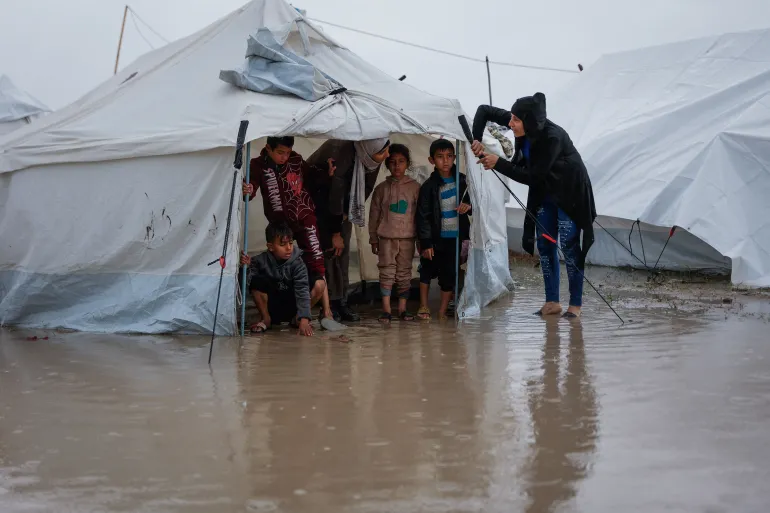
As the first rains approach, the residents of the Gaza Strip don’t prepare for winter as other countries usually do. Here, the rain doesn’t bring the scent of new beginnings; instead, it reopens wounds that haven’t healed, an early warning of the return of suffering that recurs every year. The rain mingles with images of demolished homes, flooded tents, and children shivering from the cold.
In the streets of Gaza, residents inspect cracked roofs, while displaced people haul back whatever scraps of fabric and plastic they can find to keep out the water they know will seep in no matter what they do. Years of siege and repeated wars have crippled the infrastructure, turning winter into a perpetual state of emergency.
“Sometimes we fear the rain more than the bombing,” says Muhannad Aslim. “The bombing ends, but the rain brings us back to the same fear every night: Will the tent flood? Will the children get cold? Will we lose what little we have left?”
He adds that simply hearing news of an approaching storm is enough to reignite his anxiety: “I’m always looking for a way to prevent the tent from flooding, but all my attempts fail. I follow the weather forecasts daily, as if I’m anticipating another disaster.”
This fear, as many residents describe it, is not an individual feeling, but a collective memory forged through harsh experiences: floods that swept through the camps, sewage overflowing into the alleyways, and tents collapsing on their inhabitants. With each winter, the feeling of helplessness returns, a sense of being unable to access even the most basic human rights: warmth and safety.
Fadwa Rayyan, a displaced woman living in a tent, says, “The arrival of any storm turns my life into a constant state of anxiety: I can’t protect my children from getting sick. There are no options, no way to cope with the cold. This helplessness accompanies me throughout the winter and affects my relationships with everyone around me.”
She points out that her fear isn’t just based on her own experience, but also on the stories she hears from other displaced people during storms: tents blown away, others flooded, and people losing their lives due to the bitter cold.
About the Author