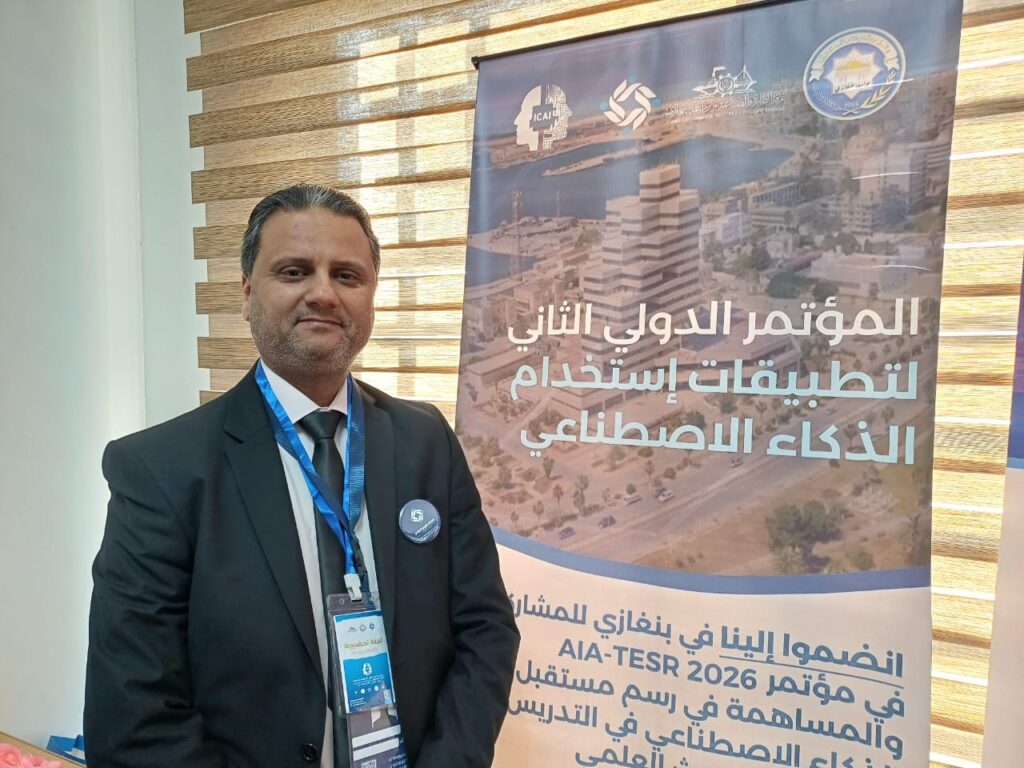
Benghazi – The Second International Conference on Artificial Intelligence Applications issued recommendations. The conference concluded yesterday evening. It was held at Benghazi University. The event partnered with Libyan and international coalitions. Recommendations emphasized integrating AI into education, training, and scientific research. They also stressed developing digital skills for faculty and trainers. This will improve learning quality. It will also enhance academic performance.
The recommendations urged designing sustainable training programs. These programs would build the capacity of teachers and faculty. They would teach effective use of smart applications. Ethical and professional frameworks must be followed. Multidisciplinary applied research was also encouraged. This research aims to develop teaching methods. It will also analyze educational data. Research performance should also improve.
The conference also affirmed the need for legal and ethical frameworks. These frameworks will ensure responsible AI use. They will protect privacy and intellectual property. Academic integrity will also be promoted. Smart tools should be used for assessment. They can analyze performance. They can also provide immediate feedback. This supports continuous learning.
Ahmed Naseeb Al-Obeidi spoke about the conference. He is Deputy Head of the Preparatory Committee. He also chairs the Recommendations Committee. He said the conference stressed strengthening institutional and international partnerships. These partnerships should involve universities, research centers, and training institutions. Technology companies are also included. The goal is to exchange expertise. They will also develop innovative solutions in educational AI. Innovation and entrepreneurial projects will be stimulated.
Al-Obeidi told Libyan News Agency that the conference is a crucial step. It moves towards developing an advanced digital learning environment. It also raises academic and scientific performance levels. He emphasized the importance of holding continuous conferences. Seminars and training courses are also vital. This will keep pace with rapid AI developments.
The conference served as a platform for expertise exchange. It also aimed to integrate modern technologies responsibly. This includes ethical integration into Libya’s education, training, and scientific research systems.
About the Author