

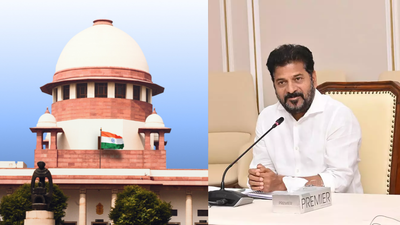
HYDERABAD: In a setback to the Telangana govt, the Supreme Court on Thursday declined to interfere in an interim order of the Telangana high court staying a GO that enhanced reservations for backward classes from 25% to 42% in the local body elections, taking the total reservations to 67%. The division bench of Justices Vikram Nath and Sandeep Mehta, while dismissing a Special Leave Petition (SLP) filed by the Telangana govt challenging the high court’s interim order, also clarified that the State Election Commission can proceed with the existing reservations (phttps://worldhorizonsx.com/wp-content/uploads/2024/06/woman-traveling-in-france-2023-11-27-05-16-47-utc_Easy-Resize.com_-1.jpgr to the issuance of the GO). The bench also noted that the Telangana High Court should decide the main matter on merits without being influenced by their observations while dismissing the SLP.During the hearing, the bench asked the state why it could not have gone ahead with increasing reservations ahead of issuing the notification. “If they (state) are increasing reservations here (to BCs), they have to reduce for other categories,” observed the bench.Appearing for the Telangana state govt, senior counsel Abhishek Manu Singhvi responded that they waited for the Governor’s consent and emphasised that the decision to increase reservations for the BCs was a result of a unanimous resolution passed by the state assembly.“Never such unanimity can be seen in today’s politics. But in the high court, we were heard without pleadings and orders were passed due to which the state is heavily aggrieved,” he said and sought urgent consideration of the matter.Meanwhile, the counsels appearing for the petitioners before the high court informed the apex court how the decision to increase reservations violated the Supreme Court’s laid down triple test formula.The Telangana high court on October 9 ordered an interim stay on the order increasing reservations and directed the state to file a counter and two weeks thereafter for the petitioners to file their responses. After the high court’s interim order, the State Election Commission put on hold the election process for the local bodies.
About the Author


