Port Sudan
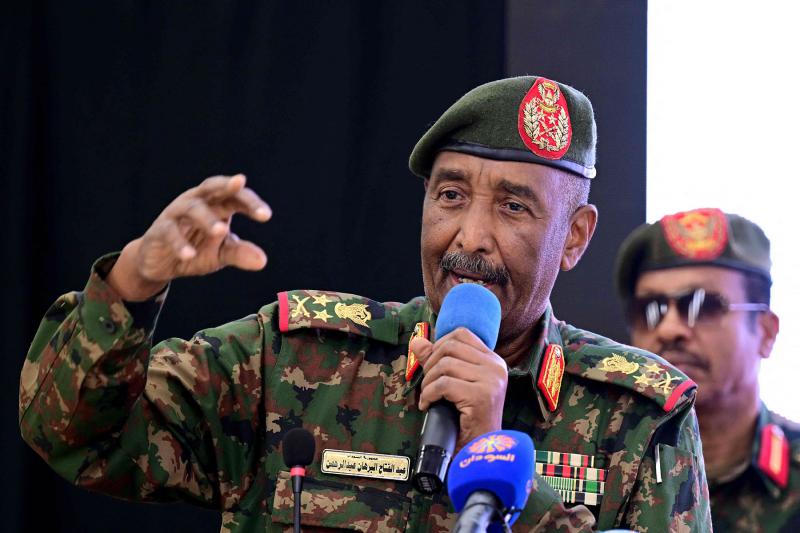
Sudan’s army-aligned government pushed back against a new peace proposal put forward by four influential foreign powers, rejecting any suggestion that it be excluded from the country’s post-war political transition, as suggested by the foreign powers.
On Friday, the United States, Saudi Arabia, the United Arab Emirates and Egypt jointly called for a humanitarian truce in Sudan’s more than two-year war, followed by a permanent ceasefire and a transition toward civilian rule, but suggested that no warring party should be part of that transition.
Responding in a statement from the foreign ministry, Khartoum said it welcomed efforts to end the war, but would not accept “interventions that do not respect the sovereignty of the Sudanese state and its legitimate institutions, which are supported by the Sudanese people, and its right to defend its people and its land”.
Sudan’s institutions are currently under the control of the army, which has been at war with the paramilitary Rapid Support Forces (RSF) since April 2023.
In May, the army formed a new civilian-led government “to complete the tasks of transition” and “cleanse all of Sudan” of the RSF.
In its statement, the foreign ministry said “the Sudanese people alone have the right to determine how they are governed through national consensus”, as led by the transitional government.
The plan put forward by the four foreign powers, often referred to as the Quad, had proposed a three-month humanitarian truce, followed by a permanent ceasefire and a nine-month transition toward a civilian-led government. It implicitly rejected any role for the army in the transition.
“Sudan’s future governance is for the Sudanese people to decide through an inclusive and transparent transition process, not controlled by any warring party,” Friday’s Quad statement read.
The four foreign powers also rejected any role in Sudan’s transition for “violent extremist groups” linked to the Muslim Brotherhood, which ruled until 2019 and has reemerged during the conflict in support of the army.
The army has so far forged alliances with Islamic militants on its war on the RSF.
That same day, the US imposed sanctions on Sudan’s finance minister Gebreil Ibrahim, who leads an armed group fighting alongside the army in Darfur. Sanctions were also placed on the Baraa Ibn Malik Brigade, an armed Islamist militia likewise engaged in combat in support of the army.
In response, Ibrahim’s Justice and Equality Movement (JEM) dismissed the sanctions on Saturday as “of no real value and represent an unjust action lacking legal foundation or objective justification”.
The conflict in Sudan has killed tens of thousands, displaced millions and created what the United Nations has called one of the world’s worst humanitarian crises.
Despite repeated international efforts to broker a ceasefire, both sides have shown little willingness to compromise.
The army currently controls Sudan’s east, north and centre, while the RSF holds parts of the south and nearly all of the western Darfur region, where it recently declared a parallel government, fuelling fears of the country’s fragmentation.
About the Author