
For the first time in five months since declaring Khartoum “liberated” and launching a frenetic campaign to repopulate the capital and restore the government’s seat there, the Rapid Support Forces (RSF) struck Khartoum with drones last week, killing both civilians and soldiers.
Claiming responsibility for the attack, the RSF-led Tasis coalition — which heads the parallel government in western Sudan — described it as a “justified response” to the military’s airstrikes in Darfur earlier this month, which killed dozens of civilians and fighters.
As renewed threats return to central Sudan, fighting expanded to new fronts in Kordofan. The city of Abu Gubeiha, the third largest in South Kordofan, was targeted by RSF drones for the first time since the war began.
The RSF’s ally, the Sudan People’s Liberation Movement-North (SPLM-N) led by Abdel Aziz al-Hilu — who serves as deputy head of the parallel government’s presidential council — has redeployed its fighters from Fasher to South Kordofan. A former military source in the movement told Mada Masr that Hilu is seeking to consolidate control over new territories in the state.
The SPLM-N has been laying a joint siege with the RSF on South Kordofan’s Kadugli and Dalang since late 2023, with their military alliance growing stronger after the announcement of the parallel administration in Nairobi earlier this year.
The two besieged cities are suffering a severe humanitarian crisis, worsened by the two allies’ closure of the road between them since June and by contentious military aid-distribution policies that have fueled protests in recent months.
In Darfur, the RSF’s siege of Fasher has forced the shutdown of all charity kitchens after food supplies completely ran out early last week. The city’s displacement camps face similarly dire conditions, with residents saying that families attempting to flee or smuggle food are being captured and returned, with young men held for ransom or killed.
As new fronts continue to emerge in the third year of the war, Transitional Sovereignty Council Chair Abdel Fattah al-Burhan traveled to Cairo on Wednesday for talks with President Abdel Fattah al-Sisi on the US-led Quad’s roadmap to end the war. Khartoum initially met the plan with staunch rejection, but now appears to be softening its public stance under mounting international pressure. Both presidents stressed the Quad’s importance as a platform for advancing a settlement to the crisis.
Domestically, divisions within the TSC persist over the final step in forming transitional state institutions — the establishment of the Transitional Legislative Council. Meanwhile, mounting tensions between the Central Bank of Sudan and the Finance Ministry over gold trade policies — which created a state monopoly that sources warn is repeating past mistakes — culminated in the dismissal of the CBS governor after a heated meeting with Prime Minister Kamel Idris over sector complaints.
Sign up here for the Lens on Sudan newsletter to stay up to date on all things Sudan.
Burhan holds talks with Sisi over Quad roadmap, GERD
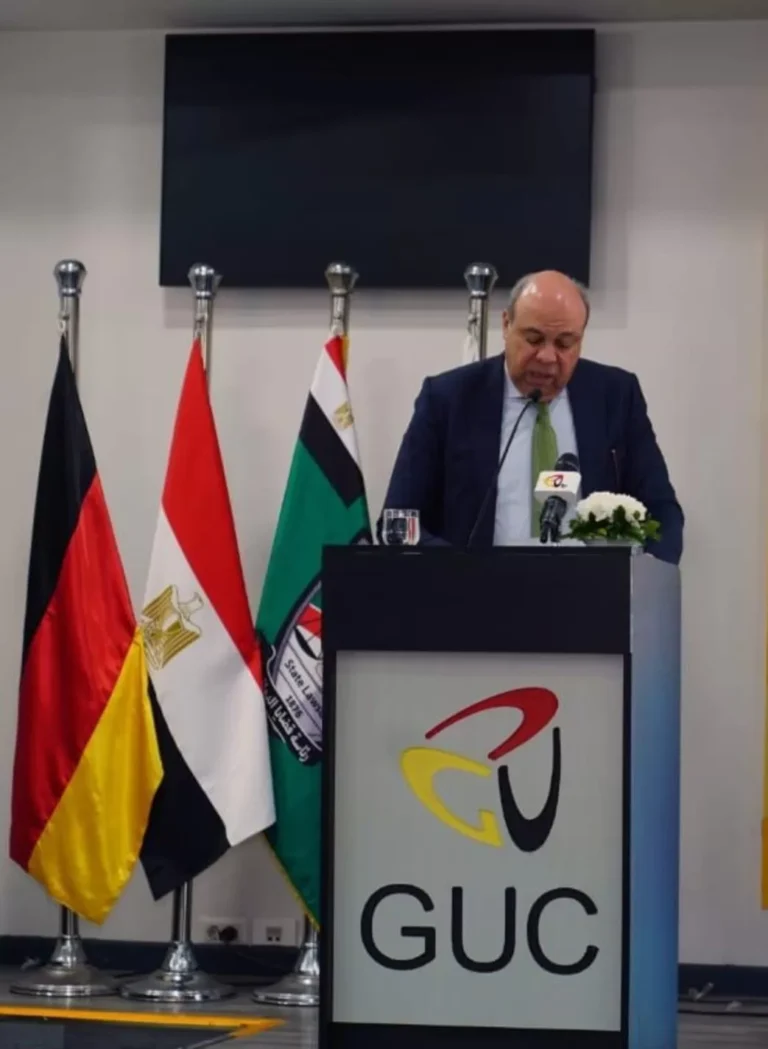
Transitional Sovereignty Council (TSC) Chair Abdel Fattah al-Burhan held official talks on Wednesday with President Abdel Fattah al-Sisi at the Ettehadiya Presidential Palace in Cairo.
The discussions covered the US-led Quad group’s roadmap for ending the war, marking Khartoum’s most positive engagement in a political settlement since the signing of the Jeddah Declaration in May 2023.
According to the Egyptian presidency’s spokesperson, the talks highlighted the importance of the Quad as a platform to advance a settlement to the crisis, end the war and restore stability. Both presidents expressed hope that the upcoming Quad meeting scheduled to be held in Washington later this month would yield tangible results.
In mid-September, the US-led diplomacy track on Sudan — which includes Egypt, Saudi Arabia and the United Arab Emirates, Sudan’s adversary in international courts — presented a yearlong roadmap to end the war and establish a transitional government. Khartoum initially rejected the plan outright but has since softened its stance.
According to a TSC source, Burhan traveled to Cairo carrying two key files related to the Quad. The first concerned the need to lift the siege on the cities of Fasher, Kadugli and Dalang, and the second pertained to halting Emirati support for the RSF.
A source in the Sudanese Foreign Ministry told Mada Masr in late September that the government would hold consultations with international partners in October to discuss its own proposed roadmap to end the war.
During the talks, Sisi emphasized Cairo’s full support for Sudan’s unity, sovereignty and territorial integrity, reiterating his country’s categorical rejection of any attempts that could undermine Sudan’s national cohesion or create parallel governance structures to its legitimate government, the spokesperson’s statement read.
Burhan’s one-day visit to Cairo was accompanied by Foreign Minister Mohie Eddin Salem and Intelligence Chief Ahmed Ibrahim Mufaddal. The meeting with Sisi was attended by Egyptian Foreign Minister Badr Abdel Atty and Egyptian Intelligence Chief Hassan Rashad.
Burhan and Sisi also reaffirmed their position on the Grand Ethiopian Renaissance Dam (GERD), stressing full coordination between Cairo and Khartoum on measures both countries should take in response to Ethiopia’s unilateral actions. Burhan described Addis Ababa’s handling of the dam as a violation of both countries’ rights to Nile waters, pledging continued efforts to overcome the current impasse, according to a second TSC source familiar with the visit.
In late September, floods exacerbated by Ethiopia’s upstream releases from the GERD swept through six Sudanese states, destroying hundreds of homes and farms. Seeking to avoid a diplomatic confrontation with Addis Ababa, Khartoum chose to downplay the crisis, while Cairo engaged in a war of words with Ethiopia, meanwhile seeking to deflect responsibility for the devastation that struck its own governorates.
***
After months of halted battles in Khartoum, RSF drones strike the capital

House in the Ad Babiker area, east of Khartoum, bombed by a RSF drone, 14 October. Courtesy of SudanTrends – X

Months into a campaign to recast Khartoum as safe and securely under military control — urging citizens to go back and straining state finances to project a return to normalcy and restore the government in Port Sudan to its seat in the capital — RSF drones struck Khartoum, killing both civilians and soldiers.
Eyewitnesses told Mada Masr that, on Monday, suicide drones hit a house in the East Nile locality, killing two people. A military source said the apparent target was Abu Agla Keikal, the commander of the military-allied Sudan Shield Forces, who frequented the area.
In the early hours of Wednesday, Khartoum came under another wave of attacks, as suicide drones struck several military locations in Omdurman and Bahri.
RSF drone targets Ad Babiker area, east of Kahar, 14 October. Courtesy of @blackboy, X
According to the military source, more than 20 RSF drones took part in the assault. Military air defenses managed to shoot down some of them, while others hit their targets, causing several casualties among soldiers. The source said the drones targeted the Sarkab and Khaled ibn al-Walid camps in northern Omdurman, as well as sites near the Jaili Oil Refinery in the far north of Bahri.
The RSF-led Tasis coalition, which heads the parallel government in western Sudan, claimed responsibility for the attacks, saying they struck “highly significant” military sites, including training bases and weapons depots in Kararim northern Omdurman and Kadro in Bahri.
In a statement on Wednesday, Tasis described the drone strikes as a “justified response” to the targeting of civilians by “Islamists and terrorist militias” in several parts of Darfur — including Nyala, Bolbol, and Timbisko in South Darfur, as well as the Zurug area in North Darfur.
A wide-scale aerial campaign by the military in early October killed over 80 civilians west of Nyala, according to Tasis, while dozens more were killed in Zurug, an RSF field source told Mada Masr at the time.
Military airstrikes resumed last week in Nyala. A former government official in the city told Mada Masr that on Wednesday morning, the military launched heavy bombardment on RSF positions to target the Kashlango training camp and the military police headquarters, killing and wounding several soldiers.
A senior military officer told Mada Masr in early October that the return of airstrikes in RSF-controlled territories serves to make the notion of safe, fortified areas suitable to host a parallel government untenable.
***
Abu Gubeiha targeted for 1st time amid anticipated escalation in South Kordofan

A RSF convoy bombed Abu Gubeiha, 13 October, 2025. Courtesy of Daily Sudan Post
For the first time since the outbreak of war, the city of Abu Gubeiha — the third-largest city in South Kordofan — has come under attack, placing it on the front line of fighting between the military and the RSF and its ally, the Sudan People’s Liberation Movement-North, led by Abdel Aziz al-Hilu.
Located in an area under military control, Abu Gubeiha came under RSF drone strikes on October 11, targeting military positions in and around the city. The attack killed and wounded 23 soldiers, a source in the military’s 10th Infantry Division told Mada Masr.
Reinforcements have since arrived in the city, including units from the armed movements’ joint force and troops from the Sayyad mobile unit, a field source told Mada Masr.
The drone attack began at around 8 pm, striking military sites in the eastern part of the city, according to three residents who spoke to Mada Masr. The military responded with anti-aircraft fire, but the drones managed to drop their bombs, triggering powerful explosions heard across Abu Gubeiha for the first time.
Residents described a night of panic, fearing that the RSF would attempt to storm the city. By the following morning, calm had returned.
But an intelligence source warned that the RSF and SPLM-N attacks on South Kordofan’s cities are likely to escalate, particularly after SPLM-N fighters deployed to the Fasher front have now been summoned back to the state.
Earlier this year, Hilu joined the RSF-led Tasis, the coalition founded by the paramilitary group in Nairobi, which now leads the parallel government in western Sudan. RSF commander Mohamed Hamdan “Hemedti” Dagalo appointed Hilu as deputy chair of the administration’s Presidential Council, a position he formally assumed after being sworn in before Hemedti in Nyala in September.
A second intelligence source told Mada Masr that the Hilu-Hemedti alliance is not merely political but also military. SPLM-N forces have participated in military operations around Fasher, while RSF units continue to maintain a dual siege with the group on Dalang and Kadugli in South Kordofan, coordinating closely in joint operations aimed at capturing both cities.
For the RSF, the siege aims to weaken military garrisons within the cities, cut off supplies and secure strategic ground in Kordofan to expand influence, according to a retired SPLM-N colonel now based in military-held areas in South Kordofan. The SPLM-N (al-Hilu), on the other hand, seeks to exploit the vacuum brought about by the war to consolidate control over new territories as part of its broader strategy to take over the Nuba Mountains, the colonel added.
Now, the military is attempting to assert control over South Kordofan, deploying reinforcements from White Nile and North Kordofan — the latter one of the war’s main battlegrounds as the military is pushing toward Darfur to lift the siege on Fasher.
According to a member of the Sudanese Development Call Organization’s (Nidaa) South Kordofan initiative, the two cities hold immense strategic value on demographic, economic and military levels, making them key targets in Sudan’s ongoing war.
While Kadugli, South Kordofan’s capital, and Dalang, its second-largest city, are ethnically and socially diverse, they are home to a majority population from the Nuba Mountains, the source said.
Dalang’s proximity to the Habila Agricultural Project — one of Sudan’s largest mechanized rain-fed farms producing sorghum and sesame — gives it particular economic importance. A senior official in the South Kordofan State Secretariat described the city as a crucial commercial hub linking South Kordofan to North and West Kordofan.

RSF used Katyusha rockets and artillery to shell the city of Dalang, South Kordofan, October 16. Courtesy of East Kordofan News on X

Militarily, both Kadugli and Dalang host key garrisons, and the road connecting them serves as a vital route for troop and logistical supplies movement. Control over this route, the official said, would allow any warring party command over military, commercial and humanitarian access across much of the state.
That is why the military is working to bolster its capabilities in the state, they added, in preparation for major operations along the Dalang-Kadugli route once the rainy season ends in October.
Since the beginning of the year, the military has stepped up its efforts to break the siege on the two cities, a military source in North Kordofan told Mada Masr. The route was briefly reopened in February after heavy clashes with SPLM-N forces that culminated in lifting the siege on Dalang, albeit briefly, the source said.
In Dalang, the RSF encircles the north and east, while SPLM-N forces are besieging the west and south, concentrating in areas such as Karkul, Keiga and Dashoul along the road between the two cities.
A resident of the Keiga area told Mada Masr that the SPLM-N has imposed strict restrictions on civilian movement and banned the trade of key commodities such as sorghum and wheat, labeling them “strategic goods.” Meanwhile, the RSF continues to strike the city with drone fire and artillery shelling.
The blockade, which began in October 2023, has pushed both cities to the brink. Conditions deteriorated sharply by the end of June, when RSF and SPLM-N forces sealed the Kadugli-Dalang road, bringing supply chains to a complete halt.
A trader in Dalang’s market said the dual blockade has left both cities on the brink of famine amid severe shortages of basic goods. Prices for staple products have surged by up to 300 percent compared to pre-siege levels.
Three medical sources in Dalang confirmed rising cases of malnutrition and hunger-related deaths, particularly among children and newborns. One source told Mada Masr that, across South Kordofan, around 3,000 infants have died due to worsening health conditions since late 2023. Some families, they said, have resorted to eating wild grass to survive.
The siege and ongoing fighting have also forced large-scale displacement, with Dalang now overcrowded with people fleeing nearby villages. Many have taken refuge in schools converted into shelters, further straining already limited services.
Military policies in handling the crisis have further fueled widespread discontent. While Finance Minister Gibril Ibrahim announced in August an emergency plan to airdrop food and medicine in coordination with government bodies and United Nations agencies, a military source in Kadugli said the military has imposed strict controls on aid distribution, describing them as measures to ensure “fair allocation” and prevent supplies from reaching the RSF or being sold on the market.
Such restrictions have been coupled with a crackdown on those who protest them. In late July, women and girls in Kadugli took to the streets over the deteriorating living conditions, demanding that the military release food stored in its warehouses. The demonstrations were met with repression, and eight women were detained for at least two days, according to a report issued by Sudanese Women Rights Action last week. Most households in Kadugli are headed by women, “who are disproportionately affected by rising prices and limited access to food,” the group said.
***
RSF launches a series of attacks on Fasher, military retakes lost ground
Military and allied forces repelled RSF assaults in Fasher this week. Courtesy: Alhaj Abdalnasr Alhaj on Facebook
Military and allied forces in Fasher, North Darfur, repelled several RSF assaults launched this week, marking the heaviest fighting the city saw in weeks. Battles spread across open fronts within the city, as RSF artillery and drone fire continue to pound civilian neighborhoods.
On Friday, the military and the joint force repelled a major attack launched on the northern and northeastern axes, in a battle that lasted for four hours, a field source from the military-allied joint force of armed movements told Mada Masr.
According to the source, the RSF preceded its ground assault with heavy artillery shelling and drone strikes targeting both the military’s Sixth Infantry Division camp and the densely populated Daraga neighborhood, which shelters thousands of displaced people.
The RSF deployed infantry forces and over 50 combat vehicles for the attack, the Sixth Infantry Division command stated, adding that dozens of RSF fighters were killed and several vehicles destroyed or captured.
The Justice and Equality Movement (JEM), led by Gibril Ibrahim, announced the death of Gamal Eissawy, the movement’s member and deputy spokesperson for the joint force, who was killed during Friday’s battle. Eissawy was among the most prominent media figures within the joint force, known for documenting and reporting on the Fasher clashes.
RSF artillery shelling of civilian neighborhoods had been ongoing since Thursday, a military source told Mada Masr, the same day the military repelled a limited infiltration attempt.
The RSF also attacked the southern perimeter of the military Medical Corps headquarters on Wednesday, according to the source, who said the military repelled the assault, inflicting casualties among the attackers.
Earlier in the week, on Tuesday, the RSF claimed it shot down a strategic military drone over Fasher. But the Sixth Infantry Division later denied the claim, saying the footage released by the RSF was misleading. The downed drone actually belonged to the RSF and was hit by mistake, the military said, noting that the absence of identifying markings in the video disproved the RSF’s account.
The military’s allied forces recaptured lost ground elsewhere in North Darfur this week, with the Popular Defense Forces retaking the Abu Gamra area in the Kernoi locality on Friday, a field source in the forces told Mada Masr. The RSF had seized the area just three days earlier with support from forces loyal to Abu Bakr Hagar, a former member of the Transitional Sovereignty Council, now a leading figure in the RSF-led Tasis coalition.
***
‘Die if you stay, die if you leave’: Fasher’s charity kitchens close as residents risk death to escape hunger, shelling
All of Fasher’s charity kitchens shut down early last week as their food supplies ran out, three residents from across the city told Mada Masr.
Residents described a worsening food crisis in the besieged city and its surrounding displacement camps, as clashes and artillery bombardments continue to escalate.
Fasher has been under siege by the RSF for 17 months — a siege that has only worsened in recent weeks. In September, a resident told Mada Masr that the RSF dug three-meter-deep trenches cutting off roads to Malit, Tawila and Nyala. Around the city’s perimeter, sand barriers now stretch for over 68 kilometers, according to a UN report published later that month.
With charity kitchens shuttered in what has become the epicenter of Sudan’s humanitarian catastrophe, residents have to rely on markets where supplies are scarce and prices have long soared beyond reach.
Conditions in Fasher’s displacement camps are equally dire, with widespread hunger and collapsing basic services. Thousands of displaced people in the Zamzam, Abu Shouk and Nivasha camps face acute shortages of food, water and medical care.
Mohamed Khamis Doda, the spokesperson for the Zamzam camp, told Mada Masr that markets have nearly run out of food supplies amid ongoing RSF raids that continue to kill civilians and drive new waves of displacement.
Although some goods remain available in small quantities, most displaced families cannot afford them. A kilogram of rice or flour costs 500,000 Sudanese pounds (about US$150 at the parallel market rate). Millet and sorghum have disappeared entirely.
With famine looming over Fasher and its camps, residents have turned to limited smuggling routes to bring in what little food they can. Some young men from Zamzam risk their lives sneaking into nearby areas to bring back supplies, Doda said. If caught, the RSF might kill them.
With the RSF maintaining a tight siege on every entrance and exit, capture is highly likely.
Taher Salah Eddin, a young man from Zamzam camp, told Mada Masr that the dire humanitarian situation is driving people to flee toward nearby localities where food is still obtainable. Staying in Fasher, he said, means either dying of hunger or in an RSF attack.
But he confirmed that the escape routes themselves are deadly. People trying to flee are often shot or detained for ransom by the RSF if caught near the city’s perimeter or along the roads to Tawila and other areas in northern and northeastern Darfur, Salah Eddin said.
Many families who attempted to leave were forced to turn back, particularly following the digging of trenches and the installation of new checkpoints along escape routes, according to Salah Eddin.
Fasher has become a massive prison, he said, but no one is sure they will survive if they stay.
Amid the worsening crisis, residents have long resorted to eating animal fodder — ambaz — as their main source of sustenance, according to Doda. A sack of ambaz now sells for around 5,000,000 Sudanese pounds, if available. Consuming ambaz causes health problems including diarrhea and stomach pain, he said.
But hunger is not the only threat. Doda said a cholera outbreak is spreading, compounded by severe malnutrition among children. Every day, he said, between five and seven children die of hunger.
***
Tribal chief, elders killed in North Kordofan, military, RSF trade blame
The Maganin tribe’s chief and 17 other community leaders were killed on Friday in a drone strike that targeted a meeting in the Mazroub area of North Kordofan State.
A local source in the RSF-held area west of Bara City told Mada Masr that the tribal leaders had gathered with RSF commanders to mediate an armed clash that broke out a day earlier between residents and RSF members at the town’s market.
The military and the RSF traded accusations over responsibility for the attack.
The Transitional Sovereignty Council said that tribal leader Sulaiman Gaber Gomaa Sahl and several elders were killed in a “treacherous attack” carried out by the RSF during a reconciliation meeting.
In response, the RSF blamed the military and called on the international community, regional organizations and human rights groups to condemn what it described as “heinous massacres committed against innocent civilians in Darfur and Kordofan.”
***
Disagreements within Transitional Sovereignty Council over legislative council composition
Following the appointment of a new civilian prime minister in May and a new head to the Constitutional Court in September, attention has now turned to the legislative branch of the transitional government — an institution absent since the ouster of former president Omar al-Bashir in 2019.

Assistant Commander-in-Chief and TSC member Yasser al-Atta. Courtesy of Sudanakhbar
The political committee within the Transitional Sovereignty Council (TSC) has been assigned by TSC Chair and military Commander-in-Chief Abdel Fattah al-Burhan to handle the legislative council file, a TSC source told Mada Masr. The committee began deliberations on the matter in May, but disagreements have since emerged over how the council should be composed, particularly as momentum grew following the recent appointments.
According to the source, the committee is composed of Deputy Commander-in-Chief and TSC member Shams Eddin Kabbashi, Assistant Commander-in-Chief and TSC member Yasser al-Atta and Salah Rosas, representative of the Sudan Liberation Movement-Transitional Council that signed the 2020 Juba Peace Agreement.

Deputy Commander-in-Chief and TSC member Shams Eddin Kabbashi. Courtesy of Sudan News Agency
In February, the transitional legislative authority — made up of the TSC and the Cabinet — approved amendments to the 2019 constitutional charter mandating the creation of the Transitional Legislative Council, while temporarily assuming legislative powers itself. Under the revised constitutional document, the new body will function as an independent legislative authority representing the parties to the peace process as well as other national forces, with seats capped at 300.
A second TSC source close to the legislative file said divisions within the committee center on the question of representation. Atta believes the legislative body should be composed primarily of social, political and armed groups backing the military and that it must be established swiftly to stabilize state institutions. He argues that the current arrangement — in which the TSC and Cabinet jointly hold legislative powers — should not continue for long.
However, Kabbashi disagrees. He contends that limiting representation to factions involved in the war would be overly restrictive. Instead, he favors a broader composition that includes all political currents as long as they oppose the Tasis-led parallel government in western Sudan and have declined to join it.
According to the source, Atta’s position effectively seeks to reshape Sudan’s political alliances around a new principle — one rooted in the war as a starting point — while Kabbashi advocates a more inclusive approach.
A third TSC source downplayed the rift, describing the disagreements as largely formal rather than substantive. The source noted that there is consensus on key representation quotas: women and youth are to comprise 40 percent of the council, while signatories to the Juba Peace Agreement will retain their agreed shares — 30 percent — alongside other social and political groups.
The forthcoming political parties law, the source said, will define which political entities qualify for representation, stressing that participation cannot be left open to any group that merely labels itself a political force.
ِA political source in Port Sudan said the TSC’s political committee has called, through an intermediary, for a workshop on the proposed law — a move the source described as an effort to regularize the status of political groups and pave the way for their participation in the legislative council.
***
Central bank governor dismissed amid rift with Finance Ministry over gold trade policies

The new governor of the Central Bank of Sudan, Amna Mirghani Hassan Al-Tom. Source: X, @Benomer11
Transitional Sovereignty Council (TSC) Chair Abdel Fattah al-Burhan dismissed the governor of the Central Bank of Sudan (CBS) Burai al-Sadig, amid disputes over monopolistic gold export policies, which sources in the sector say repeat past mistakes.
Burhan’s decision followed a heated meeting in Port Sudan on Monday, attended by Prime Minister Kamel Idris, Finance Minister Gibril Ibrahim, Sadig and representatives of the Gold Exporters Chamber, a consortium of companies involved in Sudan’s gold trade.
The dispute centered on how gold exports and their revenues should be managed, a ministerial source told Mada Masr. According to the source, Sadig’s conduct during the discussion ultimately led to his removal.
A TSC source said the decision was made on Idris’s recommendation.
During the meeting, held at the ministries’ complex in Port Sudan, Sadig defended the decision to channel all gold exports exclusively through the CBS, according to the ministerial source. But exporters demanded the right to sell directly without the bank’s mediation — a position backed by the finance minister.
While Sadig’s dismissal was prompted by his behavior during the meeting, the monopolistic policies at the heart of the dispute remain in place.
On August 21, Idris introduced a set of restrictive economic measures, including decisions granting the state a monopoly over gold trading, in a bid to maximize national revenues.
These steps came despite Burhan’s earlier directive instructing both the CBS and the Finance Ministry to activate Sudan’s first national gold exchange. A steering committee headed by the Finance Ministry’s undersecretary was formed to develop an executive plan to launch the exchange, through which all gold exports must pass, in the wake of the UAE’s — Sudan’s largest gold buyer — ban on all trade with Sudan.
A few days later, on August 25, Idris instructed the CBS to coordinate the issuance of gold export certificates with Sudan’s Single Gate for Gold Exports — a platform intended to regulate and streamline the trade.
The CBS went a step further in mid-September, issuing its own policies governing gold purchases and exports, developed in coordination with the government, stating that only the bank, or entities it authorizes, may buy or sell gold.
Tensions between the CBS and the Finance Ministry have been mounting since Idris’s August directives. Sadig sought to leverage these measures to give the bank a monopoly over gold purchases — a move that ran counter to the Finance Ministry’s stance, which argues that such a mechanism hampers the operations of gold companies.
The conflict deepened with the September policy document in which the CBS made itself the sole buyer and seller of gold, prompting both the companies and the Finance Ministry to lodge complaints with Idris.
A former CBS official told Mada Masr that the bank’s moves to centralize control over the gold trade come as the bank seeks to contain the economic crisis marked by currency volatility and pressing fiscal shortfalls. Channeling gold revenues — which reached $900 million this year — through the central bank could help narrow the deficit and inject up to $4 billion into state coffers, according to the source.
Yet the series of directives from both the government and the CBS has drawn criticism from within the gold sector.
A source in the Gold Exporters Chamber described the government’s policies as “trying what has already been tried,” recalling how the former regime’s attempt to monopolize gold purchasing ended in economic disasters and rampant fiscal corruption within the sector. The situation reached the point where Bashir personally controlled the allocation of foreign currency for essential imports, the source said. That has been why the chamber called on Idris in August to revisit his decisions and open it for discussion, according to the source.
Al-Hadi al-Sadig, who works in traditional mining in the Red Sea region, where he purchases gold ore residue from traditional mills, said that the CBS’s recent directives pose an obstacle to local production. The new decisions would disrupt exporters and impact traditional mining, which is a major source of income for millions of Sudanese, he said.
Sadig also pointed to implementation challenges, citing the government’s “weak regulatory systems” and the presence of open border regions outside full state control, including the border triangle area between Egypt, Libya and Sudan — a major region for traditional gold mining that fell to the RSF in June.
Previous governments had already failed to implement similar monopolistic policies on gold, which Sadig said casts doubt on the effectiveness of the new decisions.
The TSC, however, is distancing itself from the controversy. A TSC source said that the dismissal of CBS governor was made on the prime minister’s recommendation, stressing that the TSC played no direct role in the executive decision.
The source said that recommendations by the TSC regarding gold trade were made during a periodic meeting between the council and the Cabinet earlier this year and were regarding the establishment of a national gold exchange and the development of refining infrastructure to enhance the added value. The Cabinet has likely already begun implementing parts of those recommendations, the source said, stressing that the Cabinet bears full responsibility for execution.
According to the source, overall government performance has so far been unsatisfactory in several areas, with the current crisis demanding more efforts from the prime minister. Although the TSC acknowledges, the source added, that the government is facing obstacles in the economy portfolio.
Sign up here for the Lens on Sudan newsletter to stay up to date on all things Sudan.
About the Author