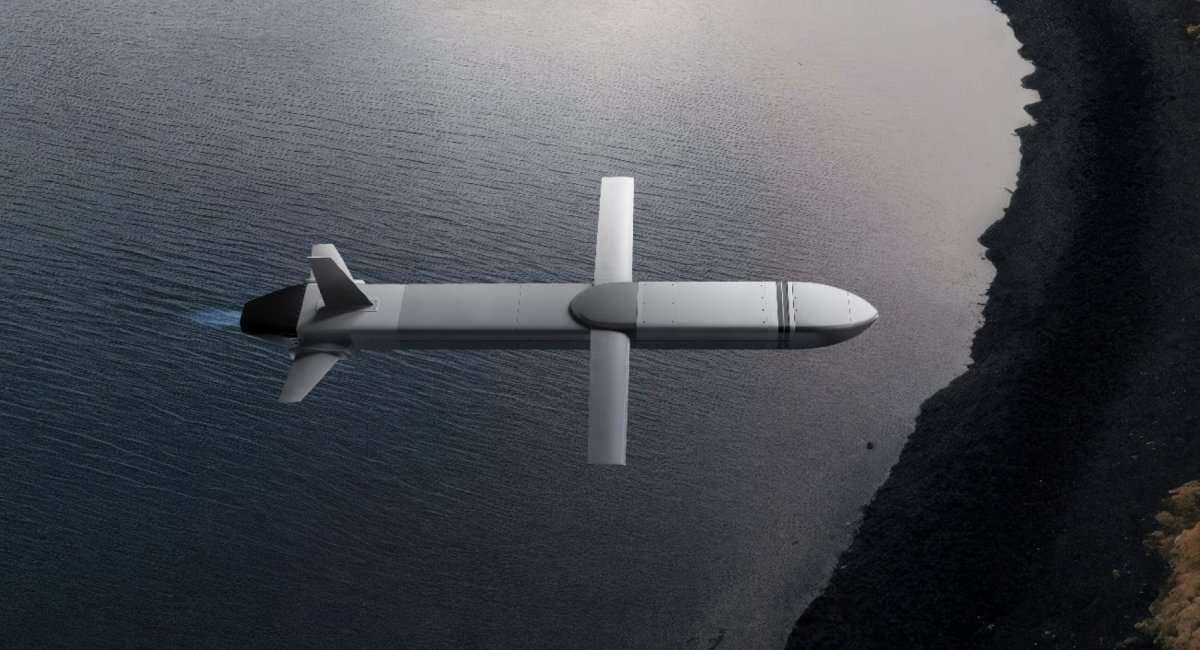
The Ruta cruise missile, which initially clearly fit the definition of a missile-drone, has now received a new version that substantially outperforms its predecessor.
Images of the missile, designated Ruta Block 2, along with its specifications were published by the developer and manufacturer itself—Destinus, a company currently headquartered in the Netherlands (founded by Mikhail Kokorich, who fled putin’s russia).
Read more: Ruta Missile Drone Maker Acquires AI Firm for €195M and It’s More Than Just Interesting

According to the published specifications, the Ruta Block 2 has a range exceeding 450 km, a warhead weighing more than 250 kg, and “multimode guidance using artificial intelligence.” The missile is also claimed to be capable of penetrating layered air defense systems under conditions of active electronic countermeasures, while being suitable for scalable mass production.
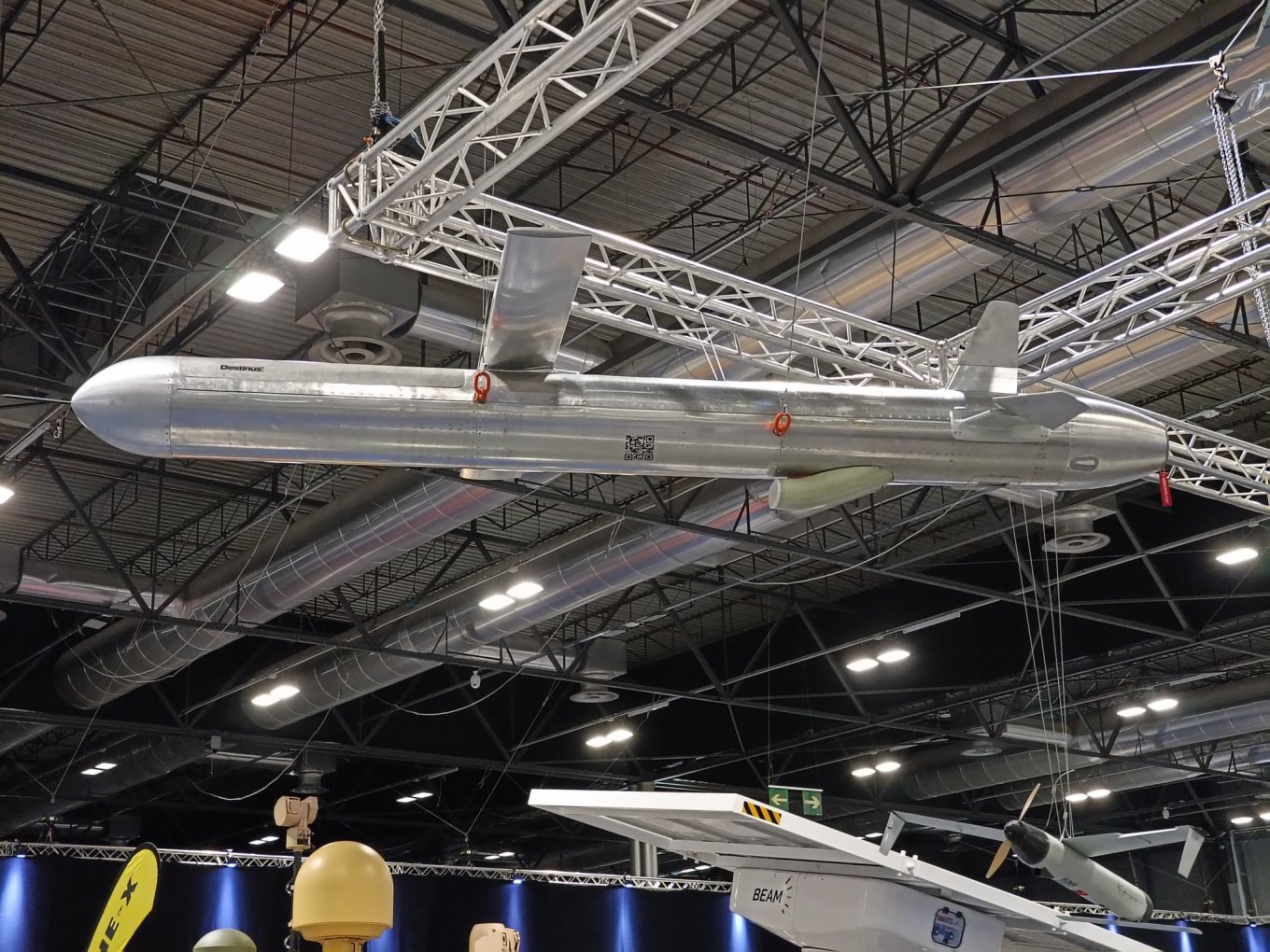
These figures clearly indicate a major leap compared to the first version of Ruta, which had a declared maximum takeoff weight of 300 kg, a wingspan of 2.25 meters, and a length of 3.93 meters (data presented at the FEINDEF 2025 exhibition in Madrid). This is a leap across virtually all parameters, making it reasonable to describe the project not as a modernization, but as the creation of an entirely new missile. However, the missile’s reported combat use against russia may explain why the original name was retained.
Beyond the sharp increase in warhead weight, the Ruta Block 2 features a shift toward reduced observability through changes to the airframe shape. It also incorporates folding wings, which should allow launches either from a transport-launch container or from under an aircraft wing.
The missile’s nose section is also noteworthy, as its shape suggests the likely integration of an imaging infrared (IIR) seeker to ensure the required accuracy during the terminal phase of flight. Such a solution is standard for modern cruise missiles, including Storm Shadow / SCALP.
The emergence of the Ruta Block 2 is clearly the result of a series of partnerships between Destinus and several European companies. In particular, in May 2025, Destinus announced the integration of a GPS-independent and electronic warfare–resistant navigation system from the Spanish company UAV Navigation, part of Grupo Oesía. In November, the company also announced the integration of Shield AI’s Hivemind combat artificial intelligence.
At the same time, no timeline has been disclosed for when the Ruta Block 2 will be ready for operational deployment. Overall, it is worth noting that despite announcements of Ruta’s use by Ukraine’s Defense Forces as early as December 2024, publicly available information about the missile remains limited.
However, this is not unusual. For example, the appearance of Ukraine’s mass-produced Bars cruise missile only became public at the end of 2025, while the developer of the Palianytsia system was disclosed by the government only recently.
Read more: Ukraine’s Ruta Missile Drone Will Get an EW-Immune Navigation System
About the Author