President Abdel Fattah El Sisi stressed the importance of intensifying political and security coordination between Egypt and Russia to preserve regional and international stability, while underscoring the need to stabilise the ceasefire in the Gaza Strip and advance efforts towards early recovery and reconstruction.
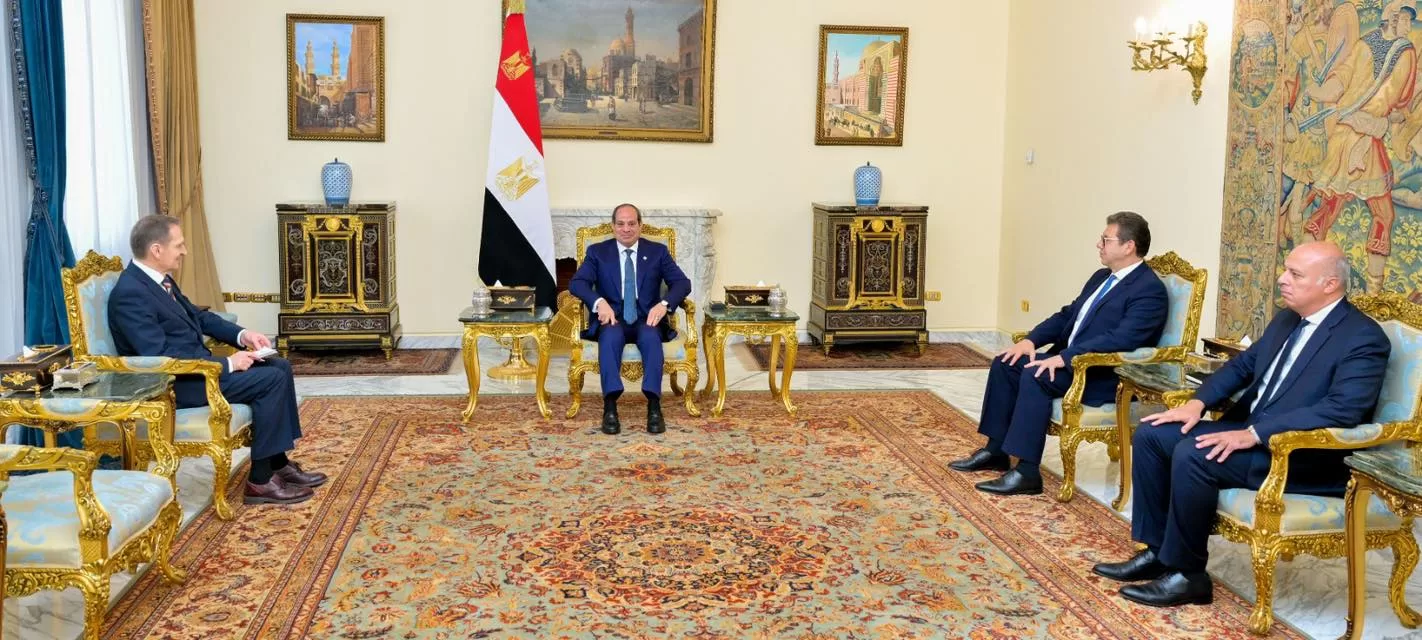
The President made these remarks during a meeting on Tuesday with Director of Russia’s Foreign Intelligence Service Sergei Naryshkin. The meeting was attended by Head of Egypt’s General Intelligence Service Major General Hassan Rashad.
President Sisi began the meeting by requesting Naryshkin to convey his greetings to Russian President Vladimir Putin. He expressed appreciation for the steady progress in Egyptian-Russian relations and reaffirmed Cairo’s commitment to strengthening bilateral co-operation across all fields, Presidency Spokesman Ambassador Mohamed el-Shennawy said.
The President also highlighted the importance of sustained consultation and coordination to meet the aspirations of both nations and contribute to peace and stability at the regional and global levels.
For his part, Naryshkin conveyed President Putin’s greetings and appreciation to President Sisi, affirming the strategic nature of relations between the two countries. He noted Russia’s keenness to deepen co-operation with Egypt, particularly in trade and investment. He also praised the strong partnership in implementing the Dabaa Nuclear Power Plant project.
Discussions also covered a range of regional and international issues of mutual concern. President Sisi outlined Egypt’s vision regarding developments in the Middle East and its ongoing efforts to de-escalate tensions. He stressed the need to implement the Gaza ceasefire agreement, especially the second phase, ensure the unfettered delivery of humanitarian aid, and commence early recovery and reconstruction efforts.
The Russian official expressed his country’s appreciation for Egypt’s role in efforts to halt the war, reject the displacement of Gaza’s population, and facilitate humanitarian assistance. Both sides agreed on the need to enhance joint action and intensify political coordination to prevent further escalation and promote peaceful solutions to regional and international crises.
About the Author