New York City could establish “safety zones” around schools and houses of worship to prevent harassment from protesters under a newly announced bill from City Council Speaker Julie Menin.
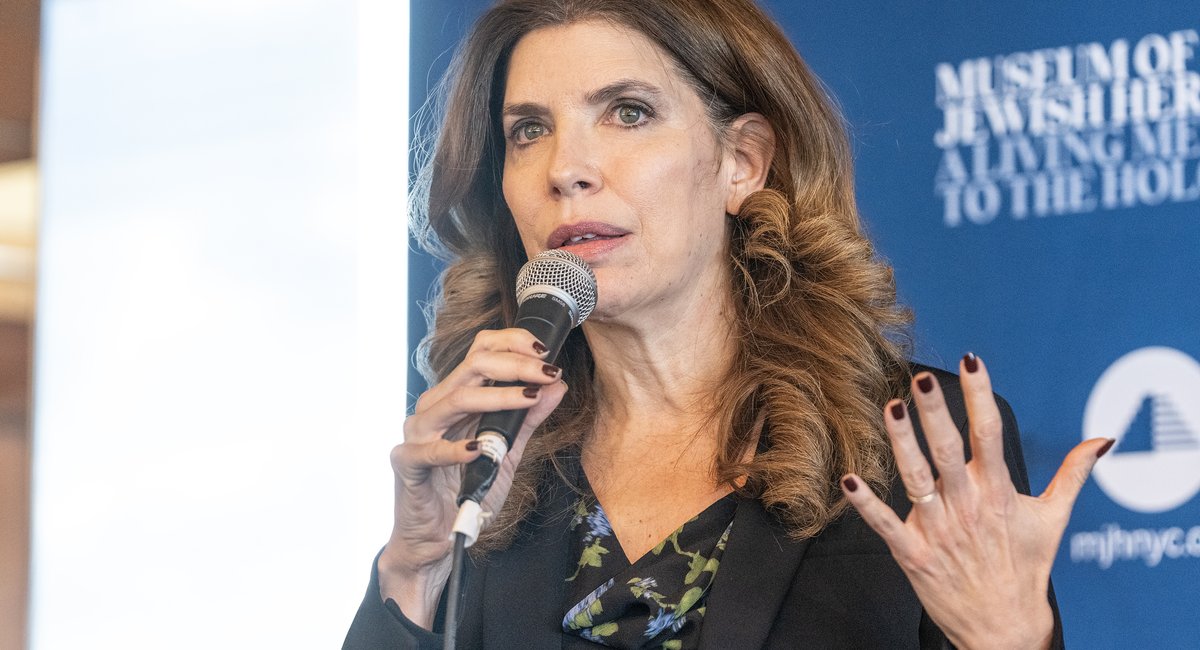
“What we are trying to do is protect congregants for any house of worship,” Menin said Friday during a press conference at the Museum of Jewish Heritage in Lower Manhattan. She said the legislation is intended to allow people to “enter and exit without fear of intimidation or harassment,” and the same rules would apply to schools.
The measure, which the speaker has yet to introduce, could pose an uncomfortable test for Mayor Zohran Mamdani, who has faced criticisms over his slow response to anti-Israel protesters yelling antisemitic and inflammatory slogans. Recent demonstrations in front of two synagogues in the city have prompted concerns around language used by protesters.
Mamdani, a staunch critic of Israel, has said New Yorkers should be able to feel safe entering houses of worship, but the city also needs to uphold the right to protest.
“The mayor is committed to fighting antisemitism, and ensuring that New Yorkers continue to be able to worship freely as well as exercise their First Amendment rights,” said mayoral spokesperson Dora Pekec in an emailed statement. “On the first day of his administration, the mayor directed the NYPD and the city’s law department to review the legality of a range of proposals, including those like Speaker Menin’s buffer zones proposal, and he will wait for the outcome of that review.”
Legal experts have said such proposals would face serious scrutiny. The U.S. Supreme Court has in the past ruled that states cannot restrict free speech on public sidewalks. New York state law currently prohibits people from intimidating or blocking someone seeking to enter a house of worship or abortion clinic, but does not restrict where protests can occur in public space.
Under her bill, Menin said the NYPD would be responsible for clearing access for those entering schools and houses of worship. Gov. Kathy Hochul has proposed a similar measure, which she spoke about during her State of the State speech in Albany on Tuesday. The governor said she wants to establish a 25-foot barrier for protests at houses of worship and health care facilities.
Mamdani, who was present at the event, notably did not applaud when Hochul spoke about her proposal.
Menin’s and Hochul’s proposals come in the wake of two high-profile incidents. In November, a group of protesters chanted “globalize the intifada” and “death to the IDF,” referring the Israel Defense Forces, outside an Upper East Side synagogue that had rented space to an organization that helps Jews move to Israel and settlements in the West Bank.
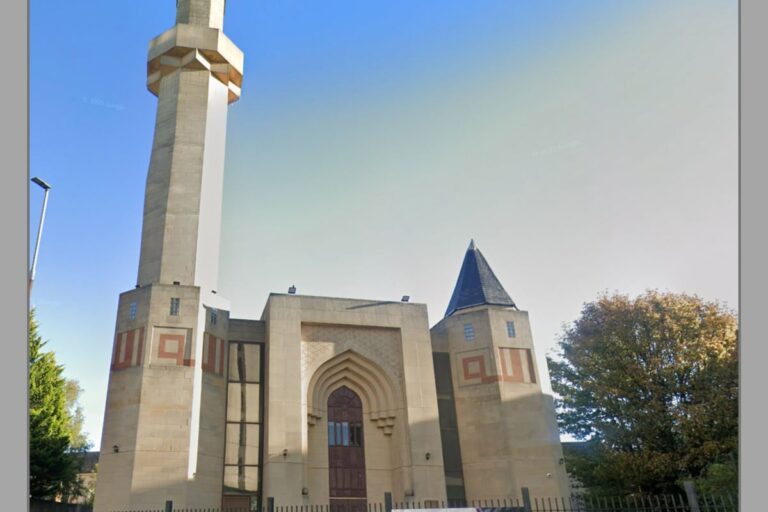
And last week, a group of pro-Palestinian protesters chanted in support of Hamas outside a Queens synagogue as pro-Israel protesters yelled “death to Palestine.” A video of the pro-Hamas chants went viral, prompting several elected officials to condemn them.
Mamdani was criticized by some Jewish New Yorkers for being slow to issue a statement. But he eventually said, “Chants in support of a terrorist organization have no place in our city.”
He added: “We will continue to ensure New Yorkers’ safety entering and exiting houses of worship as well as the constitutional right to protest.”
Menin said her legislation, which would need a majority of the Council’s support to pass, is based on proposals drafted by councilmembers last year. She said she is also introducing additional initiatives to combat antisemitism. They include helping cash-strapped synagogues and Jewish institutions pay for security training and equipment, setting up a hotline for reporting antisemitic incidents and a $1.25 million fund for Holocaust education at the Museum of Jewish Heritage.
According to the NYPD, antisemitic incidents made up 57% of all reported hate crimes last year. Jewish New Yorkers make up only about 10% of the city’s population.
Menin said on Friday that elected officials need to respond to the worrying statistics.
“I make no apology about insisting on a proportionate response to the disproportionate discrimination against our Jewish community,” she said.
About the Author