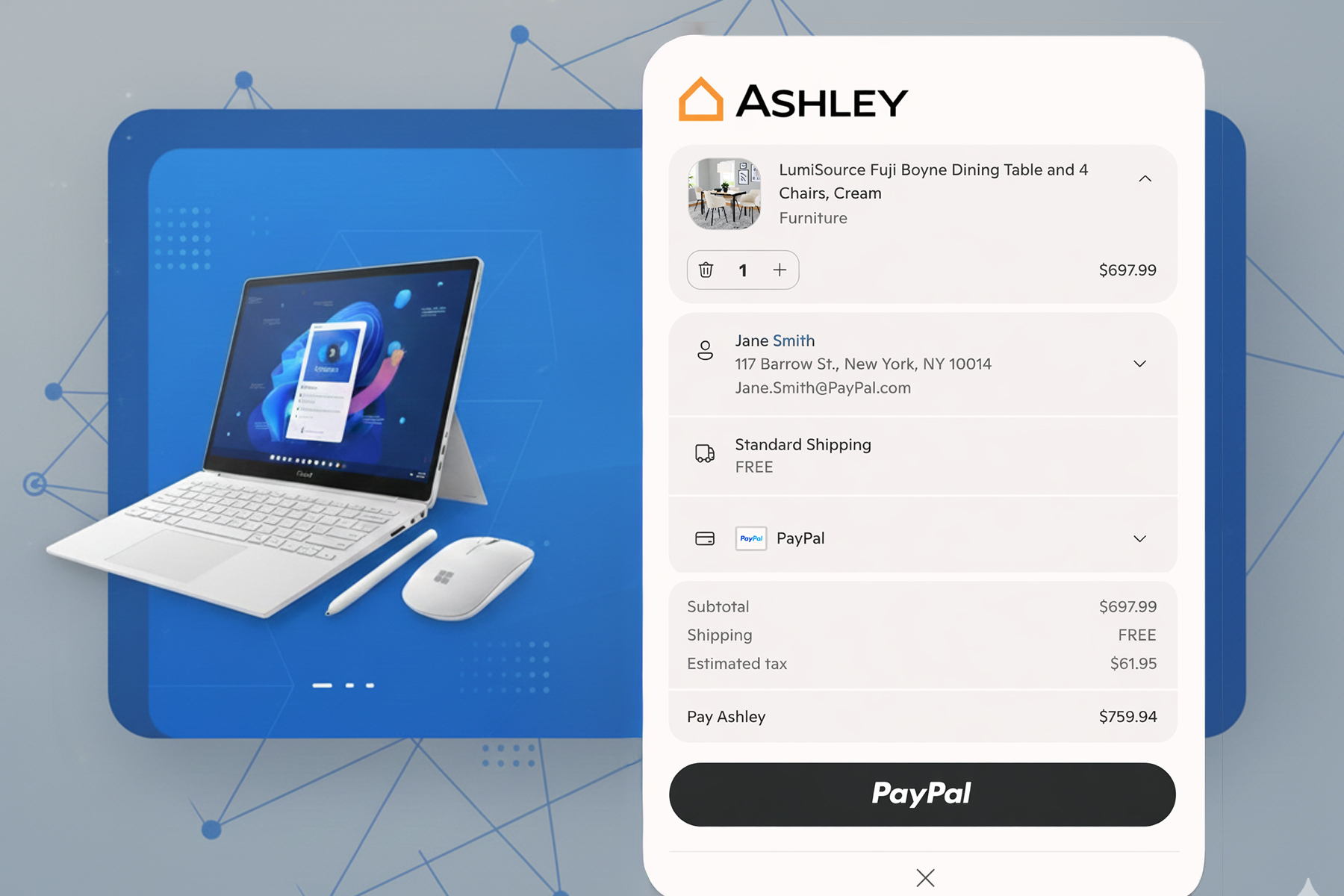
Microsoft is making a massive play to change how we buy things online by integrating two of the world’s biggest payment heavyweights into its AI ecosystem. The company has announced significant partnerships with both PayPal and Stripe to power the new Copilot Checkout experience.
This move signals a shift from AI being a simple chatbot that answers questions to a functional tool that can execute financial transactions on your behalf. By bringing these providers into the fold, Microsoft is ensuring that when you ask Copilot to find and buy a product, the payment part is seamless.
The integration is part of a broader push into “agentic commerce,” a term you will be hearing a lot more of in 2026. It essentially means your AI assistant is no longer just a researcher, but an agent that can act on your behalf to get tasks done.
PayPal and Stripe power the new Copilot Checkout
The headline act of this announcement is the deep integration of payment architecture into the Copilot environment. This allows users to use their existing accounts, including saved cards and balances, directly through the AI interface on Copilot.com and soon within Windows.
When you are chatting with Copilot about a new laptop or a pair of running shoes, the AI can now surface a native checkout button. This button leverages secure infrastructure to process the payment without you needing to manually enter credit card details every time.
“By integrating PayPal’s trusted payment platform into Copilot, we’re making it easier than ever for consumers to move from discovery to purchase in a single, fluid motion.”
Alex Chriss, President and CEO, PayPal.
For Australians, this means the familiar PayPal login or Stripe-powered card entry will appear within the Copilot sidebar. You will still get the same protections these platforms are known for, providing a layer of security when dealing with new merchants found via AI.
Why Microsoft needs both PayPal and Stripe
You might wonder why Microsoft would sign deals with two competing payment giants at the same time. The reality is that PayPal and Stripe serve slightly different purposes in the global e-commerce ecosystem, and Microsoft needs both to succeed.
PayPal is a consumer-facing powerhouse with hundreds of millions of active users who trust the brand for safe checkout. It is the wallet that people already have in their pockets, making it the perfect choice for the “Buy Now” button inside a chat.
Stripe, on the other hand, is the engine that powers the backend for millions of businesses, including major retailers like Urban Outfitters and Etsy. By partnering with Stripe, Microsoft ensures that the merchants selling the products have a reliable way to receive those AI-driven payments.
“AI is changing how commerce works, and as with every technology shift, it needs new infrastructure. Stripe is building that infrastructure, and Microsoft is putting it to use by enabling commerce inside Copilot.”
Kevin Miller, Head of Payments, Stripe.
Security and the Agentic Commerce Protocol
Whenever we talk about AI and money, security is the first thing on everyone’s mind. To solve this, Stripe and Microsoft are using a new “Agentic Commerce Protocol” to ensure your financial data stays protected.
When you make a purchase, Stripe issues a “Shared Payment Token” rather than passing your actual credit card numbers to the AI or the merchant. This means the AI understands the transaction is happening, but it never actually “sees” your sensitive financial details.
This separation of duties is important because it means Microsoft doesn’t become a bank or a high-risk data vault for credit cards. Instead, they are sticking to the software platform while letting the payment experts handle the movement of money.
How this changes the way you shop
Until now, using an AI to shop was a bit of a disjointed experience where the AI would find a link and you would click it to go to a website. With Copilot Checkout, the goal is to keep you in the flow of the conversation while handling the transaction securely.
Imagine telling Copilot that you need to book a flight to Sydney and buy a new suitcase for the trip. The AI can find the options, and instead of sending you to five different websites, it can process the payments using your saved credentials.
Microsoft’s internal data suggests this is already working, with journeys including Copilot leading to 53% more purchases within 30 minutes. By removing the need to find your physical wallet or type in long strings of numbers, Microsoft is betting you will buy more often.
Availability and pricing in Australia
The rollout of Copilot Checkout has officially begun, starting with users on Copilot.com in the US, with Australian access following closely behind. There is no additional cost to consumers for using these features within the free or Pro versions of Copilot.
Microsoft Copilot Pro is currently available in Australia for A$33 per month, which offers faster performance and priority access to the latest models. However, the basic payment integrations are available to all users with a Microsoft account.
For businesses looking to integrate their stores, those using Shopify will find themselves automatically enrolled in the program unless they choose to opt out. Standard transaction fees for merchants will still apply, typically starting around 1.75% plus 30 cents for domestic transactions in Australia.
The competitive landscape
Microsoft isn’t the only one trying to turn AI into a shopping mall, as Google and OpenAI are also working on similar integrations. However, by locking in both PayPal and Stripe, Microsoft has secured massive merchant coverage from day one.
The success of this will depend on how many retailers choose to opt into the Copilot ecosystem. If your favourite local Aussie shop uses Stripe or Shopify to process payments, there is a high chance they will show up in Copilot results.
This is a big step toward the “Action Oriented” AI that we have been promised for years. It turns Copilot from a digital encyclopedia into a personal assistant that can actually get things done for you.
What users should do next
If you are already a regular user of PayPal, you won’t need to do much other than ensure your account is linked when the prompt appears in Copilot. It is also a good time to review your security settings, such as enabling Two-Factor Authentication, to stay safe.
As we move through 2026, the line between searching for information and making a purchase is going to continue to blur. Microsoft’s dual-partnership strategy is a clever way to cover all bases and make sure the checkout process is ready when you are.
Keep an eye out for the Copilot update on your Windows PC, Mac, or mobile device over the coming weeks. It will be interesting to see if this actually changes our shopping habits or if we still prefer the traditional website experience.
For more information, you can head to https://www.paypal.com/au/home or https://stripe.com/au
About the Author