Recycling apparel pieces made from different types of fibers has always been a problem for the textile industry. For this reason, in the absence of a chemical or mechanical process capable of separating the different materials and recovering them, these garments have always ended up as waste destined for incineration or landfill at the end of their life.
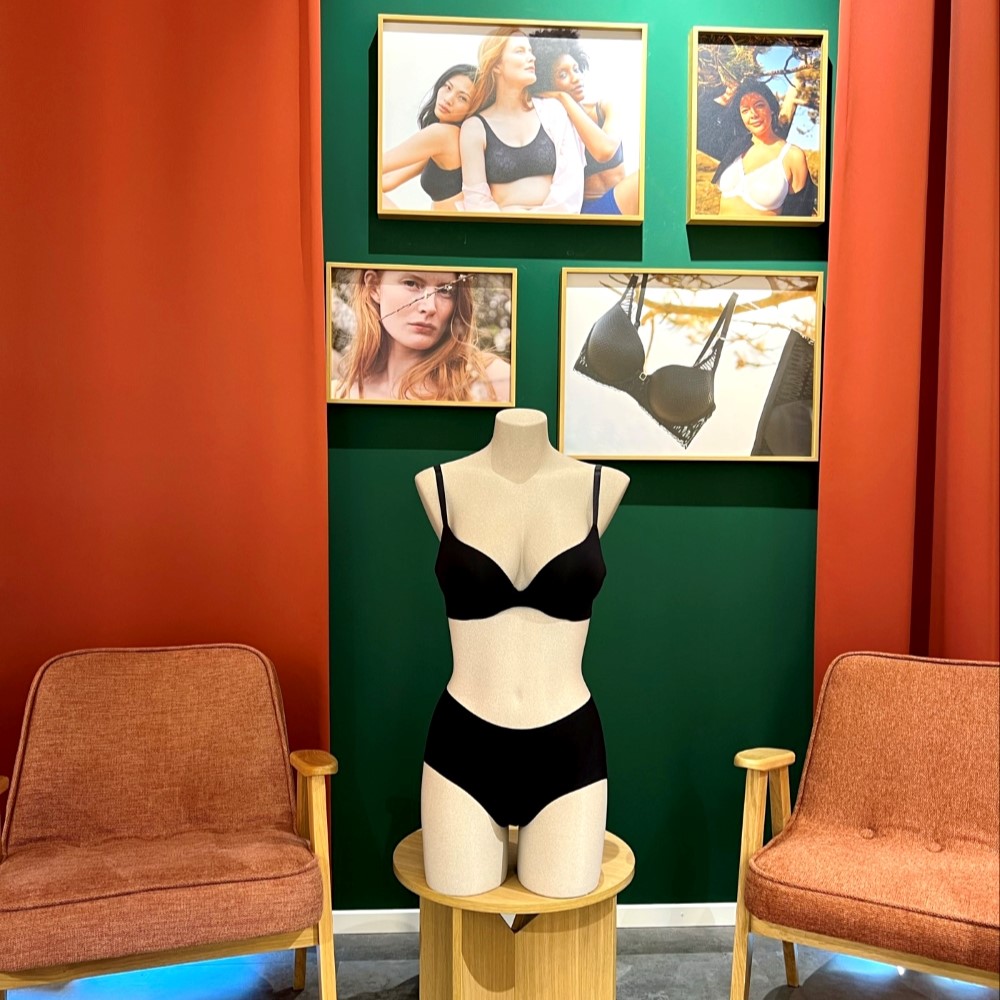
However, today, thanks to a strategic partnership between Radici Innova, a division of the RadiciGroup chemical group, together with The Lycra Company, a specialized high-tech fiber manufacturer, and the underwear brand Triumph, they have been able to create a lingerie set made from 100% recycled fibers.
Radici Innova has developed an innovative recycling process based on selective dissolution technology capable of treating mixed textile waste—from swimsuits, tights, and leggings, for example—and recovering nylon and Lycra fibers from it, which are then made available for the production of new garments.
The new internationally patented process uses non-toxic, non-flammable, and environmentally friendly solvents. It is applicable to the main types of nylon (PA6 and PA66) and is economically sustainable because it allows for the recovery of both nylon and Lycra fiber, regardless of the percentages of the composition, as well as the solvent.
“Thanks to this project, for the first time it is possible to recover textile fibers from mixed fabrics and reuse them for the production of new garments. This innovation opens up revolutionary development scenarios for the textile industry,” said Stefano Alini, CEO, Radici Innova.
“This innovative project highlights the role that elastane can play in helping to advance circularity in the apparel industry,” said Nicholas Kurland, product development director, Advanced Concepts, The LycraCompany.
“Working closely with Radici Innova and Triumph, The Lycra Company has demonstrated that Lycra fibers can maintain their renowned elasticity and shape recovery performance, providing comfort, fit, and freedom of movement, while being reintegrated into the spinning cycle,” added Kurland.
Four years ago Radici Innova started researching an innovative process for dissolving and separating mixed textile fibers. After the initial development of the process, subsequent tests made it possible to recover samples of Lycra fiber from fabrics containing multiple materials, which were then sent to The Lycra Company to verify their recyclability.
Triumph provides its production surplus, which is a fabric containing 16% Lycra fiber. From this material, Radici Innova is able to recover Lycra fiber and nylon. The Lycra Company re-spins the Lycra fiber, while RadiciGroup processes the recycled nylon into new Renycle yarn.
These recycled yarns—Lycra and Renycle—are used to make a black fabric that Triumph uses to produce a matching bra and briefs, demonstrating that it is possible to close the recovery cycle (closed-loop): from textile waste to new garment.
The result achieved today demonstrates the technical feasibility of recycling mixed fabrics and lays the foundation for its subsequent industrialization.
“While still in its early stages, Triumph is proud to contribute to this pioneering initiative and explore the potential of this recycling technology for future applications,” said Vera Galarza, global head of sustainability, Triumph.
“Our next step will focus on creating a capsule collection, working on solutions that ensure product identification, traceability, and circularity systems, so that garments remain in use for as long as possible and, once they reach the end of their life, can be recycled in the most appropriate way,” added Galarza.
READ ALSO:


About the Author