Dec. 17, 2025, 5:31 a.m. ET
I get the appeal of “Heated Rivalry” and why it’s been plastered all over my social media feeds. The ambiguous sexuality of the two lead twunks, their butter-smooth skin, blade-sharp jawlines and sculpted abs nested neatly in our favorite homoerotic contact sport – hockey, that is – seem predestined for fan-fiction folders of smut-obsessed netizens.
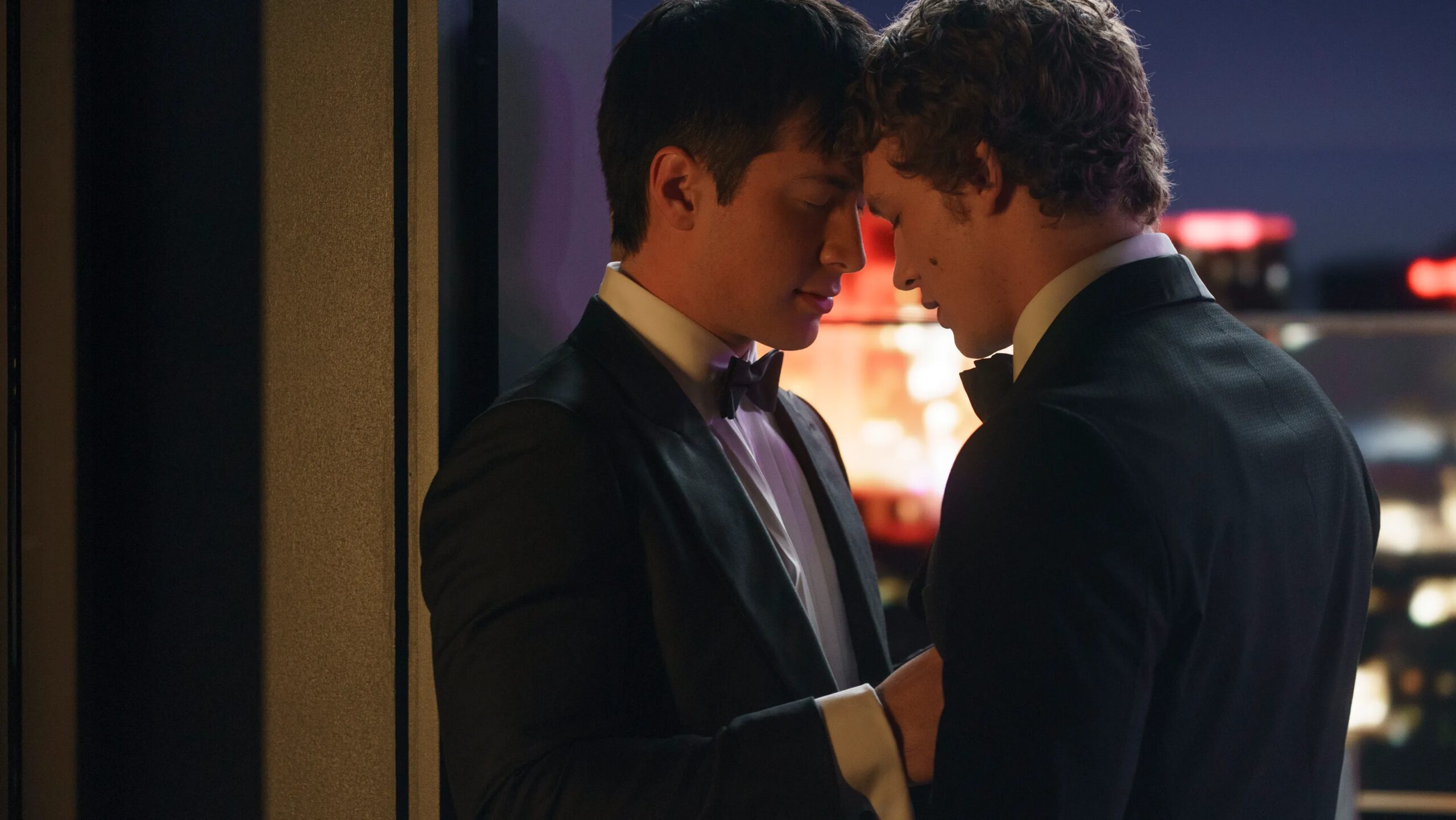
The Canadian ice hockey drama follows the steamy, secret romance between players Shane Hollander (Hudson Williams) and Ilya Rozanov (Connor Storrie). Aside from viral clips of titillating sex scenes, the show has reignited an online debate about who gets to be gay in Hollywood, specifically in regard to non-queer actors playing queer roles.
Both lead actors faced pushback online for choosing not to disclose their sexualities. One corner of the internet defends their right to privacy, while others see this as another instance of non-queer actors profiting off the LGBTQ+ community – with both schools of thought screaming past each other. In reality, this debate is decades-old and requires more nuance than the internet allows.
Who gets to be gay in Hollywood?
Some argue gay actors should play gay characters because their lived experience could inform their approach to bringing the character to life, making the performance more authentic. But actors are actors. Any actor worth his salt should be able to play any character convincingly, regardless of his own sexuality.
This line of thinking is also predicated on the idea that there’s something inherently different or unknowable about queer love. Sure, there are cultural and societal factors that complicate the queer experience, but at its heart, queer love is no different than any other love.

A more valid argument is found in those acknowledging the lack of gay representation in Hollywood, and argue that gay roles are opportunities to increase visibility for openly gay actors.
Despite outward support for queerness, Hollywood isn’t a safe, equitable space for queer actors. There’s a storied history of queer actors who hid their sexuality to not stifle their career options nor limit their marketability (in concealing their sexualities, the actors of “Heated Rivalry” get to play into the fantasies of the show’s primarily female audience).
What makes this even more insidious is that many presumably cis, straight actors have played gay roles to much acclaim. Timothée Chalamet, Paul Mescal, Jake Gyllenhaal, Matt Damon and many more have played gay characters and were praised by critics and award bodies for their performances. Eddie Redmayne and Jared Leto, two cisgender men, both won Academy Awards for playing transgender women.
Yet, queer people are seldom given the opportunity to play these roles, and when they do, they don’t get the same accolades.
It’s difficult to watch queer actors be pigeonholed and discriminated against due to industry homophobia, while straight actors can profit off of queer roles and amass a legion of online fans who defend their right to do so.
Correcting this industry’s ills, though, is what’s difficult. Acting is a job.
As Jacob Tierney, the creator of “Heated Rivalry,” pointed out, it’s against the law to ask a potential employee their sexuality during the hiring process.
Even so, preferring actors of a certain experience to play certain roles has been done before. “Pose,” an FX show that followed New York’s ballroom scene in the 1980s and ’90s, had a cast almost entirely of trans women and openly gay men.
It’s not impossible to give queer roles to queer actors. It’s just not profitable.
Ambiguity is marketable

I feel that if the two actors in “Heated Rivalry” were openly queer, the show wouldn’t get the same response. Of course, fans poking and prodding into their private lives to find clues about their sexuality is uncalled for, even if privacy is the price of fame.
The ambiguity is marketable. But how can we get more representation with this sort of don’t-ask-don’t-tell ethos?
The actors of “Heated Rivalry” or any other queer media don’t owe us their sexuality. Expecting that puts undue onus on two young actors to solve a problem that’s plagued Hollywood since its inception. No one should be forced to explain a very personal part of their being to the world, nor should they be forced to come out before they’re ready.
The pressure to conceal is an amalgam of societal expectations of masculinity and our myopic view of sexuality, issues that are much, much larger than one show can solve. In 2025, sexuality is harder to define as some prefer fluid identities over ossified labels, complicating this conversation further.
But depictions of queerness in media will always feel voyeuristic and exploitative as long as openly queer actors continue to face discrimination in Hollywood. Art and the stories we tell are inherently political.
Who we allow to tell these stories is a reflection of our society.
Kofi Mframa is a columnist and digital producer for USA TODAY and the USA TODAY Network.
About the Author