Google has officially pulled the curtain back on Genie 3, the latest evolution of its generative world model that is currently setting the internet on fire. This release marks a significant leap forward from its predecessors, moving beyond simple image generation into the realm of fully interactive, simulated environments.
The technology allows users to take a single prompt or image and transform it into a playable, three-dimensional world with consistent physics and logic. It is being described by many in the industry as the beginning of the “world engine” era, where software can dream up entire realities on the fly.
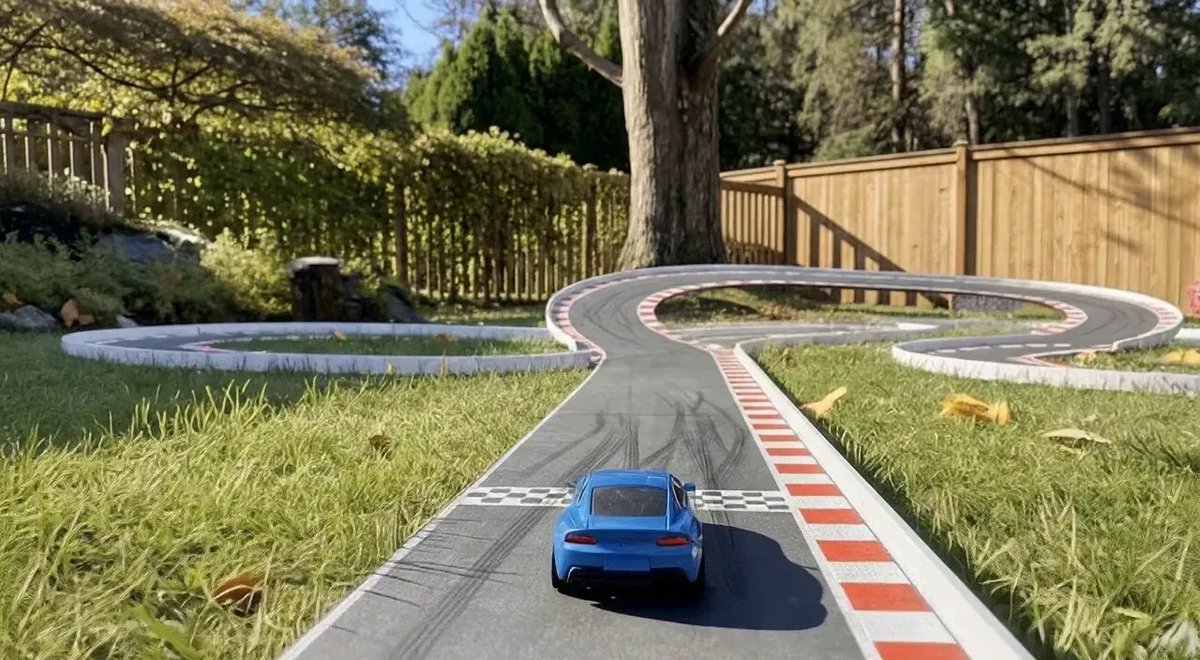
Early adopters have spent the last 24 hours stress-testing the system, and the results are flooding social media. From hyper-realistic racing simulations to surrealist platforming games, the breadth of content being produced is staggering for a tool in its infancy.
Understanding the leap to Genie 3
The core magic of Genie 3 lies in its ability to understand spatial consistency and latent action. Unlike traditional video generation which might “morph” or lose track of objects, Genie 3 maintains the integrity of the environment as you move through it.
This means if you turn a corner in a generated city, the building you just passed remains where it should be when you turn back. It creates a sense of presence and permanence that was previously the exclusive domain of handcrafted game engines like Unreal or Unity.
The model has been trained on a massive dataset of video and interactive content, allowing it to “predict” how a world should react to user input. Whether it is the way light hits a surface or how an object falls, the AI is now doing the heavy lifting of physics calculations.
What people are creating
The hashtag #Genie3 on X has become a gallery of the impossible, featuring everything from retro-style RPGs to cinematic architectural tours. One of the most popular use cases emerging is the “sketch-to-world” workflow, where a simple drawing is brought to life.
Artists are taking basic 2D doodles of landscapes and watching Genie 3 extrude them into 360-degree interactive spaces. This has massive implications for rapid prototyping in the gaming industry, where concept art can now become a playable “greybox” in seconds.
We are also seeing users recreate nostalgic environments from their childhoods using nothing but descriptive text. By prompting for specific aesthetics like “90s era bedroom” or “early 2000s shopping mall,” the AI generates a walkable time capsule that feels eerily authentic.
A new era for interactive storytelling
Beyond just “games,” Genie 3 is being leveraged for immersive storytelling where the viewer is no longer passive. Creators are building narrative experiences where the environment changes dynamically based on the tone of the conversation or the actions taken.
This creates a “choose your own adventure” experience that is visually rich and unpredictable. Rather than following a pre-rendered path, the story unfolds within a world that is being rendered in real-time by the AI.
Education is another sector seeing immediate experimentation, with creators building historical recreations. Imagine a history student being able to walk through a generated version of ancient Rome, interacting with the environment to learn about architecture and daily life.
Technical requirements and Australian availability
For those of us in Australia looking to jump in, there are some specific details regarding access and pricing to keep in mind. Google is currently rolling Genie 3 out as part of their advanced AI suite, which typically requires a specific subscription tier.
To access the full power of Genie 3, users generally need to be on a Google One AI Premium plan. This plan currently retails for A$32.99 per month in Australia, which includes 2TB of storage and access to Gemini Advanced.
While many Google AI features often debut as “US-only” or “US-English” first, Genie 3 is seeing a broader initial footprint via the Vertex AI platform and early access labs. However, some of the more advanced interactive web interfaces are still rolling out regionally, so your mileage may vary depending on your account status.
The impact on the gaming industry
The traditional game development cycle can take years and hundreds of millions of dollars to produce high-fidelity worlds. Genie 3 suggests a future where a small indie team, or even a single individual, could produce assets and environments of a similar scale.
There is naturally some apprehension among environmental artists regarding what this means for their roles. However, many see it as a powerful new tool in the kit, allowing them to skip the tedious work of building repetitive assets and focus on high-level design.
“The goal with Genie is to empower anyone to be a creator of interactive experiences, regardless of their technical background in coding or 3D modelling.”
Tim Williamson, Senior Research Scientist, Google DeepMind.
The road ahead for world models
We are still in the early days of what Genie 3 can do, with current limitations around session length and complex logic. While the worlds look incredible, they don’t yet feature the deep mechanical complexity of a AAA game title with complex AI NPCs.
However, the rate of improvement is what has everyone talking, as the jump from Genie 2 to Genie 3 was substantial. Google is clearly betting big on the idea that the future of the internet is not just 2D pages or video, but interactive 3D spaces.
As hardware catches up to the demands of these models, we can expect to see Genie 3 integrated into more consumer-facing products. This could eventually mean your Google Maps Street View becomes an interactive simulation or your search results become a 3D space to explore.
Final thoughts
Google Genie 3 feels like one of those “before and after” moments in the timeline of generative AI. It shifts the conversation from what AI can show us to where AI can take us, providing a literal sandbox for our imagination.
For Australians, the A$32.99 monthly investment for the AI Premium tier is becoming an increasingly easy pill to swallow as these tools become more capable. Whether you are a developer, an artist, or just a tech enthusiast, the ability to build worlds is now at your fingertips.
It will be fascinating to see how the community continues to push the boundaries of this tool over the coming months. We are likely only scratching the surface of what a “world engine” can actually achieve in the hands of creative people.
For more information, head to
https://deepmind.google/technologies/genie
About the Author