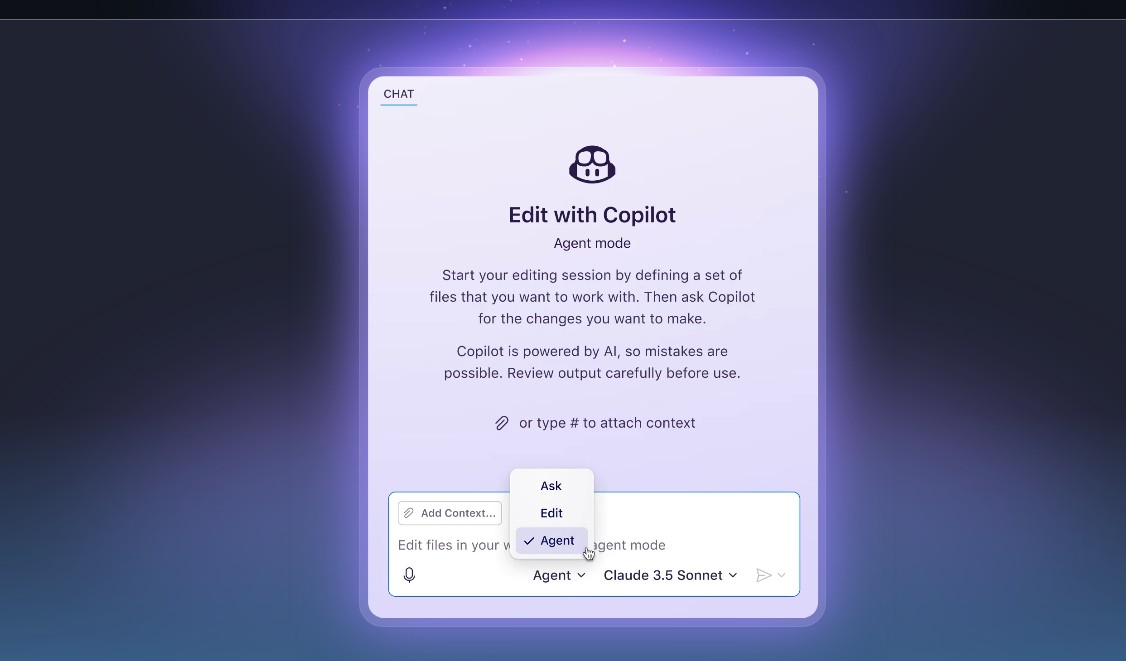
GitHub has just made a massive play for the hearts and minds of developers by officially bringing Anthropic’s Claude and OpenAI’s Codex into the fold.
Starting today in public preview, these high-powered AI agents are now accessible directly within GitHub and VS Code for those on premium subscriptions.
This move follows the launch of Agent HQ last year, which was designed to solve the growing headache of managing a fragmented AI tool stack.
One home for every agent
Many advanced developers have moved beyond using just one AI assistant, often juggling four or more tools simultaneously to get the best results.
Previously, this meant a lot of messy context switching, moving between different browser tabs and applications just to compare how different models handled a specific block of code.
With the new Agent HQ integration, GitHub is effectively removing that friction by allowing developers to move between Claude, Codex, and GitHub Copilot without leaving their primary workspace.
The goal here is clear: let the machines handle the syntax and the boilerplate while the human developers focus on high-level strategy and shipping features.
The Microsoft subscription maze
There is a strange and potentially frustrating detail for those deep in the Microsoft ecosystem that needs highlighting.
If you are a Microsoft 365 subscriber paying for Copilot in Word, Excel, and Outlook, you might naturally assume that access extends to VS Code, which is also a Microsoft product.
Unfortunately, that is not the case, as Microsoft and GitHub continue to treat these as entirely separate products with separate billing.
Your M365 Copilot license will not unlock the professional coding features in VS Code; for that, you still need a dedicated GitHub Copilot subscription.
Pricing and how to get it in Australia
For Aussie developers looking to jump in, these new capabilities are tied to specific GitHub subscription tiers.
You will need to be on a Copilot Pro+ or Copilot Enterprise plan to access the public preview of Claude and Codex.
While GitHub pricing is often billed in USD globally, Australian customers can expect to pay approximately A$58 per month for Copilot Pro+, while Enterprise pricing sits around A$58 per seat.
It is important to note that these agents aren’t turned on by default, so you will need to dive into your GitHub settings to explicitly enable Claude and Codex before they show up in your sidebar.
Seamless integration with VS Code
The integration extends deeply into Visual Studio Code, which remains the editor of choice for a significant portion of the Australian dev community.
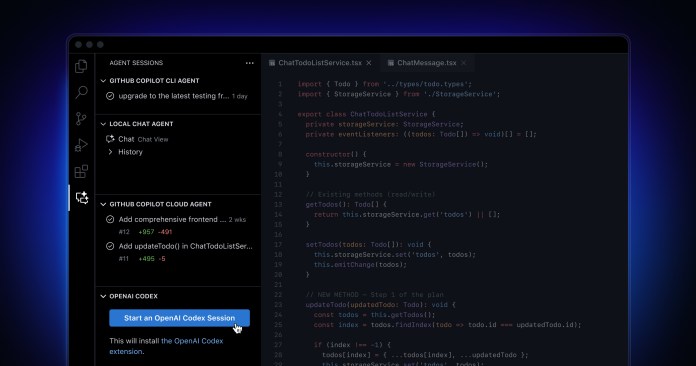
By updating to version 1.109 or later, you can open the Agent sessions view to trigger local or cloud-based tasks using your preferred model.
This allows you to run a quick interactive session locally with Copilot or delegate a massive, long-running autonomous task to the cloud using Claude.
Because everything is synced, you can start an exploration in your editor on the train and then review the logs and results on GitHub.com when you get back to your desk.
Comparing outputs for better code
One of the coolest features of this update is the ability to run these agents in parallel to see which one produces the most efficient solution.
You can assign an issue to Copilot, Claude, and Codex simultaneously and then compare the resulting draft pull requests side-by-side.
This “logical pressure testing” helps identify edge cases or architectural flaws that a single model might have missed.
“We’re bringing Claude into GitHub to meet developers where they are. With Agent HQ, Claude can commit code and comment on pull requests, enabling teams to iterate and ship faster and with more confidence. Our goal is to give developers the reasoning power they need, right where they need it,”
Katelyn Lesse, Head of Platform, Anthropic.
Managing agents at scale
For those working in larger teams, Agent HQ provides a centralized way to manage how these AI tools interact with a corporate codebase.
Enterprise admins can set policies on which models are allowed, ensuring that the team isn’t using unauthorized or unvetted AI services.
The system also includes a code review step where Copilot can actually review the work of Claude or Codex before a human even sees it.
This automated first-pass review catches basic errors early, meaning human code reviews can focus on the logic rather than fixing typos or syntax errors.
The legacy of Codex and Copilot
It is easy to forget that the original GitHub Copilot was powered by an early version of OpenAI’s Codex, so this feels like a homecoming for the model.
OpenAI has continued to refine Codex to be faster and more confident in its suggestions, particularly for complex refactoring tasks.
“Our collaboration with GitHub has always pushed the frontier of how developers build software. The first Codex model helped power Copilot and inspired a new generation of AI-assisted coding. We share GitHub’s vision of meeting developers wherever they work, and we’re excited to bring Codex to GitHub and VS Code.
Codex helps engineers work faster and with greater confidence—and with this integration, millions more developers can now use it directly in their primary workspace, extending the power of Codex everywhere code gets written,”
Alexander Emiricos, OpenAI.
What is coming next
GitHub isn’t stopping with just Anthropic and OpenAI, as they have confirmed more partnerships are already in the works.
We can expect to see specialized agents from Google, Cognition, and xAI appearing in the Agent HQ interface in the coming months.
The expansion will also see these models move into the Copilot CLI, bringing AI agent power to the terminal for those who prefer the command line.
For now, the ability to switch between the world’s leading models inside a single environment is a massive win for developer productivity.
For more information, head to https://github.com/features/copilot/plans
About the Author