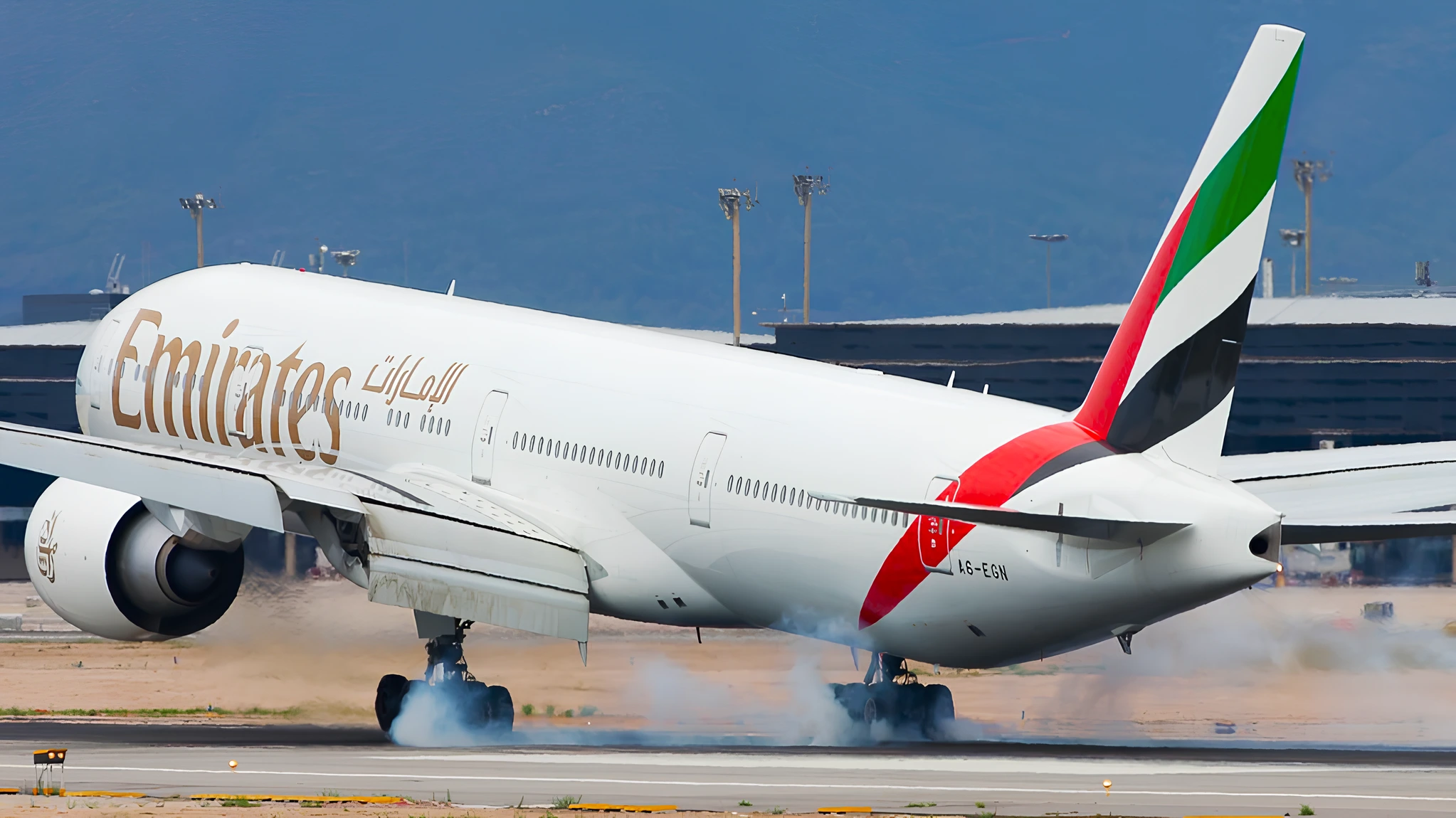
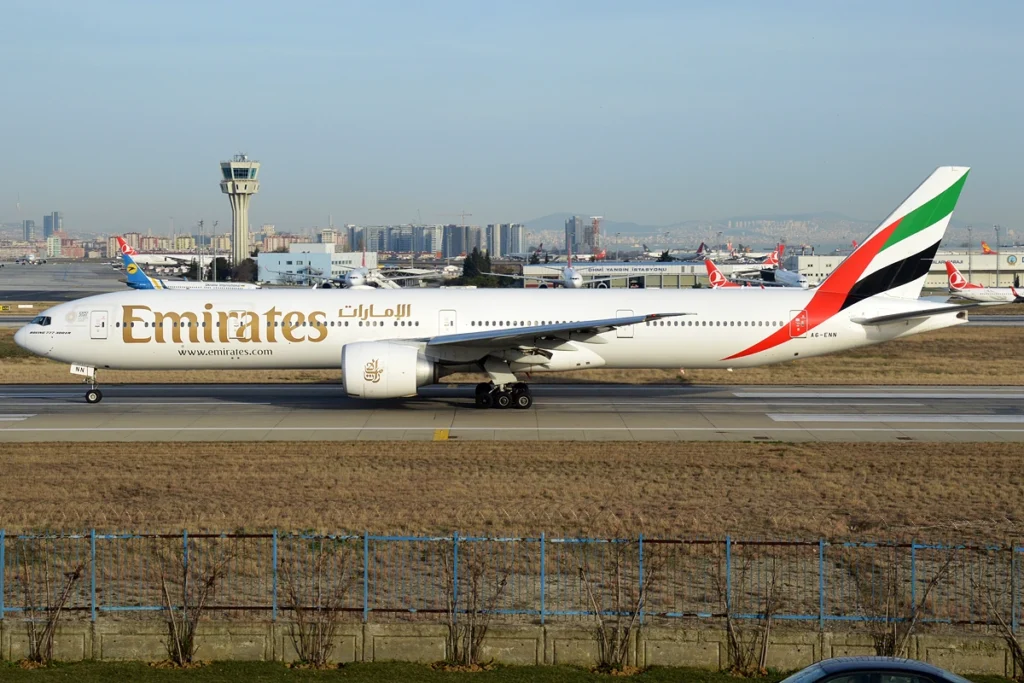
DUBAI- Emirates (EK) will suspend scheduled flights between Dubai (DXB), UAE, and Damascus (DAM), Syria, from November 15, 2025, following an operational review that reassessed fleet deployment and route priorities.
The airline confirmed that passengers booked to travel after November 14 will be rerouted on alternative services operated by flydubai (FZ), while the carrier continues to evaluate commercial and operational conditions on the route.
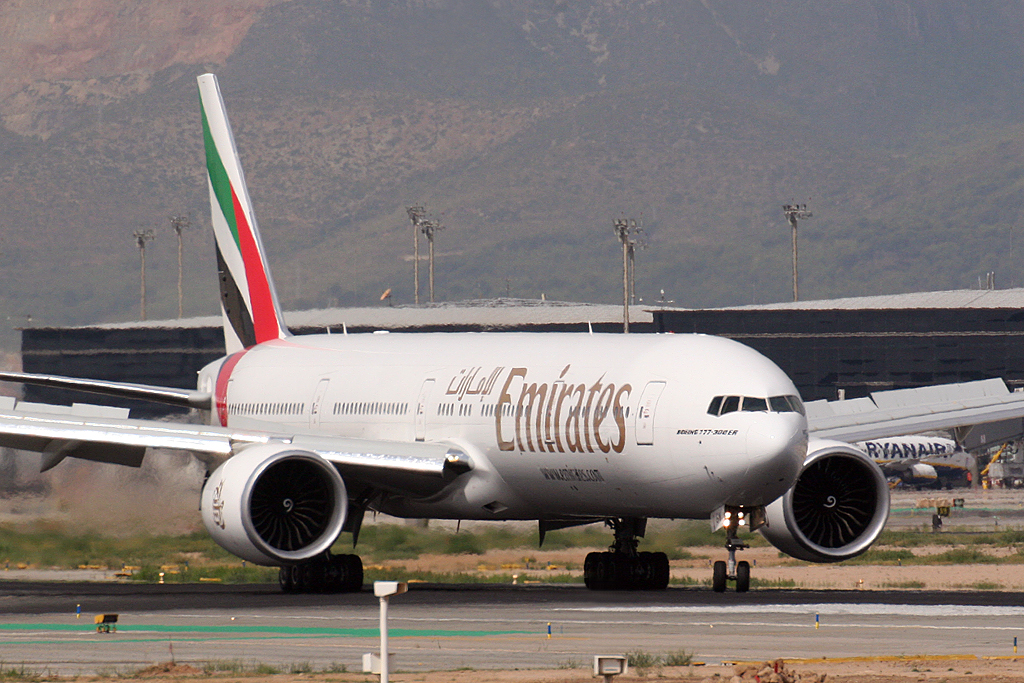
Emirates Cancels Damascus Flights
Emirates said the decision stemmed from a planned assessment of its fleet utilisation strategy. The carrier stated that suspending the Dubai–Damascus rotation supports long-term network planning and enables capacity to be reassigned where demand patterns are stronger.
The airline acknowledged the disruption for affected travellers and reiterated that it aims to restore the route once conditions stabilise.
Earlier this year, Emirates resumed flights to Damascus after a decade-long pause linked to the Syrian conflict.
The reinstatement had signaled a cautious recovery of air links between the UAE and Syria, particularly as multiple Gulf carriers returned to the Syrian market. These included Etihad Airways (EY), flydubai (FZ), and Qatar Airways (QR), with Saudi carriers flynas (XY) and flyadeal (F3) also introducing or planning services.
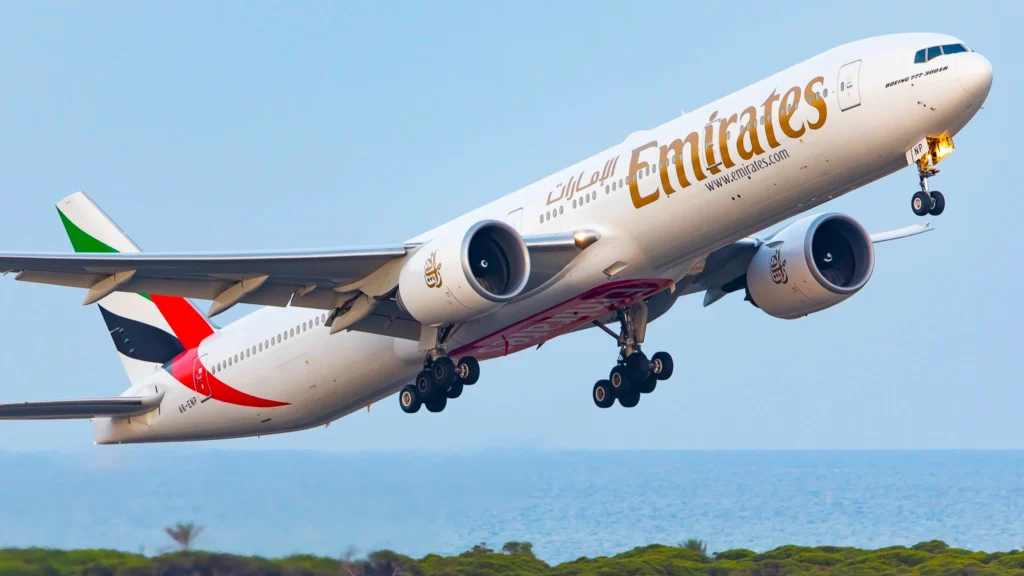
Recent Growth in UAE–Syria Air Connectivity
The resumed Emirates service had expanded gradually, beginning with three weekly flights before rising to four. Plans were in place to operate daily flights by late October 2025, but the schedule was withdrawn ahead of the November suspension.
The airline highlighted Syria’s long-standing importance within its regional network. Emirates first flew to the country in 1988 and has consistently viewed the market as a key link for tourism, trade, and investment between Syria and more than 150 global destinations.
The carrier thanked Syrian and UAE authorities for supporting the resumption earlier in the year, when its return flight carried 286 passengers to Damascus.

Syria: One of the Most Dangerous Countries
Syrian Air (RB) and Cham Wings Airlines (6Q) operate limited services to Damascus (DAM) and Aleppo (ALP), but the overall security environment in Syria remains extremely dangerous for foreign travelers. The country faces persistent terrorism, fragmented control, and widespread instability that continue to undermine safe movement by air or road.
Travel to cities like Damascus (DAM) and Aleppo (ALP) carries significant risk due to ongoing conflict, active militant groups, and unpredictable violence affecting civilians and foreign nationals alike. Limited flight operations offer no guarantee of safety, as airports and transport hubs remain potential targets.
Ongoing Conflict and Widespread Instability
Syria continues to face a fragile security landscape shaped by more than a decade of conflict, shifting political dynamics, and weakened institutions. Militant groups such as Daesh and Hay’at Tahrir al Sham maintain active operations across several regions, carrying out lethal attacks in urban centers and contested zones.
Their tactics include shootings, coordinated bombings, suicide attacks, and vehicle-borne explosives, often aimed at crowded public areas, government buildings, and places frequented by foreigners.
Kidnapping remains a major threat, particularly for journalists, aid workers, students, and business travelers. Groups aligned with Al-Qaeda and Daesh routinely abduct foreign nationals for ransom or political leverage, with several cases resulting in fatalities.
The UK government maintains a strict policy against paying ransoms, reinforcing the elevated danger for individuals taken hostage.
The fall of the Assad regime in late 2024 opened space for a new government in Damascus, but control of territory remains fractured.
Armed groups operate autonomously in parts of northeast Syria and southern areas like Suwayda, leading to unpredictable violence, artillery exchanges, and occasional airstrikes. These conditions have triggered temporary flight suspensions, curfews, and border closures without warning.
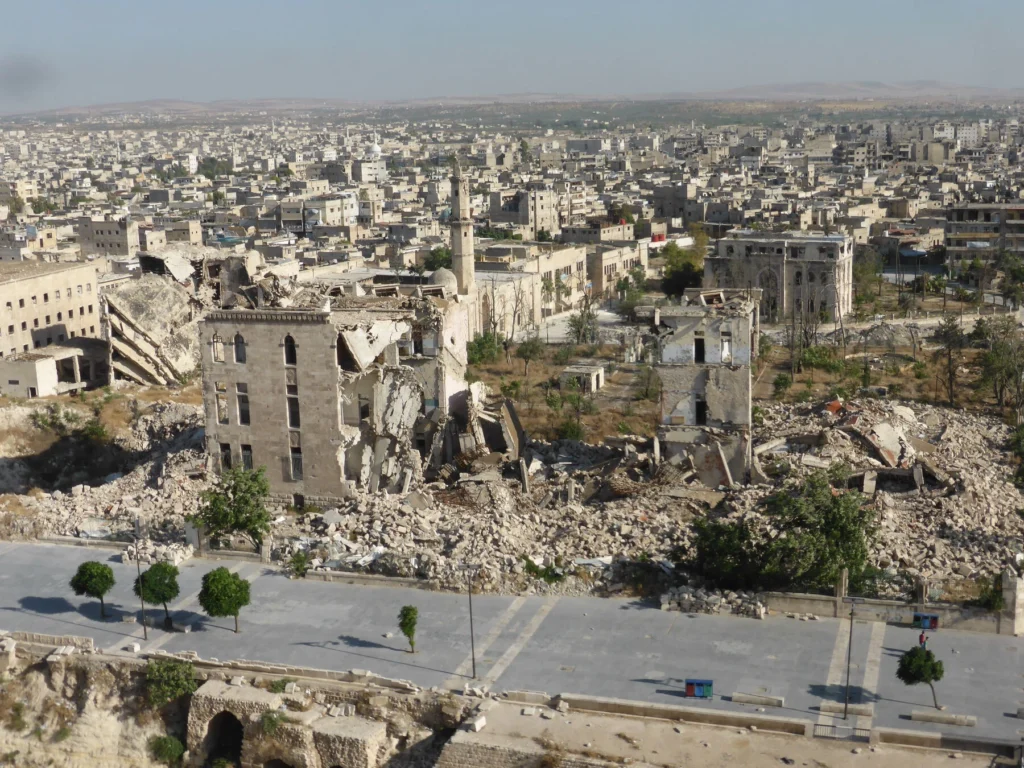
Terrorism Threat Across Major Cities
Terrorist groups continue to target both civilian and strategic locations. Attacks have struck transport hubs, markets, religious sites, hotels, restaurants, and residential areas. Military installations, police stations, and government buildings remain frequent targets.
A major attack on 2 June 2025 at the Greek Orthodox Church of Prophet Elias in Damascus killed more than 30 people, illustrating the scale and unpredictability of such incidents.
Public holidays, religious events, and national commemorations often coincide with heightened risk. Travelers are advised to avoid large gatherings and remain alert to local developments.
Kidnap Risks for Foreign Nationals
Kidnapping for ransom or political influence affects many regions. Western nationals are viewed as high-value targets. The reason for one’s presence in the country, whether for journalism, humanitarian work, or business, offers no protection.
Volatile Political Environment
Political demonstrations can escalate rapidly, sometimes turning violent. Participation in political activities carries a significant risk, including detention. Foreign journalists may face restrictions, harassment, or equipment confiscation by security forces.
Landmines and Unexploded Ordnance
Large areas of rural Syria contain mines and unexploded weapons. Even partially populated regions may pose hazards. Travelers should avoid untarred roads, abandoned buildings, and open countryside unless accompanied by trained personnel.
Humanitarian and Infrastructure Challenges
Syria’s prolonged conflict has crippled essential services. Water, electricity, fuel, healthcare, and communications remain unreliable. Food shortages and high prices affect daily life. Electronic payment systems are scarce, and cash withdrawals are limited.
Crime and Law Enforcement
Rising crime includes extortion at checkpoints, violent robbery, vehicle theft, and both criminal and terrorist-linked kidnappings. Drug trafficking carries the death penalty, and drug possession can lead to life imprisonment. Travelers must carry passport and visa copies at all times.
Cultural and Religious Considerations
Syria hosts diverse religious communities, though sectarian tensions persist. During Ramadan, travelers should respect local customs, adhere to dress expectations, and account for changes in business hours.
Transport Risks
Road travel is dangerous due to poor maintenance, low driving standards, checkpoints, and the presence of unexploded devices. Night driving is especially unsafe. Although Damascus (DAM) and Aleppo (ALP) airports operate limited services, fighting can halt flights with little notice.
Natural Hazards
Earthquakes pose an ongoing threat. High-magnitude events can damage infrastructure and disrupt emergency services. Travelers should follow recognized safety guidance for seismic activity.
Bottom Line
The suspension comes at a time when Gulf–Syria aviation ties have been rebuilding after years of limited connectivity. Improved regional relations have driven airlines to restore services, supporting travel demand and wider economic recovery efforts.
Emirates noted that it will continue to track developments affecting the route and will adjust its network plans as required.
Stay tuned with us. Further, follow us on social media for the latest updates.
Join us on Telegram Group for the Latest Aviation Updates. Subsequently, follow us on Google News
About the Author