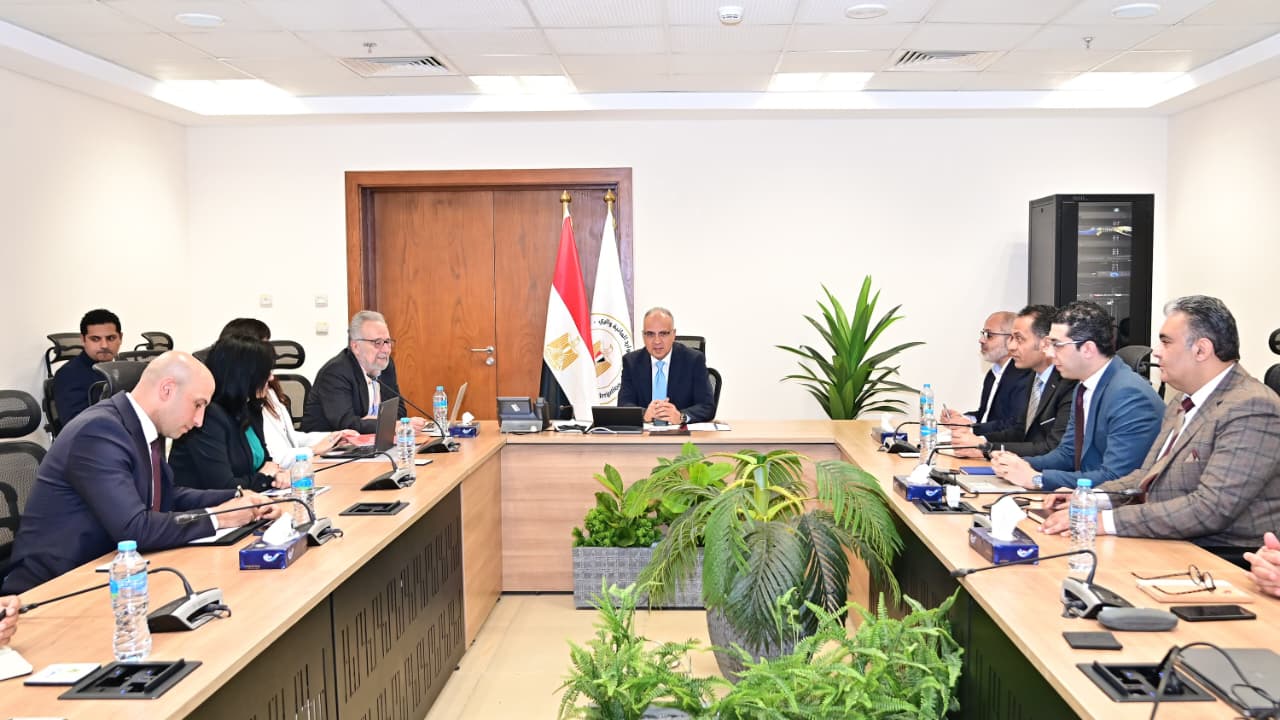
Egyptian Minister of Water Resources and Irrigation, Hani Sewilam, said Egypt is continuing its efforts to secure access to safe water for all citizens as a basic human right, during a meeting with Pedro Arrojo Agudo, the UN Special Rapporteur on the human rights to safe drinking water and sanitation.
Sewilam said Egypt is facing growing water scarcity, with per capita water availability at around 500 cubic metres per year—less than half the United Nations’ water scarcity threshold. He noted that approximately 98% of Egypt’s water resources originate from the Nile River.
He added that this heavy dependence places significant pressure on national water management, particularly in light of what he described as unilateral measures taken by upstream Nile Basin countries. In this context, he stressed the importance of adhering to principles of international water law, including prior notification and the obligation to avoid causing harm.
The minister said Egypt is implementing projects under its “Second-Generation Water System 2.0” strategy, including the expansion of agricultural wastewater treatment through major plants such as New Delta, Bahr El-Baqar, and El-Mahssama. He added that the government is also studying the future expansion of desalination to support food production.
Other measures include enhanced water-quality monitoring, the adoption of modern water-management technologies, rehabilitation of water infrastructure, strengthening farmer participation through water-user associations, and public awareness campaigns promoting water conservation.
Sewilam also highlighted community development initiatives in North and Central Sinai that use treated water for agricultural projects, alongside climate adaptation programmes, coastal protection works, and environmentally friendly initiatives involving local communities.
He emphasised that cooperative, consensus-based approaches among Nile Basin countries remain the only viable path to safeguarding shared water resources and achieving mutual benefits.
About the Author