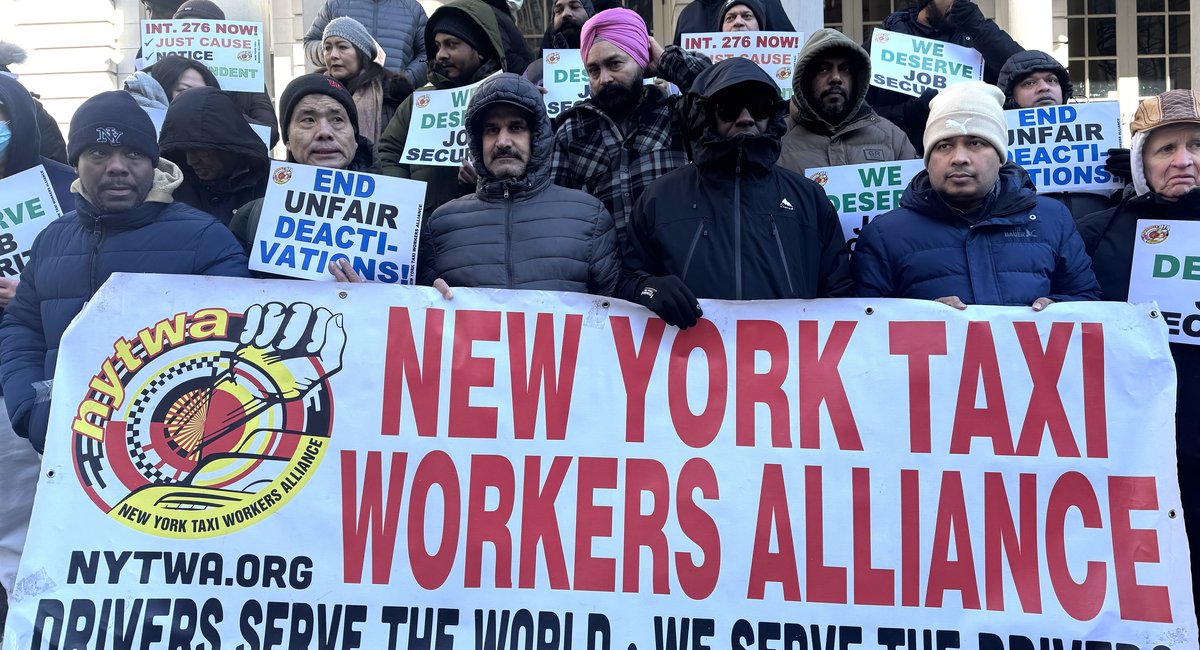
Uber and Lyft drivers rejoiced Thursday as the City Council pushed through legislation that limits how often they can be kicked off the apps by Silicon Valley.
Former Mayor Eric Adams vetoed the measure along with a dozen other bills during his final day in office. The Council moved to override most of those vetoes during its meeting, including the bill regulating the app companies.
The legislation focuses on protecting app-based for-hire drivers from “deactivation cases,” when the companies kick the workers off their platforms with little recourse. The law requires the apps to give drivers a 14-day notice before kicking them off unless they’re accused of “egregious misconduct.”
The law will also prevent drivers from getting fired without just cause, give them an independent appeal process, and a pathway to getting reinstated on the app, with back pay, when they are kicked off.
“Together, we brought an end to the nightmare of one day, a driver looking down at their phone and seeing their livelihood stripped away,” Councilmember Shekar Krishnan, the legislation’s lead sponsor, said on the steps of City Hall on Thursday before the bill went for a final vote. “We know that too often before we pass our bill, drivers would get up in the morning, and as they’re getting ready to start their day, putting food on the table and getting breakfast for their children, they would look down at the phone and see that they have been fired.”
Before the bill’s first passage at the end of last year, Krishnan and driver advocates accused Lyft of spreading a misinformation campaign to prevent the bill from succeeding.
Lyft claimed limiting deactivations would keep drivers accused of “sexual harassment, reckless driving or other offenses” on the road, while Krishnan argued the legislation explicitly calls for immediate deactivations for those charges.
The bill adds to regulations issued by the Taxi and Limousine Commission last year that limit how often apps like Uber and Lyft could temporarily “lock out” their drivers to skirt paying them.
Representatives for Uber and Lyft did not immediately respond to requests for comment.
About the Author