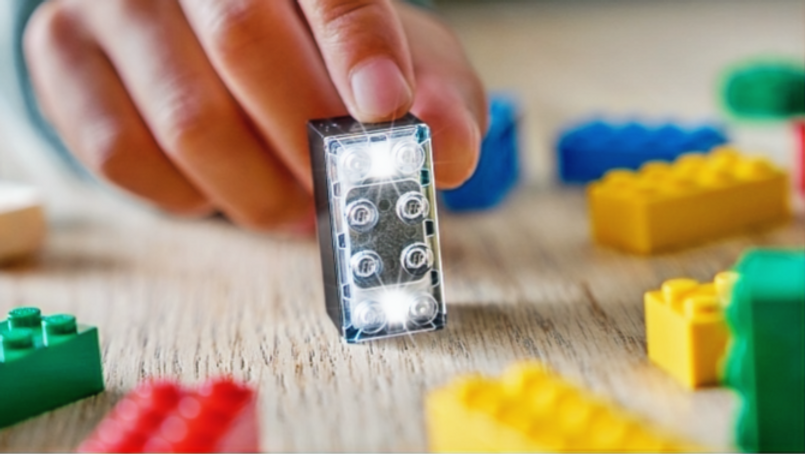
The LEGO Group’s new SMART Play system has sparked plenty of excitement, intrigue and even some confusion across the LEGO community. LEGO’s latest innovation combines traditional bricks with cutting-edge technology to create interactive, responsive play experiences. But what do real-world engineers think about this technology-led approach to play?
In this article, we’ll be covering recently received insights from engineering experts at Accu and their comments on LEGO’s SMART Play system from an engineering perspective. Both Patrick Faulkner, Lead Engineer at Accu, and Ben Massey, MEng at innDex, were kind enough to go in-depth on their professional perspectives on how LEGO can support creativity, problem-solving and engineering skills in children in a technology-driven world.
SMART Play: A Tool Not a Replacement
Lead Engineer Patrick Faulkner explained that while LEGO Smart Play adds an extra layer of engagement to play, it works best as an enhancement to traditional LEGO building rather than a starting point.
“As an engineer, I know that playing with technology at a young age can do wonders for creativity and problem-solving, but only when it’s built on strong foundations”
He recommends that children first develop core skills such as structure, stability and problem-solving through pure imagination. Only once these basic skills are acquired should SMART Play’s technology be used to enhance the play experience with sounds, lights and response interactions. Patrick also cautions the use of technology-led play for children under five when foundational brain development is at its highest.
LEGO as a Low-Fidelity Prototyping Tool
The rise of adult-oriented 18+ models in recent years perfectly demonstrates how LEGO isn’t just a toy. These iconic bricks can be used as a versatile prototyping tool, allowing engineers and designers to quickly create and adjust models, making it ideal for initial concepts.
Patrick highlights how LEGO can help children mirror real-world engineering processes:
-
LEGO’s modular design allows children to test ideas, disassemble parts and rebuild quickly.
-
Sets with advanced modules such as gears, hubs, axles, motors and sensors let children explore movement and mechanics.
-
Building different sets teaches testing, observation and adjustments, echoing how real-life engineers refine concepts.
“LEGO stands out as a low-fidelity prototyping tool because of its versatility, accessibility, and ease of modification.”
Examples of LEGO prototyping for learning include creating a robotic arm to observe how pivot points behave under motion, or creating a gear train to test if gear ratios function as intended. These simple exercises introduce children to fundamental engineering concepts without the complexity or cost of real-world equipment.
Developing Children’s Engineering Skills
The engineers at Accu and innDex also shared a step-by-step approach for using LEGO to develop problem-solving, planning and structural thinking skills:
-
Start with a question or challenge: This could be ‘Can you build something that moves?’ or ‘Can you make a bridge strong enough for a toy car?’ which helps children build with intention rather than just randomly stacking bricks.
-
Add rules (design constraints): Examples include ‘it has to fit on this table’ or ‘it must lift something small’. These shape the challenge, encouraging planning and real-world problem-solving.
-
Choose LEGO sets that encourage engineering: Sets with gears, wheels, axles and beams in particular will promote thinking about movement, structure and cause and effect.
-
Sort pieces before building: Grouping similar pieces together improves efficiency and independent thinking.
-
Build a strong base: A strong foundation will help later additions function properly, while explaining to children exactly why things fall over.
-
Add one piece at a time and test often: This mirrors the iterative testing process used by engineers and encourages children to develop patience and logical thinking as part of the design process.
-
Encourage rebuilding and trying again: Further elements of patience, problem-solving and resilience can be reinforced by experimenting with the bricks.
-
Test strength and stability: Observing the complete build can help children understand weight, balance, support and the importance of testing designs before using them.
Learning Health and Safety Through Play
Ben Massey, MEng and customer success coordinator at health and safety software provider innDex, also highlights how LEGO helps children develop health and safety awareness in a playful environment.
“A collapsing LEGO tower becomes a physical metaphor for structural failure without any real danger, and it teaches you as a child to test different builds and be cautious of failure in the future.”
Group building also fosters teamwork, collaboration and an understanding of how infrastructure interacts with people, which are invaluable skills in engineering careers.
With SMART Play, LEGO continues to innovate, but experts agree that the magic of play happens when technology supports creativity, not when it replaces it. For parents and educators, combining traditional building with SMART play offers the best of both worlds, mixing imaginative, hands-on learning with responsive, ground-breaking technology.
So that’s an engineer’s perspective of LEGO SMART Play, but what do you think? Do you agree with some of the points covered in this article? How important is traditional LEGO building for future engineers? Will SMART Play prove to be successful or another big flop like previous iterations of interactive technology in LEGO themes? Let us know your thoughts and opinions in the comments below.
About the Author