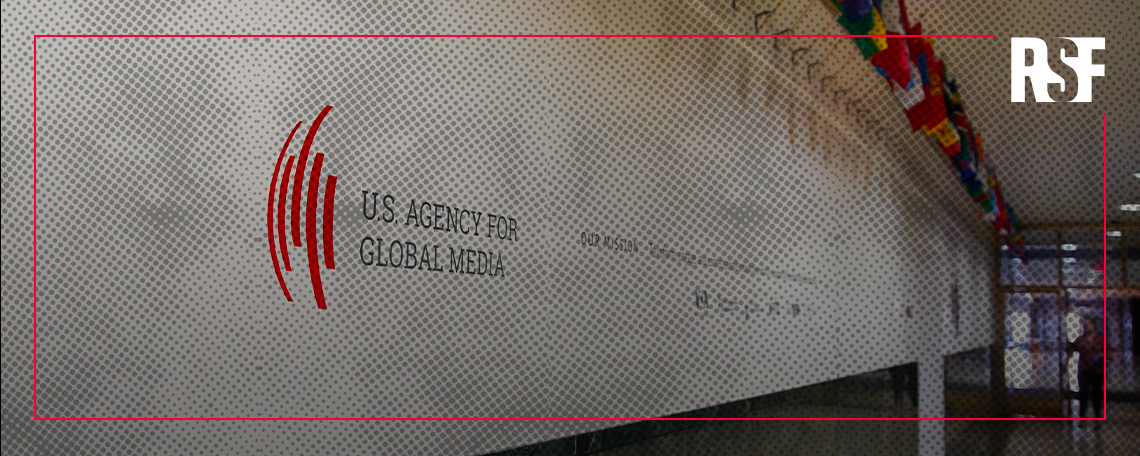
On February 3, President Donald Trump signed a long-awaited annual spending bill into law, which includes funding for USAGM for the next year. The international public broadcasters supported by USAGM — Voice of America (VOA), Radio Free Europe/Radio Liberty (RFE/RL), The Office of Cuba Broadcasting (Radio and Television Martí), Radio Free Asia (RFA) and The Middle East Broadcasting Networks (MBN) — provide reliable information in some of the world’s most difficult environments, including Cuba, Iran, Myanmar, China, Russia and Venezuela. In 2024, USAGM’s networks reached a weekly audience of 427 million people worldwide. USAGM funding will also go to The Open Technology Fund, which supports internet freedom technologies for journalists and their audiences.
The fact that the inclusion of funding for USAGM was supported by both Democrats and Republicans, and in both the House and the Senate, sends a clear signal that Congress supports the agency and its journalists. This funding is a particularly important development as the Trump administration has been waging a war against USAGM media — and journalism at large — since the US president took office for a second time one year ago. On March 14th, he signed an Executive Order attempting to dismantle USAGM. Since then, Kari Lake, who has managed USAGM under the Trump administration, has continued to freeze the ability of USAGM journalists to do their congressionally mandated work, notably by trying to slash the agency’s workforce. RSF has brought a lawsuit against the Trump administration to save VOA alongside its journalists and their unions. In September, a district court ordered Lake to reverse the VOA layoffs and keep its journalists on USAGM’s payroll, yet Lake refuses to let them report and is keeping them on furlough.
Although the funding passed for USAGM is a roughly 25% cut from previous years, it still sends a strong message that Lake must end her efforts to erode USAGM and let the journalists do their jobs.
About the Author