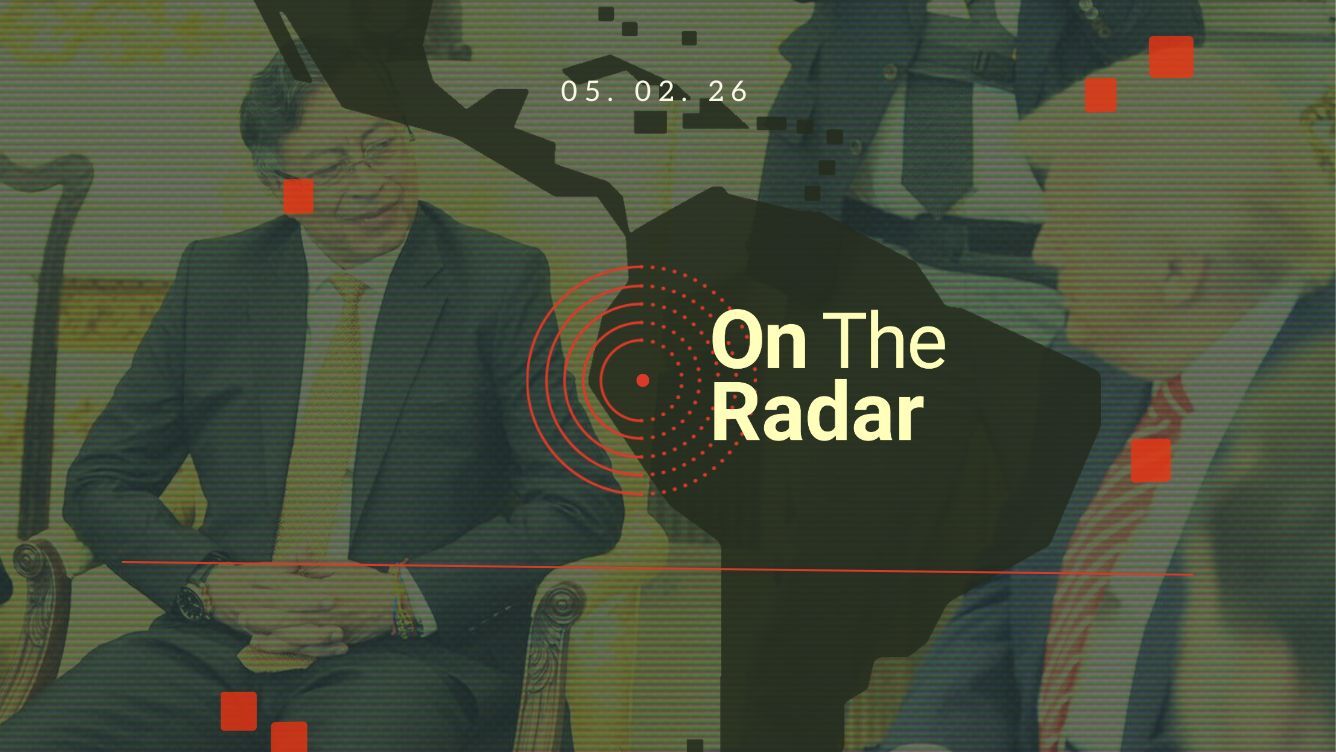

Presidents Trump and Petro meet at the White House, Brazil’s Luiz Inácio Lula da Silva warns of AI’s potential to be weaponized by organized crime for elections, and Costa Rica’s president-elect Laura Fernández promises to be tough on crime in this week’s On the Radar.
Transcript
Isabella Soto Vallejo: Have the tensions between presidents Trump and Petro been resolved?
Is AI the latest weapon in Brazil’s upcoming elections?
And in Costa Rica, will the hardline approach to security promised by the winning presidential candidate Laura Fernández bear fruit?
Stick around to find out the answers on this week’s On the Radar….
Daniel Reyes: [00:19] Colombian President Gustavo Petro met with Donald Trump at the White House after a year of public spats and political blows. Petro had called Trump a murderer and barbarian for greenlighting missile strikes in the Caribbean. Trump had said that Colombia was “run by a sick man who likes making cocaine and selling it to the United States.
The big takeaway? Trump agreed to mediate Colombia’s trade dispute with Ecuador and continue U.S.-Colombia cooperation against the ELN in Venezuela. But there’s still plenty of tension over Colombia’s drug trafficking record and the sanctions against Petro.
[00:57] In Brazil, President Lula da Silva sounded the alarm on the risks of artificial intelligence and organized crime’s role in manipulating public opinion ahead of the 2026 elections. He warns that AI could be used to create fake news, manipulated videos, and distorted realities that confuse voters and undermine democratic processes.
InSight Crime has reported on the growing use of AI and cyber crime by criminal groups in Brazil as well as organized crime’s electoral interference, using both violence and money to influence previous votes. With their growing mastery of AI, gangs will have even more tools, such as the production of election-related content, to push voters towards corrupt candidates.
[01:38] And finally, Laura Fernández won a landslide victory in Costa Rica’s presidential elections, during which rising violence was a top concern. Fernandez promised tougher security measures during her campaign, in the face of rising levels of organized crime there.
Costa Rica dismantled the so-called “South Caribbean Cartel,” last year, which local officials described as the country’s first transnational criminal organization. And the former security minister Celso Gamboa Sánchez was arrested on US drug charges. But we know that Latin America is no stranger to hardline anti-crime approaches, yet organized crime continues to be one of the major threats to public security.
Isabella Soto Vallejo: [02:34] That’s all from on the radar this week. Don’t miss our deep dives into Costa Rica’s criminal crisis, and Colombia’s ongoing bilateral woes with the US and drug trafficking. We’ll be back next week with more.
About the Author