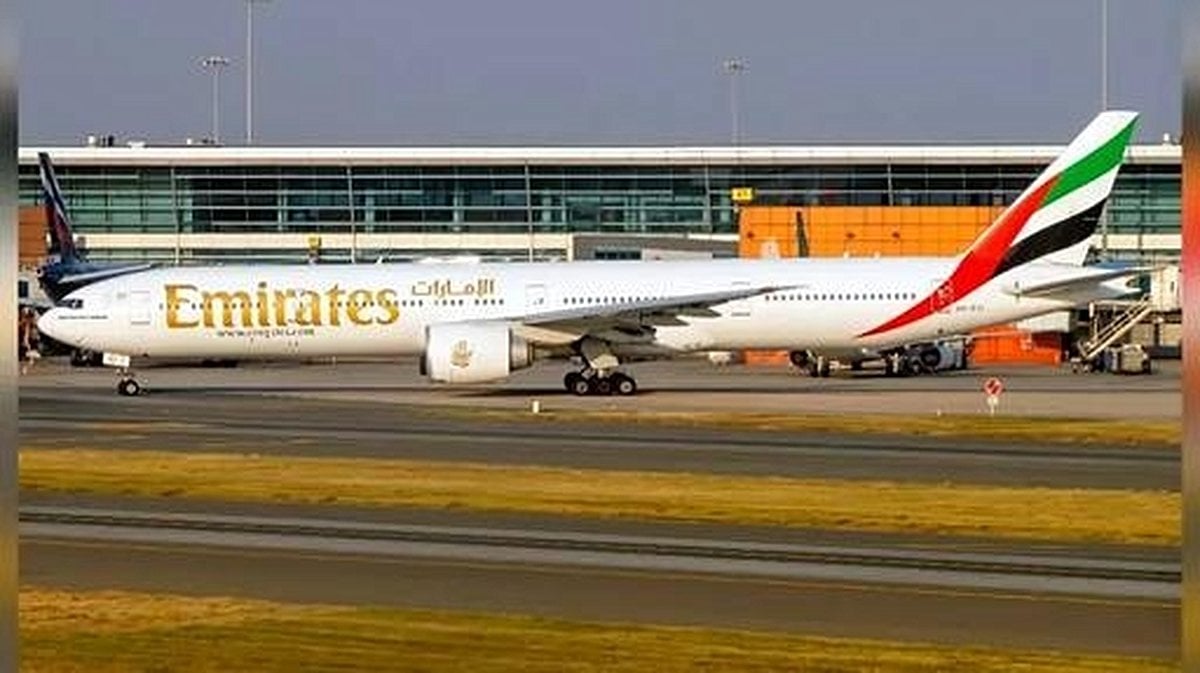
Emirates Airline is poised to restore a second daily flight between Glasgow Airport and Dubai, a move that could reshape Scotland’s air connectivity and export landscape. While the timeline remains unconfirmed, talks between Emirates and airport officials have intensified, reflecting robust demand for both passenger travel and high-value cargo—especially Scottish seafood and whisky.
For years, Glasgow Airport (GLA) enjoyed double-daily Emirates service, a schedule that was reduced in recent times. Now, with passenger numbers rebounding and cargo needs surging, the airport and airline are eager to revive the frequency. According to The Herald, Kam Jandu, chief executive of AGS Airports (which owns Glasgow, Aberdeen, and Southampton airports), confirmed that Emirates has Glasgow on its expansion roadmap. “Our hope was [it] could happen from this winter, which, essentially, is November onwards, but they, to be clear, have never guaranteed that that’s going to happen. Unfortunately, they have hundreds of airports around the world where they also have positive business cases to add capacity. So, I just don’t know where we are in that pecking order,” Jandu explained to The Herald.
The current daily operation between Glasgow and Dubai is served by the Airbus A380, the world’s largest passenger aircraft, offering high seat density and premium cabin space. The proposed second flight, however, would likely be operated by a Boeing 777. While the 777 is smaller in terms of passenger capacity, it offers greater cargo space—a critical factor for Scottish exporters. As Jandu noted, “A 777, even though it is a smaller plane, has more cargo capacity than an A380.”
This additional cargo capacity is no small matter. Scotland’s seafood industry, particularly fresh fish and live shellfish, is a major driver of export demand. Currently, limited capacity at Glasgow means some exporters must route their goods through Manchester, adding both time and complexity. The airport is now planning to expand its refrigeration facilities, aiming for faster cold-chain processing. The goal? To allow seafood, including live lobsters, to reach international markets via Dubai on the very same day of departure. “They have a vision of having the ability to take a fresh lobster from Scotland that’s still alive to a destination on the same day, through some clever, clever process of doing it, because that is an up-and coming demand-based opportunity for them,” Jandu told The Herald. Whisky shipments also contribute significantly to the route’s cargo volumes, making the Emirates service commercially attractive beyond just passenger numbers.
While cargo is increasingly central to the business case, passenger demand remains strong. Glasgow maintains a robust base of outbound and inbound travelers, supporting Emirates’ confidence in expanding service. The addition of a second daily flight would broaden schedule choices for time-sensitive travelers, boost flexibility, and improve connections to Emirates’ vast network across Asia, Africa, and Australia. According to Simple Flying, the 3,633-mile (5,848-km) sector is long enough that connections through Dubai are a key piece of local demand. Two daily departures would allow Emirates to charge a premium for flexibility and better connections, all while spreading operational costs efficiently.
Emirates is also considering introducing Premium Economy on the Glasgow route as part of its ongoing fleet upgrades. The airline has already begun retrofitting its Boeing 777s and Airbus A350s with the new cabin class, which could appear on Glasgow services within the next year if schedules align. “With the wind in the right direction, it could be the next 12 months. But the double-daily is complementary to that,” Jandu stated regarding the potential arrival of Premium Economy on the Glasgow-Dubai A380 service.
For Emirates, the Glasgow-Dubai route fits neatly into its broader European strategy. The airline has favored deploying larger aircraft like the A380 on routes with durable demand, but it is now shifting toward using retrofitted Boeing 777s and Airbus A350s with Premium Economy cabins on select European routes. Adding a second daily rotation through Glasgow is less about opening new cities and more about deepening its presence at proven network spokes. This approach not only helps Emirates defend its market share against other Gulf and European carriers but also bolsters its cargo profile, focusing on premium, time-sensitive shipments.
The timing of the second flight’s launch remains uncertain. While airport officials had hoped for a winter 2025 start, Emirates’ global capacity management means the introduction could slip into the following year. Key factors influencing the decision include aircraft availability, slot timing at both Glasgow and Dubai, and seasonal demand patterns. The UK’s Air Passenger Duty and the winter seasonality, which can punish overcapacity, are also considerations that may affect the route’s profitability.
Meanwhile, AGS Airports has undergone significant changes. In early 2025, the group was acquired by Canada’s Public Sector Pension Investment Board (PSP Investments) through AviAlliance, in a deal valued at £1.53 billion. The acquisition brought new leadership and a renewed focus on network expansion and infrastructure upgrades. Glasgow Airport is already investing in terminal improvements and gate efficiency, aiming to attract more long-haul flying and reinforce its status as a key Scottish gateway.
It’s worth noting that Emirates continues to serve Scotland via a daily nonstop service from Dubai to Edinburgh Airport, currently operated by an Airbus A350. This gives Scottish travelers and exporters multiple options for connecting to the Middle East and beyond, but the unique cargo and passenger mix at Glasgow makes the city a particularly attractive prospect for expansion.
All eyes are now on Emirates’ next scheduling cycle, with the possibility of a second daily Glasgow-Dubai flight as soon as the summer of 2026. If approved, the move would mark a significant boost for Scotland’s international connectivity, benefiting both travelers and exporters. As Jandu put it, “They used to have a double-daily here before. So they have a very different mix of proposition into Edinburgh because it’s a lot of leisure traffic inbound, definitely, whereas we have got a proven demand-based opportunity from here.”
With strong demand, strategic upgrades, and a renewed commitment from both the airline and airport, Glasgow’s ambitions for expanded Emirates service seem well within reach. The next few months will be crucial in determining whether Scotland’s skies will once again see two daily Emirates flights linking Glasgow to the world.
About the Author