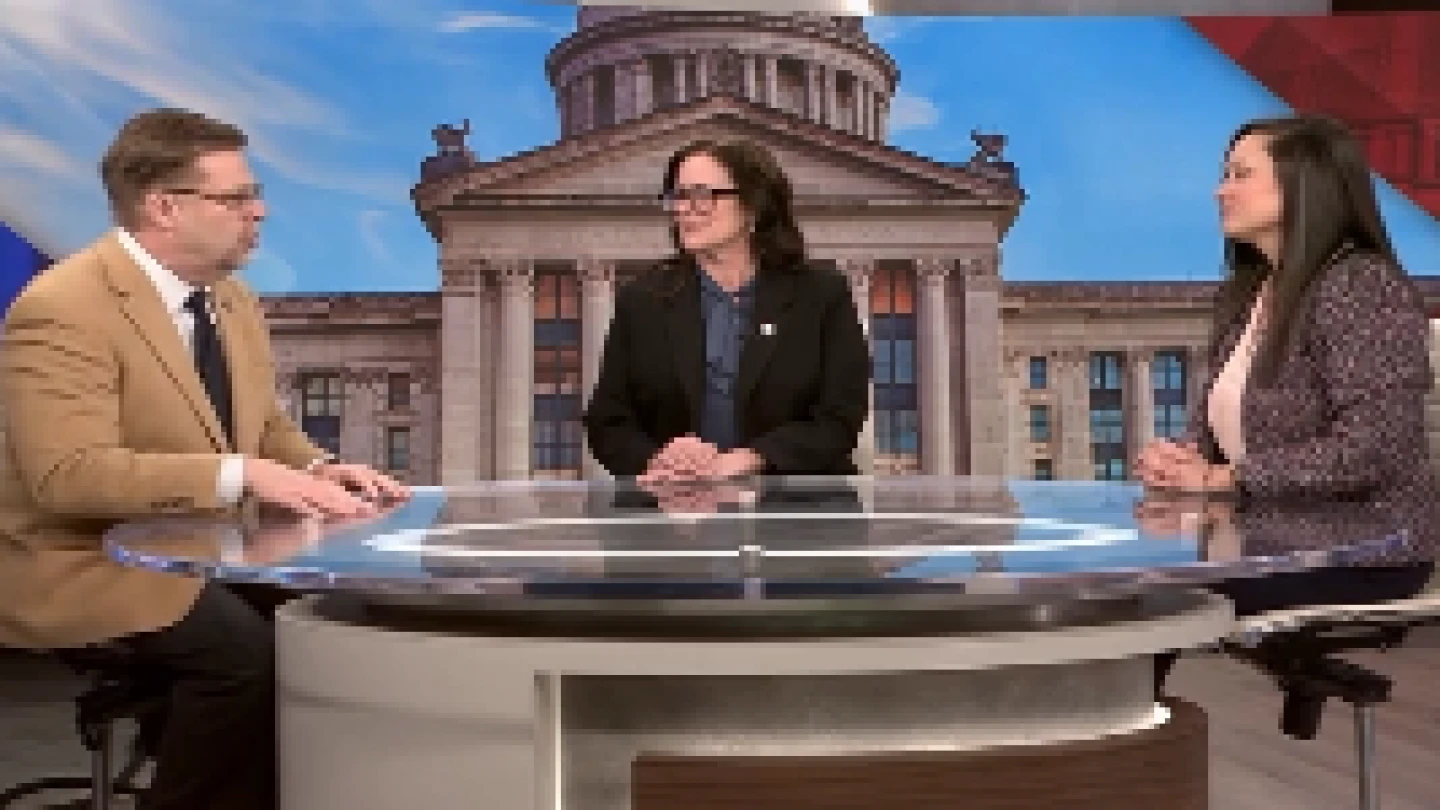
Democratic leaders in the Oklahoma House and Senate say rising costs, public education investment and government accountability will define their priorities as lawmakers begin the second session of the 60th Legislature.
Senate Democratic Leader Julia Kirt and House Democratic Leader Cindi Munson outlined their agenda during a joint interview this week ahead of the governor’s State of the State address.
Both leaders said affordability remains the most pressing issue facing Oklahomans, affecting housing, groceries, insurance and utility costs.
Affordability pressures drive agenda
Kirt said Senate Democrats are entering the session focused on lowering everyday costs, strengthening public education and reforming state government.
She said lawmakers have heard repeatedly from constituents struggling to afford basic necessities and argued the state needs stronger consumer protections, particularly as insurance rates continue to climb.
Munson said affordability concerns cross geographic and political lines, noting many working families are juggling multiple jobs but still falling behind.
She cited data showing roughly half of working families in Oklahoma struggle to cover basic expenses, saying wages have not kept pace with rising costs.
Insurance and housing reforms prioritized
Both leaders identified insurance reform as a top priority, including proposals to limit premium increases, restrict the use of credit scores in setting rates and give regulators more authority to intervene earlier.
Kirt said lawmakers should not rely on lawsuits as the primary response to excessive rate hikes and instead focus on proactive oversight.
Housing affordability is also a central focus, with Democrats supporting bipartisan efforts to address housing shortages in both urban and rural communities.
AI-driven pricing practices under review
Munson said House Democrats are advancing legislation aimed at banning pricing practices that use consumer surveillance and artificial intelligence to adjust prices based on behavior, location or timing.
She said those systems allow companies to charge different prices for the same products and unfairly disadvantage consumers.
Kirt said Oklahoma should act at the state level rather than wait for federal action, pointing to gridlock in Congress.
Government oversight and accountability
Kirt said government reform includes strengthening oversight of state agencies, citing concerns about accountability within the Department of Education under State Superintendent Ryan Walters.
She said lawmakers lack sufficient checks and balances to prevent waste or mismanagement and called that gap a priority.
Education and health care tied to workforce
Munson said education and health care outcomes are increasingly tied to economic growth, as business leaders emphasize workforce readiness.
She said Oklahoma cannot improve its economy without investing in schools, health care access and child care, noting voters have previously supported expanded health coverage.
Kirt pointed to a new House and Senate Democratic education framework, “Oklahoma’s Commitment,” which calls for sustained investment rather than one-time funding increases.
Minority role and bipartisan path
Both leaders said Democrats see their role as holding the Republican supermajority accountable while seeking areas of bipartisan agreement.
Kirt said divisions within the majority party have brought more debate into public view, increasing transparency.
Munson said Democrats will continue pushing policies they say reflect what constituents are asking for, particularly on cost-of-living issues.
About the Author