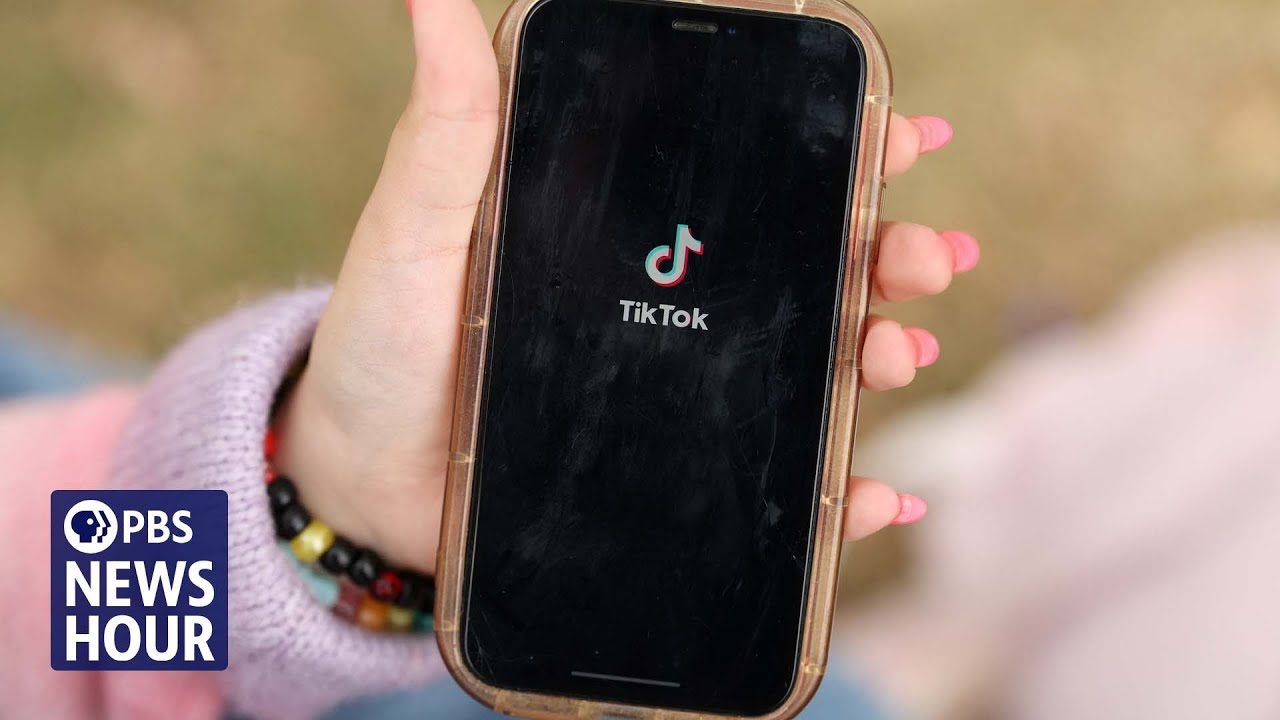
Video by PBS NewsHour | Why Americans Are Deleting TikTok After the New US Ownership Deal
🌍 What This Means for Communities
TikTok is not just a social media app for millions of Americans. For immigrant communities, youth organizers, artists, and small businesses, it functions as a public square, an organizing tool, and a source of income. When the platform falters, the effects ripple unevenly, often hitting marginalized voices first.
🏛️ A High-Stakes Transition Under Political Pressure
In January 2026, TikTok completed a long-negotiated transition to a new U.S.-based ownership structure after years of legal and political pressure from Washington. The move was required under federal legislation that threatened a nationwide ban unless the app divested from its China-based parent company, ByteDance.
The new ownership arrangement includes U.S. investors and technology partners approved during a renewed push by President Donald Trump to force TikTok under American control. Trump, who once sought to ban the app outright, publicly supported the deal framework as a way to keep TikTok operating in the United States while shifting control away from China.
The transition was presented as a stabilizing solution tied to national security concerns. Instead, it quickly exposed how fragile public trust in major tech platforms has become.
Within days, users across the country reported widespread technical problems, including stalled video uploads, slow load times, and videos showing zero views. TikTok attributed the disruptions to infrastructure recovery issues, including a power outage at a U.S.-based data center. For many users, the timing raised deeper questions.
⚖️ When Technical Failures Become Political
As outages spread, politically engaged users began reporting that certain posts appeared normally on their own profiles but were inaccessible to followers. One content creator said U.S.-based followers could not view his post analyzing the shooting death of Renee Good by federal agents, even though it appeared intact on his page.
California State Sen. Scott Wiener said TikTok prevented him from sharing a post about Immigration and Customs Enforcement for several hours. California Gov. Gavin Newsom later announced a state investigation to determine whether TikTok violated California law by censoring content critical of President Donald Trump. TikTok said a cascading systems failure, triggered by the data center outage, caused widespread bugs across the platform.
The controversy is unfolding amid a broader legal reckoning for social media companies. TikTok, Meta, and YouTube are facing multiple high-profile court cases that challenge how platforms design, moderate, and profit from their systems. TikTok has also reached a settlement to avoid participating in a landmark social media addiction trial involving harms to young users.
In a polarized environment, technical explanations often fail to satisfy. When platforms provide limited transparency, users often interpret disruption through a political lens. For communities already sensitive to surveillance or silencing, the perception of censorship can be as damaging as censorship itself.
🔐 Privacy, Policy, and Perception
Days after the ownership deal, U.S. users were prompted to accept updated terms and a revised privacy policy. The policy explicitly listed sensitive categories of data TikTok may collect or process, including precise location, immigration status, gender identity, private messages, and data linked to minors.
Legal experts noted that much of the language reflects existing state privacy laws. But perception mattered more than precedent. App analytics firms reported that TikTok deletions in the United States surged by roughly 150% following the announcement, signaling a sharp erosion of user trust even as overall usage remained high.
🎥 Creators, Organizers, and the Cost of Uncertainty
Creators reported sudden drops in reach and engagement, disrupting income streams and undermining confidence in the platform. Grassroots organizers said their posts were no longer reaching audiences they had built over years.
Community media advocates note that platforms like TikTok have become especially important for communities of color, immigrant groups, and young people who lack access to traditional media channels. When algorithmic systems destabilize, those voices often lose visibility first.
🧠 Algorithms, Infrastructure, and the Trust Gap
Tech journalist Jacob Ward noted that because major communication platforms are controlled by private companies, users often cannot easily distinguish between intentional moderation and technical failure. TikTok’s systems are capable of tightly controlling reach and visibility, even if there is no evidence such controls were deliberately deployed in this case.
Ward compared the moment to Elon Musk’s takeover of Twitter, now X, which reshaped public expectations around how ownership can influence platform norms and speech.
🔮 Technology, Power, and Public Trust
What appears to have broken is not the app itself, but the belief among users that the platform belongs to them. As ownership, governance, and technical control grow more opaque, questions of trust may now define TikTok’s future in the United States more than questions of survival.
For communities that rely on digital platforms to be seen and heard, the stakes could not be higher.
About the Author