As a kid growing up in rural Oklahoma, weekday lunches were a decision minefield. My family didn’t consume beef or pork, a religious and social product of my parents’ upbringing as Hindus who immigrated from Pakistan.
Those restrictions initially made for awkward encounters in the school lunch line, where I was often confronted by a hot meal of cheeseburgers or pepperoni pizza. Sometimes, the cafeteria workers took pity on me, quickly making me a peanut butter and jelly sandwich in the back. But on more than a few occasions, I just went hungry.
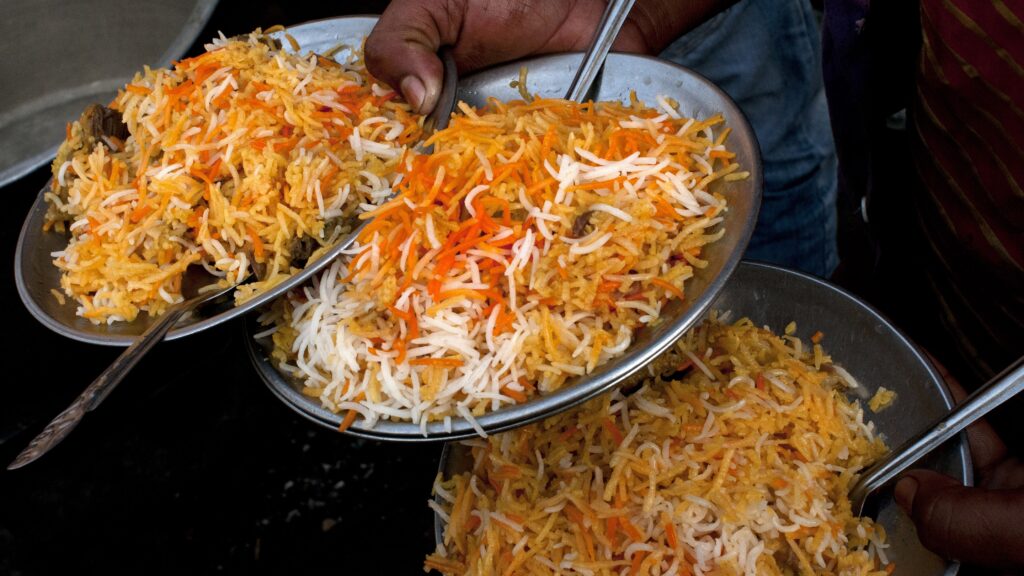
Eventually, I started bringing lunches from home. Tupperware with biryani and saag paneer, however, came with its own tradeoffs, filled with spices and aromatics that I despised at the time, out of shame and social pressure, but relish now. They carried a silent, heavy label: un-American.
Those lunch-hour memories, which I share with so many children of immigrants, were on my mind when I read through the new federal dietary guidelines published earlier this month. Much of the public discussion has been focused on familiar debates in nutrition, such as the amount of saturated fats to recommend in a balanced diet, or on the heavy focus on animal-based proteins. Yet in the guidelines themselves, the science and substance hasn’t dramatically shifted from prior editions.
What has shifted instead is the framing. The visuals accompanying the new guidelines include an inverted food pyramid filled with foods that would have felt familiar in a midcentury American kitchen: a wedge of cheese, a stick of butter, a whole roasted turkey. Shortly after their release, the National Design Studio sold limited-edition posters in a Norman Rockwell–like style, depicting steaks and salmon labeled as “real food.”
Taken together with the language of the guidelines themselves, these choices felt intentional. Early on in the document, the authors note a purposeful ignorance of “considerations of race, ethnicity, culture, or socioeconomic status.” By explicitly setting aside questions of cultural inclusion, the recommendations seemed less about making America healthy again, and more about quietly reasserting what kinds of food count as real.
More than 20 years after those lunchroom encounters, I’m finishing my training as a cardiologist, and I spend many of my days seeing patients in exam rooms and hospital wards. Although most of my discussions with them revolve around medications, procedures, and tests, I try to ask them, if we have a minute, about what they eat. Food, I’ve found, is not only a powerful tool to bend the trajectory of cardiovascular disease, but is also a way into people’s lives. The pluralism of America is hard to miss in those rooms, and in the answers to those questions. My patients tell me about the plantains they eat before an early work shift, the jollof rice they pack for lunch, and the cod they cook for dinner. They are the diets of people tackling chronic diseases like obesity, diabetes, and atherosclerosis, shared by people seeking expert guidance on how to confront and treat these conditions.
Yet when those conversations turn toward guidance, the pluralism of foods I hear about in my work starts to disappear. Despite the fact that chronic cardiovascular diseases disproportionately affect communities of color, dietary advice from medicine and public health has long gravitated toward an “American” diet.
Prior editions of the federal dietary guidelines have briefly acknowledged but largely minimized connections between food, culture, and identity. Even my most frequent set of suggestions, the Mediterranean diet — an evidence-backed, long-held gold standard in nutrition for reducing heart attack and stroke risk — has been criticized as being culturally one-dimensional.
Prior to this year’s federal dietary guidelines, a working group was convened to better evaluate how issues of health equity and diversity could be integrated into future iterations. Yet rather than taking a step forward, the new federal dietary guidelines concluded that the working group’s report “would not meet the American public’s need for objective, evidence-based nutrition guidance.” They dismissed those recommendations, and erased that progress.
To be clear, there are laudable ideas, from a public health perspective, in the new guidelines. There is good reason to believe that ultra-processed foods (although difficult to define) are linked with a host of chronic health conditions, and eating less of them is likely a good thing to do.
But in the big picture, these guidelines are not about adjusting macronutrients. They instead choose to narrow the aperture of American life and engage in a sort of food nationalism, bringing a culture war to school cafeteria menus, food assistance programs, and meals in places like hospitals and prisons.
In doing so, these guidelines undercut their public health mission of making America healthier again. By imagining a dinner table from the past, they make themselves less relevant to today.
Back in Oklahoma, my hometown has changed. Over the years, a hibachi restaurant and family-run Mexican eateries have joined the fast-food staples and diners. The local casino, once an appendage to a gas station outside town, has morphed into a world-class resort, entertainment center, and economic engine. Its advertisements greet me at the baggage claim at DFW whenever I make the trip home. People mostly come to gamble. But they increasingly come to see rodeos, comedians, EDM artists, and K-pop idols, too.
Last year, a few weeks after the presidential inauguration, my parents went to see Kumar Sanu, an Indian playback singer made famous by Bollywood in the 1990s, who came to the casino on a nostalgia tour. They flooded our family group text in the process. The crowd shown in their videos, to my surprise, wasn’t just a gathering of South Asians making the journey from North Texas across the state border to Oklahoma. It was instead mostly people visiting the casino, or from our town, mesmerized by music that my father would blast out his car during school dropoffs, much to my childhood embarrassment.
American society has moved on from a narrow view of culture rooted in the past. Our public health guidance around what to eat should move on, too.
Vishal Khetpal is a fellow in cardiovascular disease and writes the STAT column The Workup.
About the Author