By DCB Editorial, January 29, 2026
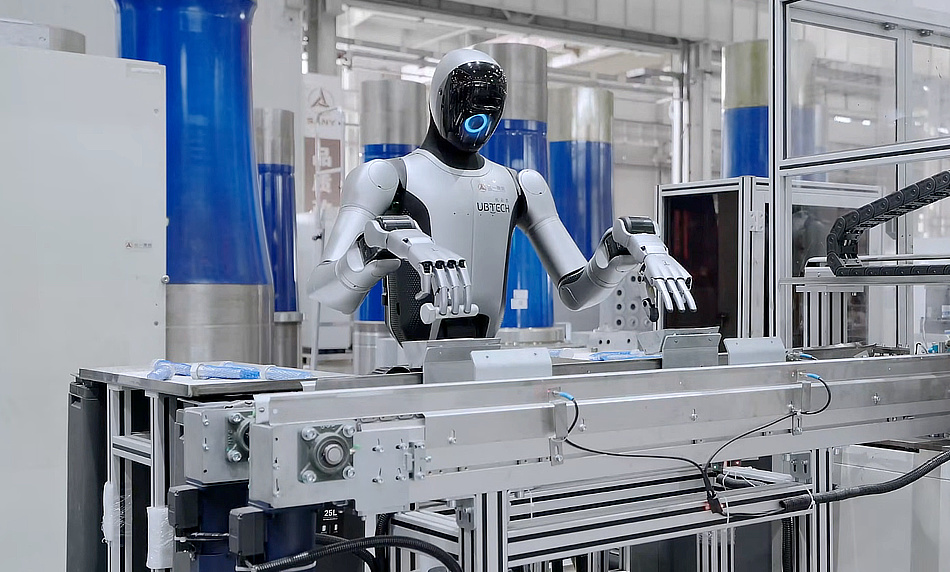
China’s push to automate factories with humanoid robots is facing technical limits, as UBTech Robotics’ latest Walker S2 models achieve only 30–50% of a human worker’s productivity. Despite these constraints, companies like BYD and Foxconn are experimenting with the robots to address labor shortages, highlighting the growing demand for flexible automation.
The Walker S2 excels at repetitive tasks and can walk between assembly lines, but it still requires manual tool changes and faces challenges in power management and joint durability.
UBTech aims to scale rapidly, targeting 10,000 units in 2026, up from 500 in 2025, with each deployment providing valuable data to refine its algorithms and hardware.
The company has begun early-stage collaborations with Airbus and Texas Instruments, though widespread commercial deployment remains some years away.
Analysts say reaching 80% of human efficiency by 2027 is ambitious but achievable, and even partial efficiency gains can be valuable since robots don’t require breaks or holidays.
While the humanoid revolution in China is still largely experimental, the gradual improvements in productivity and adaptability demonstrate a step-by-step evolution in industrial robotics.
UBTech and competitors such as Dobot, Unitree, and X-Humanoid are helping define what factory humanoids can achieve, showing how incremental, data-driven innovation is slowly translating ambitious automation visions into reality.
About the Author