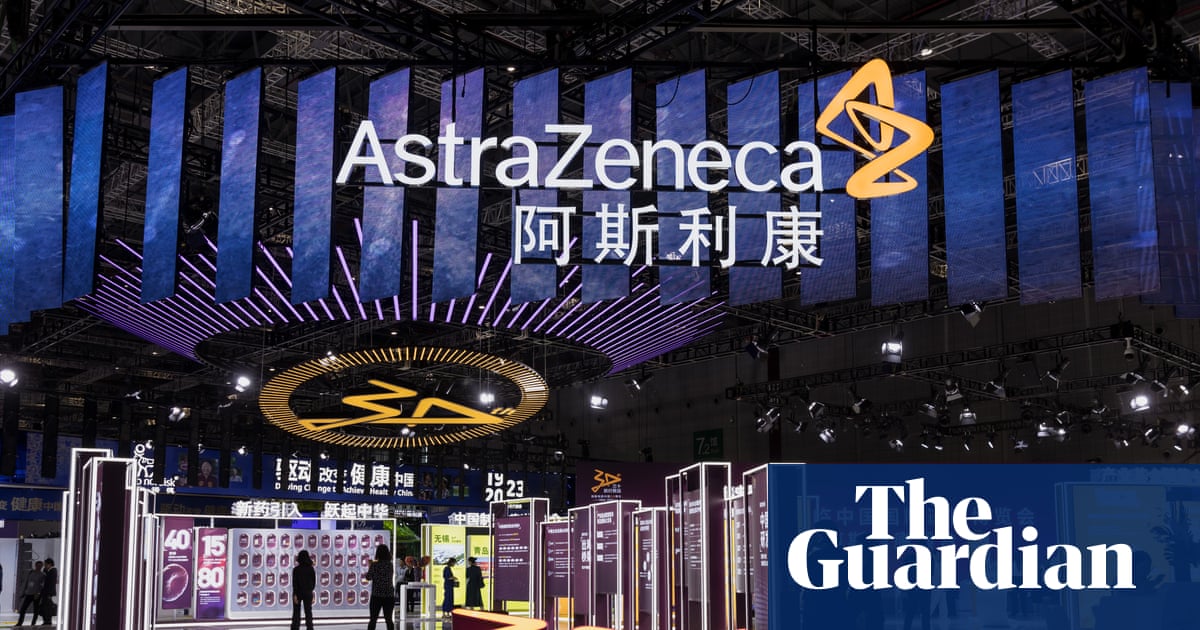
Britain’s biggest drugmaker AstraZeneca is to invest $15bn (£11bn) in China, it announced during Keir Starmer’s visit to the country, just months after cooling on plans for expansion in the UK.
The Cambridge-based company said it would spend the money by 2030 to expand medicines manufacturing and research and development in China, where it already has a big presence. It includes the construction of a $2.5bn new research hub in Beijing, which was announced last March.
During the first visit by a British prime minister to China in eight years, Starmer said the move would help AstraZeneca to grow into a bigger business, thereby supporting thousands of UK jobs.
He added: “The multi-billion pound investment announced today from AstraZeneca, alongside partnerships from some of our country’s leading universities, furthers research and development in the UK which is helping to power our world-class life sciences sector.”
The move comes after a period of cooling relations between the government and AstraZeneca, with the entire pharmaceutical industry at loggerheads with ministers over drug pricing and other issues, resulting in a deal in December. The company paused a planned £200m expansion of a research site in Cambridge in September, having ditched a £450m investment at its vaccine site in Speke near Liverpool at the start of last year.
Pascal Soriot, the AstraZeneca chief executive, said the “landmark investment” marked the next chapter for the company in China, which “has become a critical contributor to scientific innovation, advanced manufacturing, and global public health”.
The funding will go into breakthrough treatments such as cell therapy and radioconjugates, a more advanced radiotherapy that targets cancer cells specifically.
AstraZeneca has six global research hubs: two in Europe, in Cambridge and Sweden; two in the US; and two in China, in Beijing and Shanghai. The ones in China collaborate with more than 500 clinical hospitals, and have led many global clinical trials in the past three years.
The company will also expand its existing manufacturing facilities in Wuxi, Taizhou, Qingdao, and Beijing, which manufacture medicines for China and 70 other countries, and plans new sites. These investments will take AstraZeneca’s workforce in China from 17,000 to beyond 20,000.
AstraZeneca acquired the Chinese cancer specialist Gracell Biotechnologies in a $1.2bn deal in 2024 and struck a deal to develop an anti-obesity and type 2 diabetes pill with Shanghai-based Eccogene in late 2023.
However, AstraZeneca is also under investigation by Chinese authorities over allegations of unpaid import taxes on certain cancer drugs, breaches of data privacy laws and medical insurance fraud. Several of its staff were detained in 2024, including the president of its Chinese subsidiary, Leon Wang.
About the Author