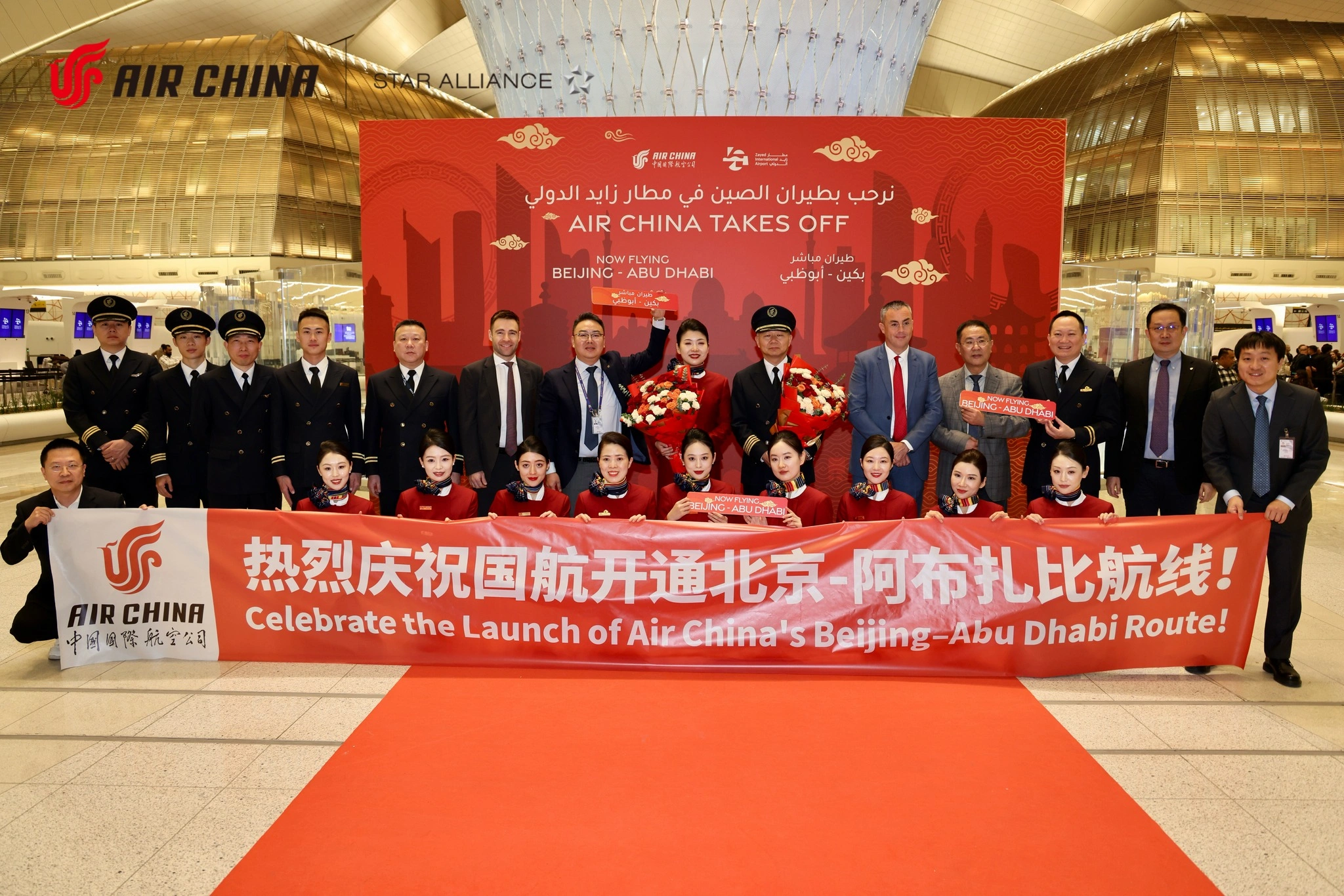
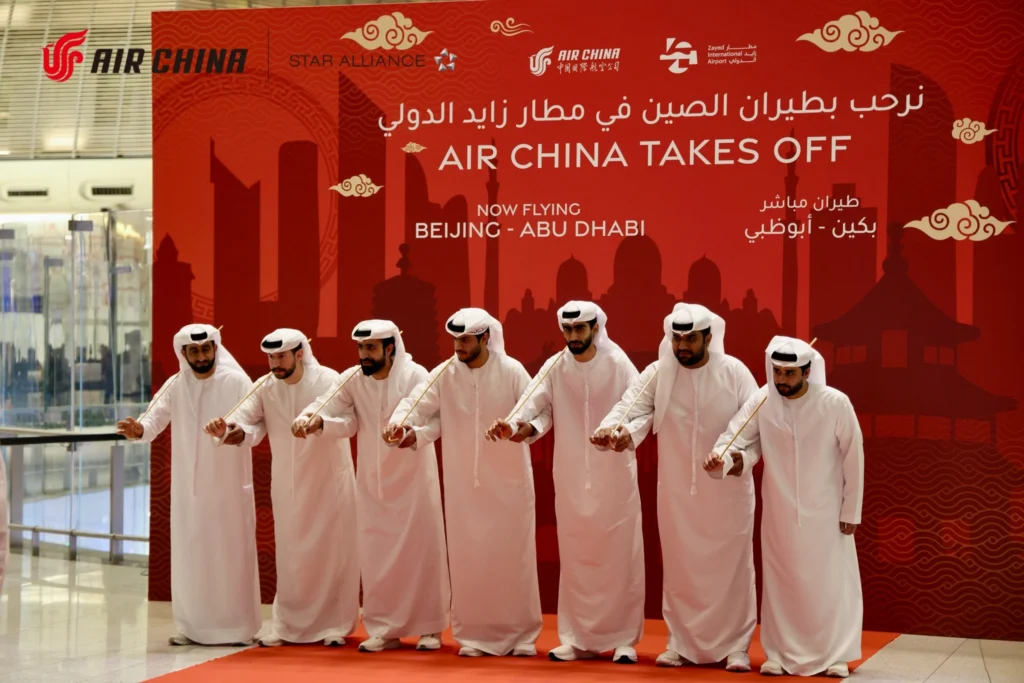
ABU DHABI- Air China (CA) has launched a new nonstop service connecting Beijing Capital International Airport (PEK) with Abu Dhabi Zayed International Airport (AUH), marking a key expansion in its Middle East network.
The inaugural flight arrived in Abu Dhabi on January 24, 2026, carrying 278 passengers and establishing the first direct Beijing Abu Dhabi link operated by a Chinese airline.
Air China Beijing to Abu Dhabi Flight
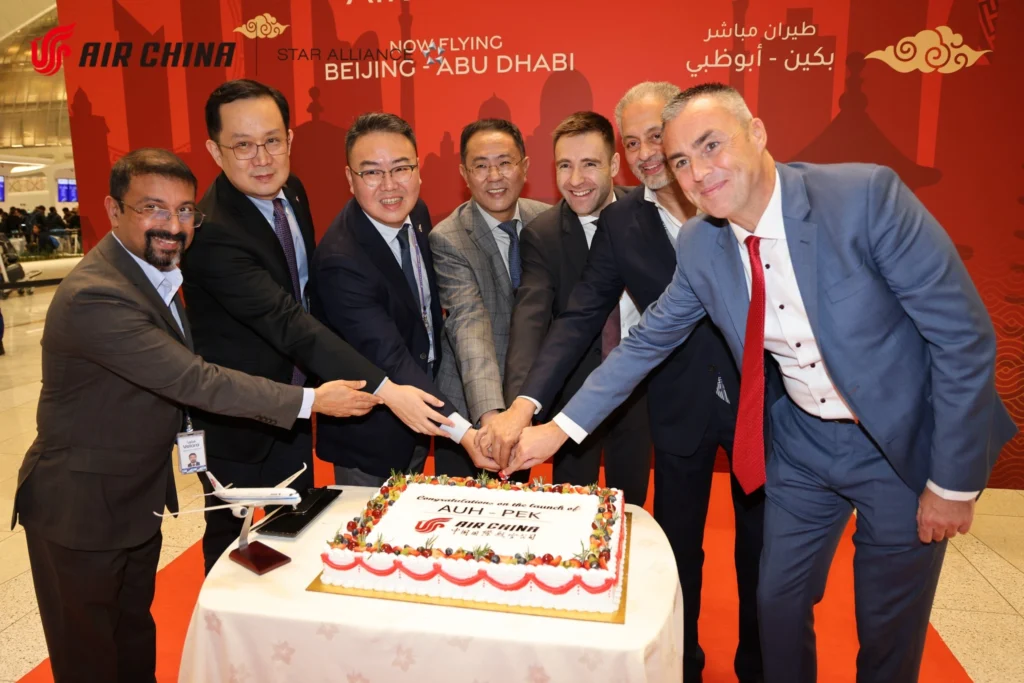
Air China operated the inaugural service as flight CA705 using a Boeing 787 Dreamliner. The aircraft departed Beijing Capital International Airport (PEK) and landed at Zayed International Airport (AUH), completing the carrier’s first new international route launch of 2026.
This service creates a direct air bridge between the political capitals of China and the United Arab Emirates.
While Etihad Airways (EY) has long connected the two cities from Abu Dhabi, this marks the first time a Chinese carrier has operated the route in the opposite direction.
Flight Schedule and Aircraft Details
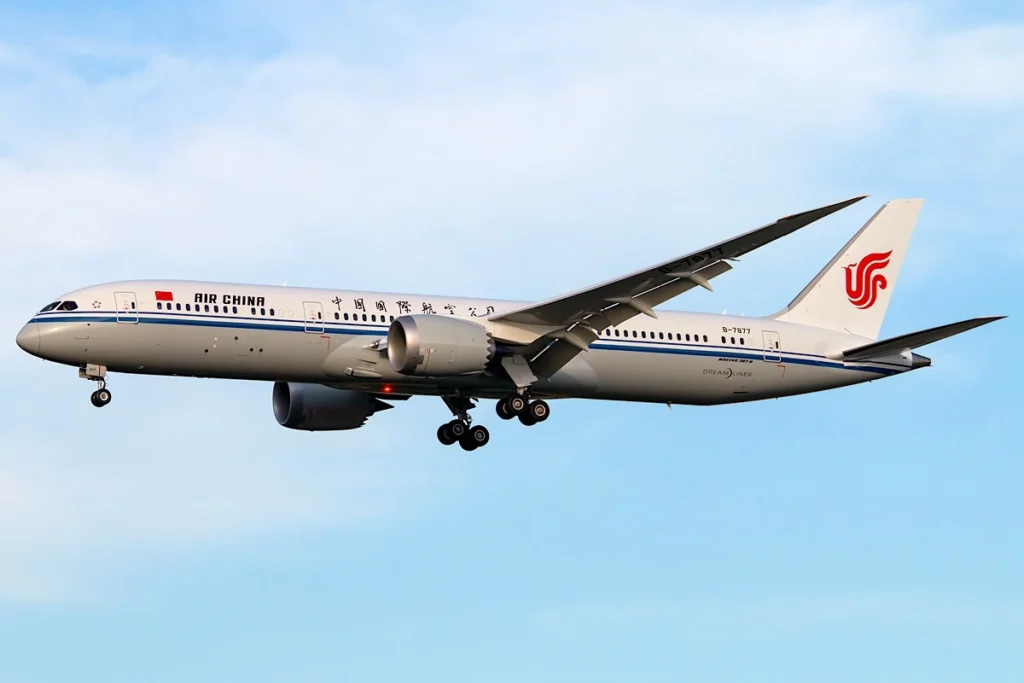
The route is operated four times weekly on Tuesdays, Wednesdays, Fridays, and Saturdays. Flights operate as CA705 from Beijing to Abu Dhabi and CA706 on the return sector.
Air China has deployed the Boeing 787 widebody aircraft on the route. Depending on cabin configuration, the Dreamliner typically seats between 250 and 300 passengers. Its range and fuel efficiency make it suitable for long-haul services where demand is steadily developing.
The Beijing Abu Dhabi service adds a new destination to Air China’s growing Middle East footprint. The route offers travelers a nonstop alternative to one-stop itineraries that previously required connections through Gulf hubs or Asian transit points.
For Air China, the launch reflects a broader strategy to rebuild and selectively expand its international long-haul network following years of reduced overseas operations. The airline continues to prioritize routes that link major political and economic centers.
Strategic Context and Market Outlook
The route launch aligns with strengthening aviation and economic ties between China and the United Arab Emirates. Increased connectivity supports business travel, tourism, and government-related movement between the two countries.
Industry observers note that direct links such as this may support longer-term traffic growth linked to Belt and Road Initiative cooperation, although Air China has not released specific demand forecasts for the route.
Abu Dhabi Travel Guide
Abu Dhabi blends deep-rooted heritage with bold modern ambition, offering culture, adventure, luxury, and nature in one destination. The emirate moves easily between ancient deserts and futuristic skylines.
Etihad Airways (EY) connects the capital globally via Abu Dhabi International Airport (AUH), making the city a major gateway to the Middle East and beyond.
Where Tradition and Vision Meet
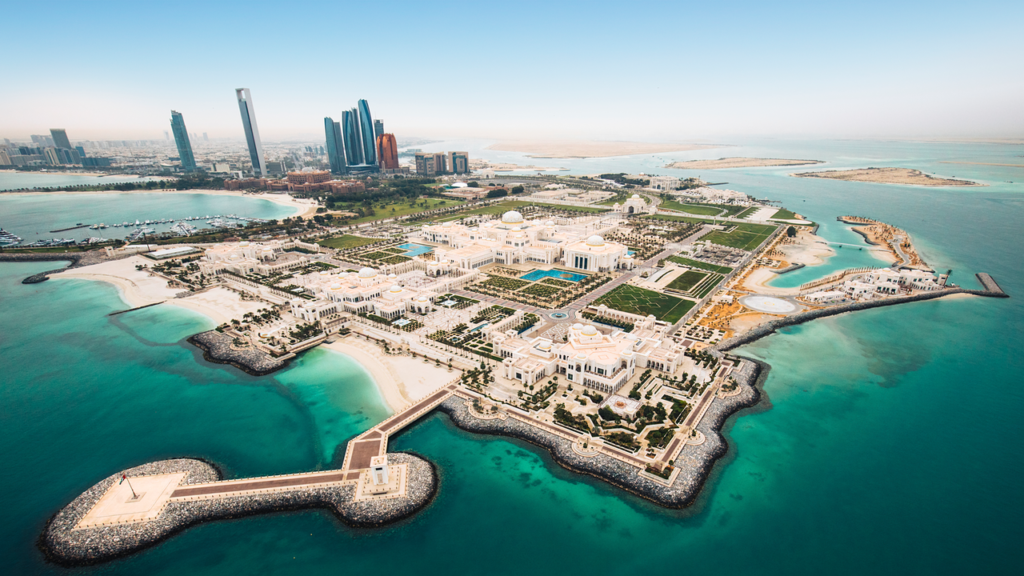
As the capital of the United Arab Emirates, Abu Dhabi reflects both continuity and transformation. From the Observation Deck at 300 in Jumeirah at Etihad Towers, the city’s modern identity comes into focus.
Landmarks include Capital Gate, one of the world’s most dramatically leaning towers, and the circular Aldar Headquarters, inspired by a clam shell and rooted in maritime heritage. Masdar City pushes sustainability forward by combining traditional wind cooling with autonomous electric transport.
Yet the past remains visible and active. Wooden dhows still arrive at ports. Shisha cafes fill with quiet conversation. Trade continues in traditional souks where bargaining is part of daily life. In Al Ain, the oasis city near the Omani border, markets sell spices, incense, coffee pots, and camels much as they have for generations.
Architectural Grandeur and Cultural Depth
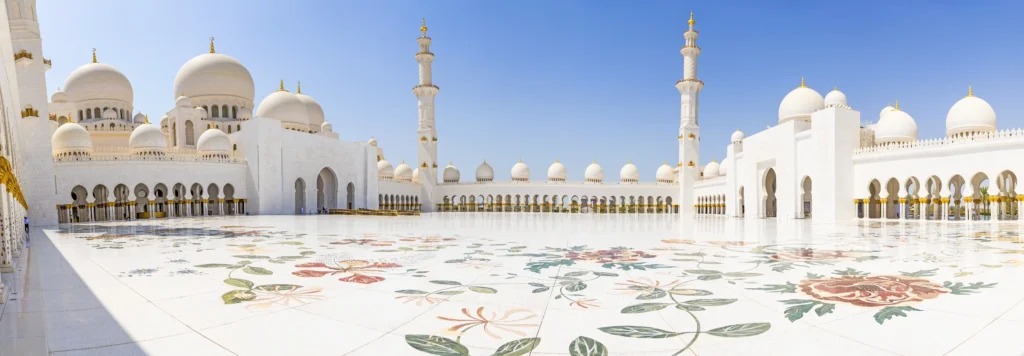
Abu Dhabi’s cultural landmarks define its global stature. The Sheikh Zayed Grand Mosque stands as one of the world’s most striking religious structures, built in white marble with more than 80 domes, Swarovski crystal chandeliers, and the world’s largest hand-knotted carpet.
On Saadiyat Island, Louvre Abu Dhabi presents a universal museum concept. Its galleries explore shared human history through works from the Louvre, Paris, and other major institutions, alongside regional artifacts. Nearby, Manarat Al Saadiyat supports local and regional artists and hosts the annual Abu Dhabi Art event.
Restored desert forts such as Qasr Al Muwaiji and Al Jahili highlight the emirate’s political and defensive history, while Hili Archaeological Park preserves Bronze Age tombs dating back over 4,000 years.
High-Speed Thrills and Family Attractions
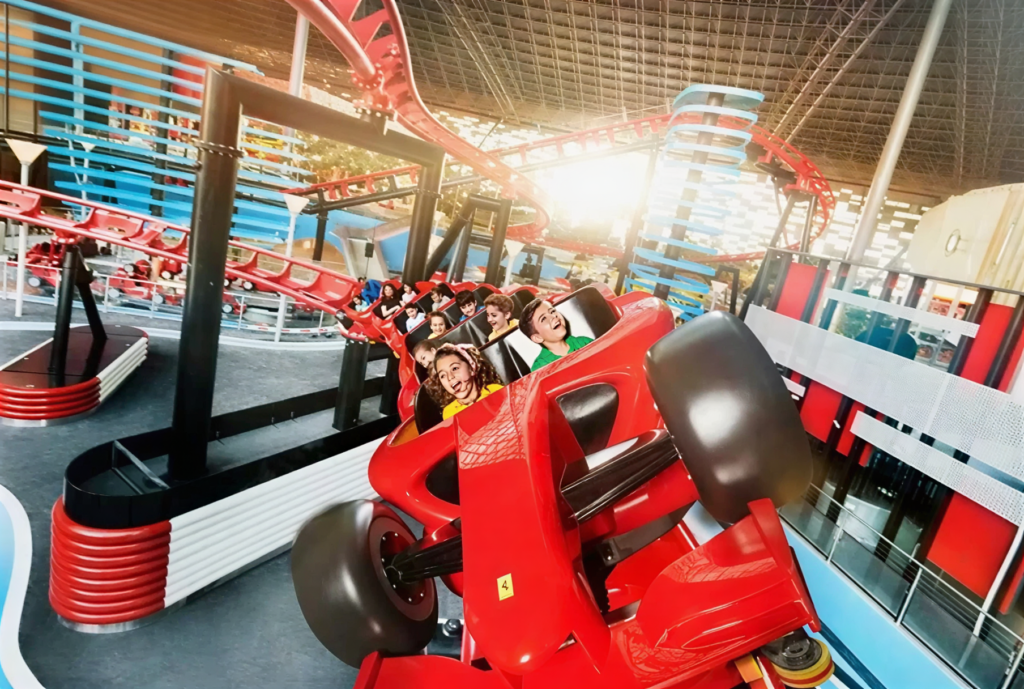
Modern Abu Dhabi also delivers large-scale entertainment. Ferrari World Abu Dhabi is home to the world’s fastest rollercoaster, accelerating to 150 mph in under five seconds.
Yas Waterworld offers wave pools and record-length slides, while Warner Bros. World Abu Dhabi brings six immersive themed worlds under one roof.
The Yas Marina Circuit hosts the Formula One Etihad Airways Abu Dhabi Grand Prix each November. Outside of race weekends, visitors can cycle, walk, or run the track during scheduled community evenings.
Emirati Cuisine and Global Dining
Abu Dhabi’s food scene reflects centuries of trade and migration. Traditional Emirati dishes include al harees, slow-cooked wheat and meat, al majboos, spiced meat with dried limes, and al madrooba, a salted fish dish with deep coastal roots.
Alongside local cuisine, the city supports a wide range of international restaurants led by globally recognized chefs, reinforcing its reputation as a culinary destination.
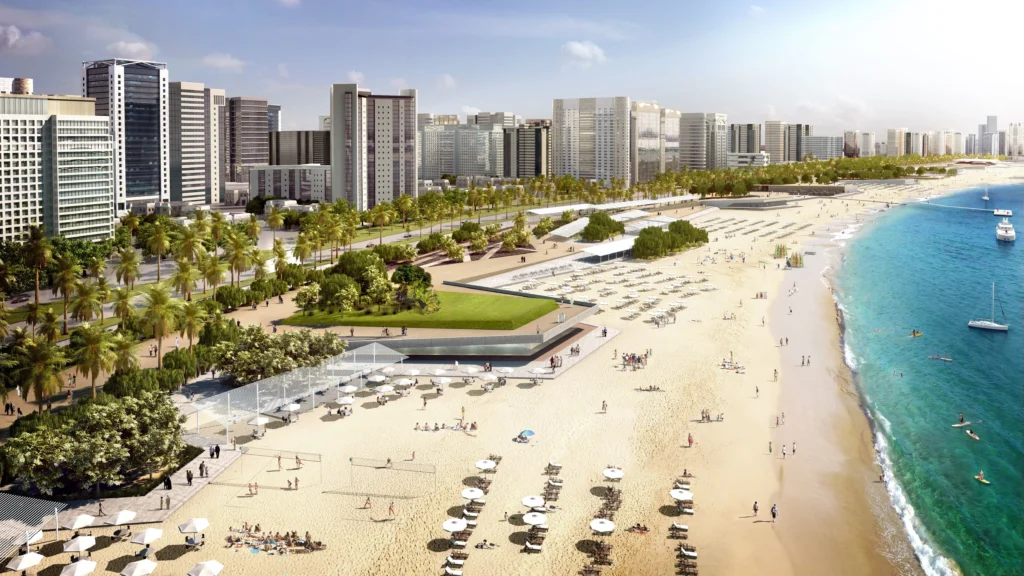
Beaches, Corniche, and Coastal Calm
Set between the Empty Quarter desert and the Arabian Gulf, Abu Dhabi offers extensive beaches. The Corniche stretches along the city waterfront with landscaped gardens, cycling paths, and Blue Flag beach zones catering to families and quiet visitors alike.
Saadiyat Beach remains deliberately low-density to protect hawksbill turtles and dune ecosystems, while Yas Beach combines leisure, water sports, and beach club culture, with complimentary access for Yas Island hotel guests.
Desert Landscapes and Bedouin Heritage
Beyond the city lies the Rub’ al Khali, the world’s largest continuous sand desert. Visitors can explore towering dunes near Liwa Oasis through dune bashing, sandboarding, quad biking, and camel trekking.
Overnight desert experiences include Bedouin-style camps with traditional meals, stargazing, falconry displays, and early morning safaris that reveal shifting desert colors from rose to gold.
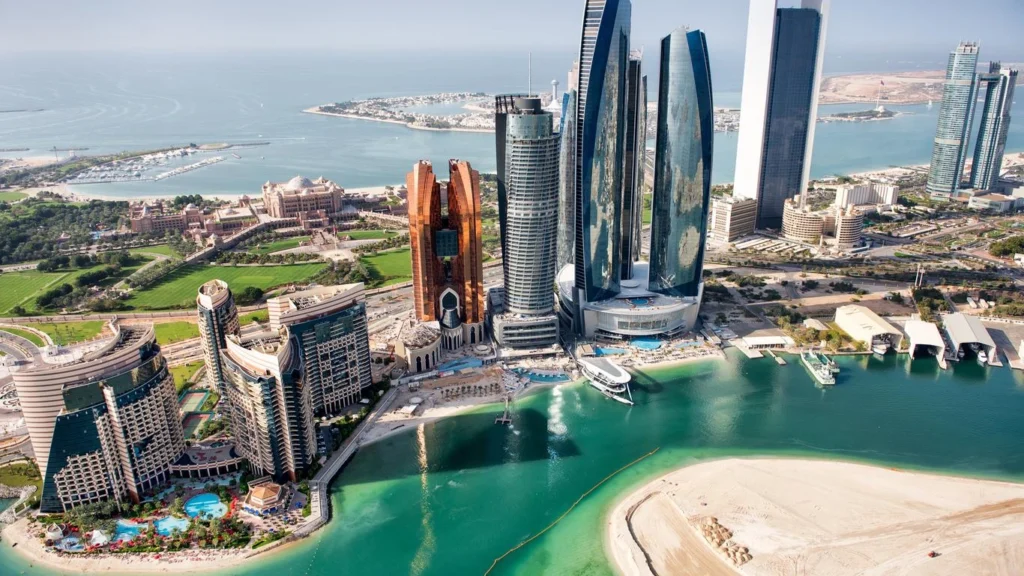
Luxury Resorts and Restorative Escapes
Abu Dhabi’s hospitality portfolio ranges from beachfront resorts to remote desert sanctuaries. Emirates Palace showcases palatial design and historic artifacts, while Saadiyat Island resorts combine art, nature, and wellness.
Qasr Al Sarab Desert Resort by Anantara stands deep within the Empty Quarter, offering private villas, panoramic dune views, and spa treatments inspired by desert traditions.
Living Heritage and Competitive Spirit
Sport and tradition remain central to Emirati identity. The Al Dhafra Festival celebrates camel beauty contests, falconry, and traditional racing each December. Falcons hold such cultural value that Abu Dhabi operates a dedicated Falcon Hospital, open to visitors.
Modern motorsport complements these traditions, reinforcing Abu Dhabi’s ability to honor the past while embracing global spectacle.
Stay tuned with us. Further, follow us on social media for the latest updates.
Join us on Telegram Group for the Latest Aviation Updates. Subsequently, follow us on Google News
About the Author