Topline
The Federal Aviation Administration (FAA) has warned airlines to exercise caution for the next 60 days when flying over parts of Mexico, Central America and South America, citing the risk of “military activities” as well as satellite-positioning and navigation interference.
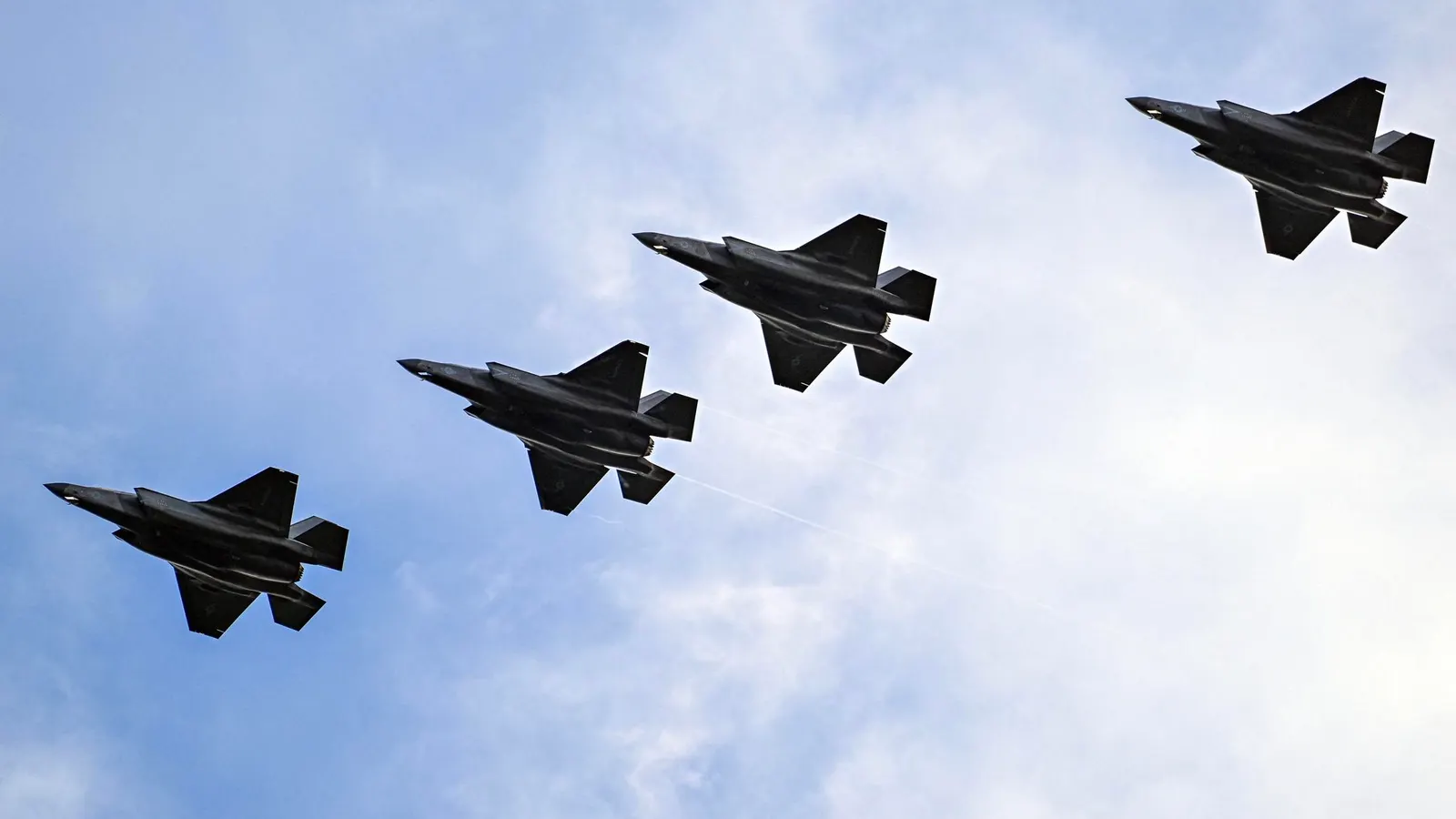
US Marines’ F35-B jets arrive in formation to José Aponte de la Torre Airport, Puerto Rico, in September 2025 as part of President Donald Trump’s war on drug cartels in the region. (Photo by Miguel J. Rodriguez Carrillo)
AFP via Getty Images
Key Facts
The FAA issued on Friday afternoon a series of seven Notices to Airmen (NOTAM) advisories, spanning parts of Mexico and Latin American countries, including Panama, Ecuador, Colombia and sections of airspace over the Pacific Ocean.
“Potential risks exist for aircraft at all altitudes, including during overflight and the arrival and departure phases of flight,” the advisories, which run through Mar. 17, said.
Last month, two midair close calls occurred between U.S. military aircraft and passenger jets off the coast of Venezuela, following U.S. strikes on alleged drug trafficking boats and the first seizure of a Venezuelan oil tanker.
A subsequent military attack on Venezuela prompted the FAA to temporarily restrict flights throughout the Caribbean, forcing major airlines to cancel hundreds of flights, which stranded thousands of passengers for several days.
Key Background
Tensions between the U.S. and countries in Central and South America have escalated since the Trump administration ramped up a military presence in the southern Caribbean, culminating in the military attack on Venezuela and the seizure of Nicolás Maduro, its president. President Donald Trump has raised the possibility of other military actions in the region, including against Colombia, and has repeatedly suggested the U.S. should take control of the Panama Canal. Last week, Trump threatened to carry out military strikes on Mexican soil to target drug cartels.
How Have U.s. Airlines Reacted To The Faa’s Advisories?
Airlines regularly adjust flight plans based on safety notices like NOTAMs by rerouting flights to avoid higher-risk airspace. As of Saturday morning, no U.S. airlines had issued public statements or travel advisories concerning flying in the region. United Airlines is “monitoring the situation and don’t have anything additional to share at this time,” a company spokesperson told Forbes via email. A Southwest Airlines spokesperson told Forbes it “remains in close contact with the U.S government on any activities in the region” and, “if needed, will follow applicable contingency procedures.” Delta Air Lines asked Forbes to redirect the query to the FAA. American Airlines and JetBlue Airways did not respond to a request for comment.
How Have Countries In Latin And South America Reacted To The Faa’s Advisories?
Mexico’s civil aviation authority said in a statement that the FAA’s notice only applies to U.S. aircraft and does not warrant “operational changes for aviation in our country,” calling it “a preventive advisory” rather than a “flight prohibition” and reiterating “there is no impact whatsoever on civil aviation in Mexico.”
Tangent
Demand for travel insurance spiked immediately following the United States’ raid on Venezuela—a sign geopolitical events are causing anxiety among international travelers.
Further Reading
2 Near-Collisions Involving US Military Aircraft Near Venezuela Raise Concerns (Forbes)
Trump’s Venezuela Raid Sends Demand For Travel Insurance Soaring (Forbes)
About the Author