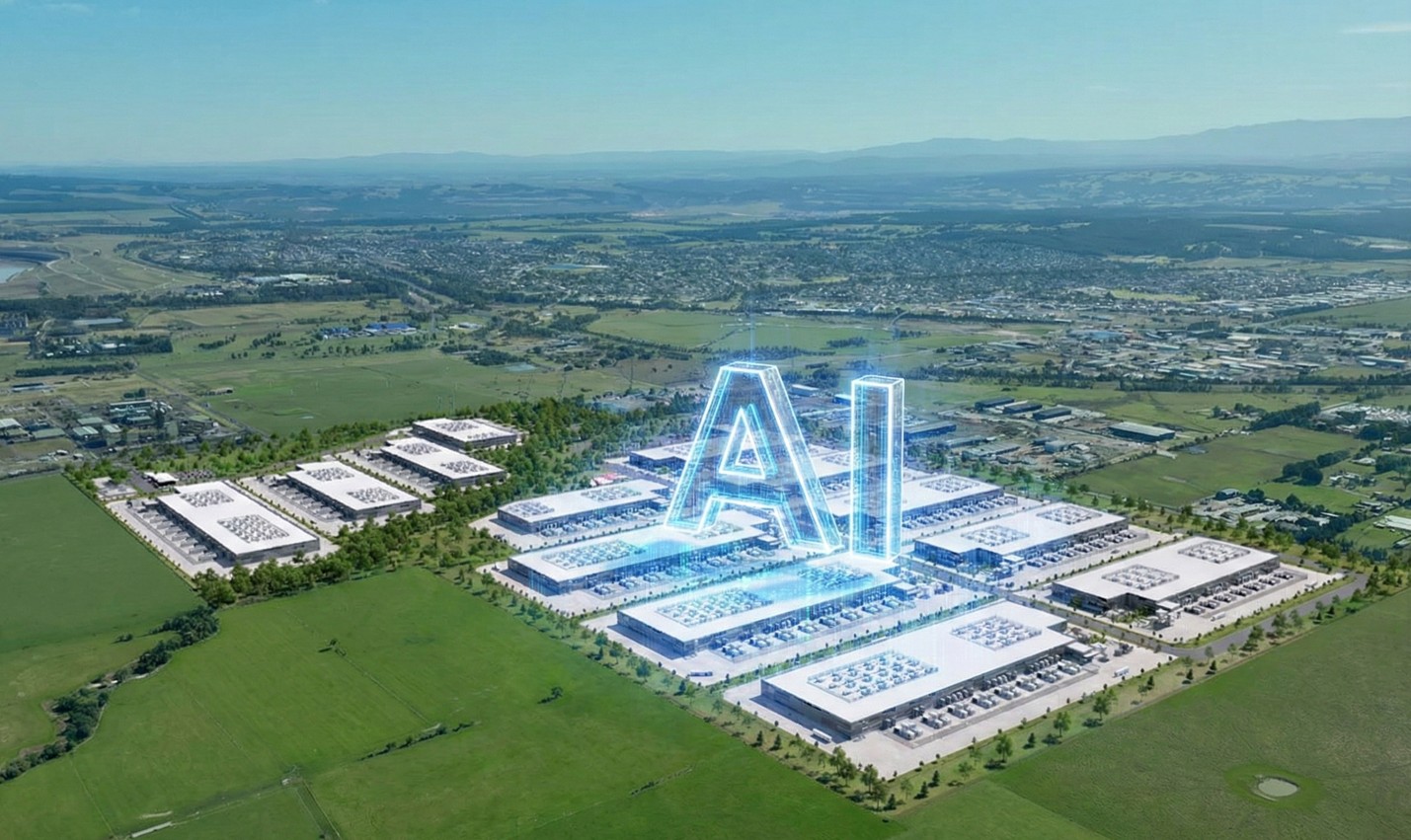
The landscape of the Latrobe Valley is about to undergo one of the most significant technological transformations in Australian history. Singaporean infrastructure giant Keppel has officially announced it has secured a 720MW “Powerbank” for a new AI data centre campus.
This massive project is situated on the site of the former Morwell power station, roughly 150 kilometres east of Melbourne. It represents a poetic shift for the region, moving from the traditional coal-fired energy of the past to the high-tech digital infrastructure of the future.
The scale of this development is difficult to overstate, especially when you consider the sheer amount of power involved. To put 720MW into perspective, this single campus will have more capacity than many of the largest data centre clusters currently operating in the Asia-Pacific region.
A new era for the Latrobe Valley
For decades, the Latrobe Valley has been the literal powerhouse of Victoria, providing the state with the majority of its electricity. As the transition away from coal continues, there has been a significant focus on what comes next for the local workforce and economy.
Keppel’s investment provides a definitive answer to that question by anchoring the region as a critical node in the global AI economy. The Powerbank project is part of a broader vision to create a hyperscale data centre precinct that could eventually exceed 1GW of total capacity.
By repurposing land that was once dedicated to heavy industry, Keppel is leveraging existing grid connections that are uniquely suited for high-density power consumption. This avoids many of the infrastructure bottlenecks that often plague large-scale tech developments in metropolitan areas.
Understanding the Powerbank concept
The term Powerbank in this context refers to a massive, dedicated energy and data precinct designed specifically to meet the gruelling demands of artificial intelligence. AI workloads are significantly more power-intensive than traditional cloud storage or web hosting.
Standard data centres often struggle with the heat and energy density required by the latest generation of AI chips and GPU clusters. The Powerbank campus is being engineered from the ground up to handle these specific technical requirements.
This includes the implementation of advanced cooling solutions that are necessary for keeping high-performance hardware running efficiently. Keppel has indicated that the site will be ready to support liquid cooling, which is becoming the industry standard for AI infrastructure.
The scale of the investment
While the total investment for the precinct is expected to reach the A$10 billion mark over its lifetime, the immediate focus is on securing the power and land. Keppel has moved quickly to ensure they have the “banked” power necessary to attract the world’s largest tech companies.
Securing 720MW of power capacity is a strategic masterstroke in a market where energy availability is becoming a major constraint. Hyperscale tenants like Microsoft, Google, or Amazon require certainty that they can scale their operations without running into power limits.
This investment is not just about buildings and servers; it is about building a sustainable ecosystem for digital growth. It positions Victoria as a primary destination for the next wave of global technology capital.
Quotes from Keppel leadership
The leadership team at Keppel has been vocal about the strategic importance of this Australian expansion. They view the Latrobe Valley as a key pillar in their global data centre strategy.
“The Powerbank project is a testament to Keppel’s ability to originate and provide large-scale, sustainable infrastructure solutions to support the burgeoning AI economy.”
Loh Chin Hua, CEO, Keppel.
This sentiment highlights that Keppel is looking beyond simple real estate development. They are positioning themselves as a critical partner for the companies that are currently building the future of artificial intelligence.
Why Melbourne and the Latrobe Valley
Melbourne has long been a secondary market for data centres compared to Sydney, but that dynamic is rapidly changing. The availability of land and the robustness of the electrical grid in the Latrobe Valley make it an incredibly attractive alternative.
Proximity to Melbourne is also a key factor, as it allows for relatively low-latency connections to a major metropolitan population. This is essential for AI applications that require real-time processing and rapid data transfer.
Furthermore, the Victorian government has been supportive of projects that drive regional development and high-tech employment. The alignment between private investment and public policy has created a perfect environment for a project of this magnitude.
Economic benefits for regional Victoria
One of the most important aspects of this project is the economic tailwind it provides for the local community. Construction of a 720MW campus will require thousands of workers over several years.
Once the initial phases are complete, the ongoing operation of the data centres will create high-skilled roles in engineering, cybersecurity, and facility management. This provides a new pathway for local residents to enter the technology sector without having to move to the city.
There are also secondary economic benefits as service providers and hardware vendors set up operations nearby to support the campus. The presence of a global giant like Keppel acts as a magnet for other businesses in the tech supply chain.
Sustainable energy and AI
As the world grapples with the environmental impact of AI, Keppel is making sustainability a core component of the Powerbank project. The facility is being designed to be as energy-efficient as possible to minimise its carbon footprint.
There is a significant opportunity to pair the data centre’s high demand with the growing renewable energy sector in the Latrobe Valley. With several offshore wind and solar projects in the pipeline for the region, the campus could eventually be powered by 100 per cent green energy.
This is a critical requirement for many of the hyperscale tenants that Keppel is targeting. Large tech firms have ambitious net-zero targets and will only commit to new facilities that can help them meet those goals.
The timeline for development
The first phase of the Powerbank project is expected to be completed by 2027. This is an ambitious timeline for a project of this scale, but Keppel’s experience in large-scale infrastructure gives them the capability to deliver.
Getting the power secured was the most significant hurdle, and now that this has been achieved, work can begin on the physical structures. The site will be developed in stages, allowing the campus to grow in line with market demand.
As each new data hall comes online, the capacity of the Australian AI ecosystem will take a massive leap forward. It is a long-term play that will yield benefits for the Victorian economy for decades.
The future of Australian digital sovereignty
Building massive AI hubs like this on Australian soil is also important for our national digital sovereignty. It ensures that the data being generated and processed by Australian businesses and citizens stays within our borders.
Having local access to high-density compute power allows our homegrown startups and researchers to compete on a global stage. They won’t have to rely on overseas data centres that come with higher latency and potential data privacy concerns.
The Powerbank project is a signal to the rest of the world that Australia is ready to lead in the AI era. We are no longer just a consumer of these technologies; we are providing the foundation upon which they are built.
Conclusion of the Keppel vision
Keppel’s 720MW Powerbank is more than just a data centre project; it is a vision for the future of the Latrobe Valley. It successfully bridges the gap between the industrial heritage of the region and the digital opportunities of the 21st century.
With A$10 billion in potential investment on the horizon, this is one of the most exciting tech stories in the country right now. The transition from coal to code is officially underway, and it is happening at a scale we have never seen before.
We will be watching the progress of the Morwell site closely as it evolves into the engine room of Australia’s AI ambitions. It is a bold move by Keppel, and one that looks set to pay off for Victoria and the wider Australian tech industry.
For more information, head to https://www.keppel.com
About the Author