RALEIGH, N.C. (WTVD) — North Carolina is positioning itself as a leader in artificial intelligence.
College students shared their experiences with ABC11 on the rapidly evolving technology.
Noah Campbell, a student at UNC-Chapel Hill, recalled his early exposure to AI around 2019, describing it as “machine learning, basic image recognition, or text-to-speech.”
Duke graduate Hannah Ford remembered a winter course on image recognition in 2021.
“Just feeling a weird sense, like something big was coming,” she said. “Like this could be a transformative technology, and we are all sort of on the cutting edge of something.”
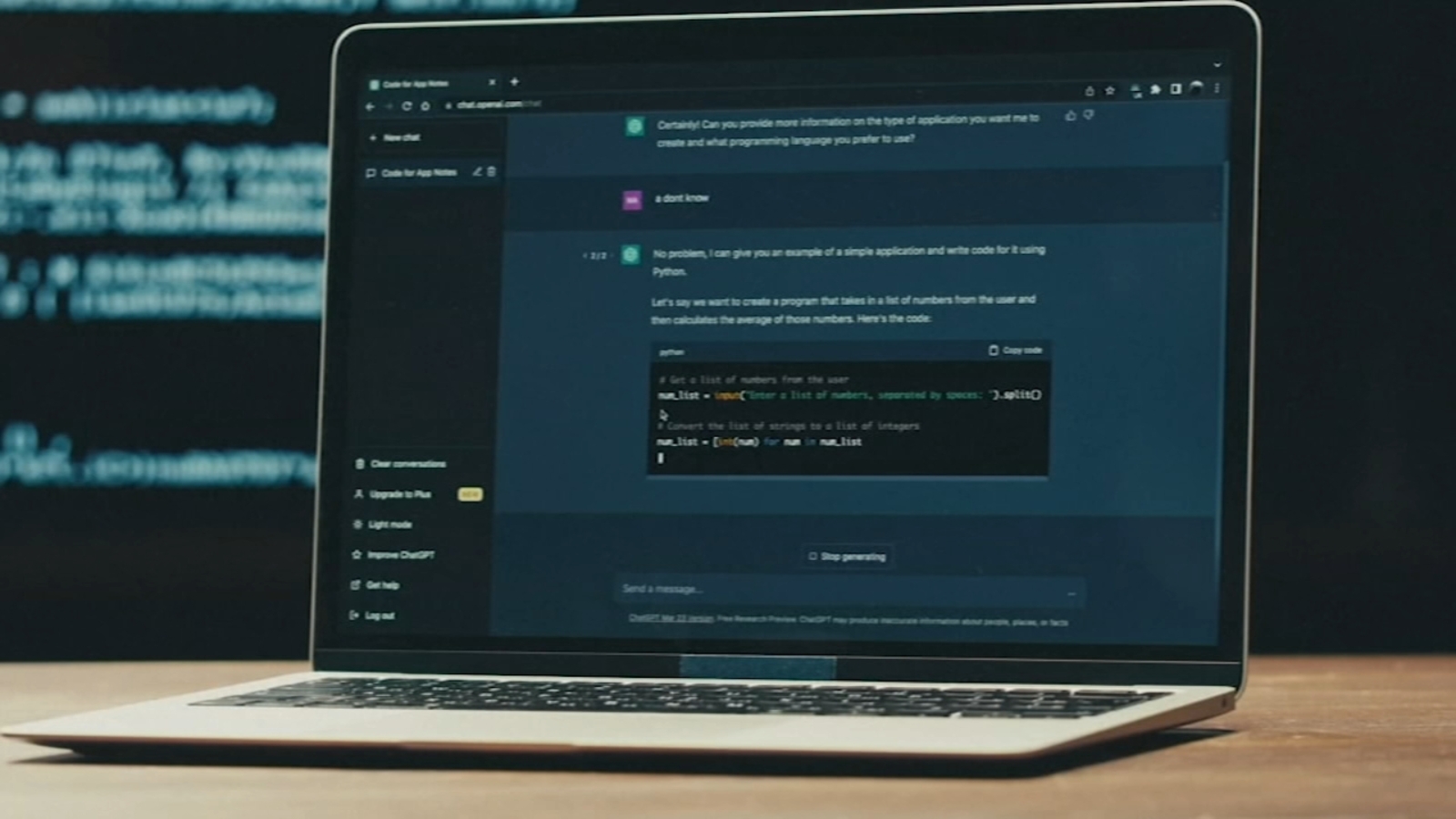
AI has since become a daily tool for young adults, used for tasks such as nutrition tracking, online tutoring, and platforms like ChatGPT.
WATCH: Why some schools use AI in the college admissions process
The college admissions application process is changing thanks to artificial intelligence. Some universities are starting to incorporate the tool in the application screening process.
Campbell highlighted its ability to “take in lots of information and paraphrase it,” particularly useful for creating study quizzes during exams. He is also part of a project introducing AI literacy into English courses and hosting syllabus workshops to modernize curricula.
Ford said they had the opportunity to participate in an OpenAI ChatGPT lab at Duke with students from across the country.
“This is a personalized learning assistant, a way to simplify tasks and even act as a decision-making aid,” said Ford.
According to the most recent Pew Research Center data, about 20 percent of U.S. workers report using AI for at least some of their work, and 61 percent of Americans want more control over how AI is used in their lives.
While acknowledging concerns about the high volume of AI-generated content, Campbell compared the technology to fire, noting its potential for both benefit and harm.
State leaders are working to adapt and implement strong guardrails.
Campbell believes regulation will emerge through trial and error, saying, “We can begin to create policy and think about what rules we want in place.”
Ford emphasized the importance of education.
“A new curriculum where every student across the country is required to take an AI literacy course-not just to briefly understand how the models work so they can use them better, but also to learn what to be cautious of and what to be wary of,” she said.
Copyright © 2026 WTVD-TV. All Rights Reserved.
About the Author