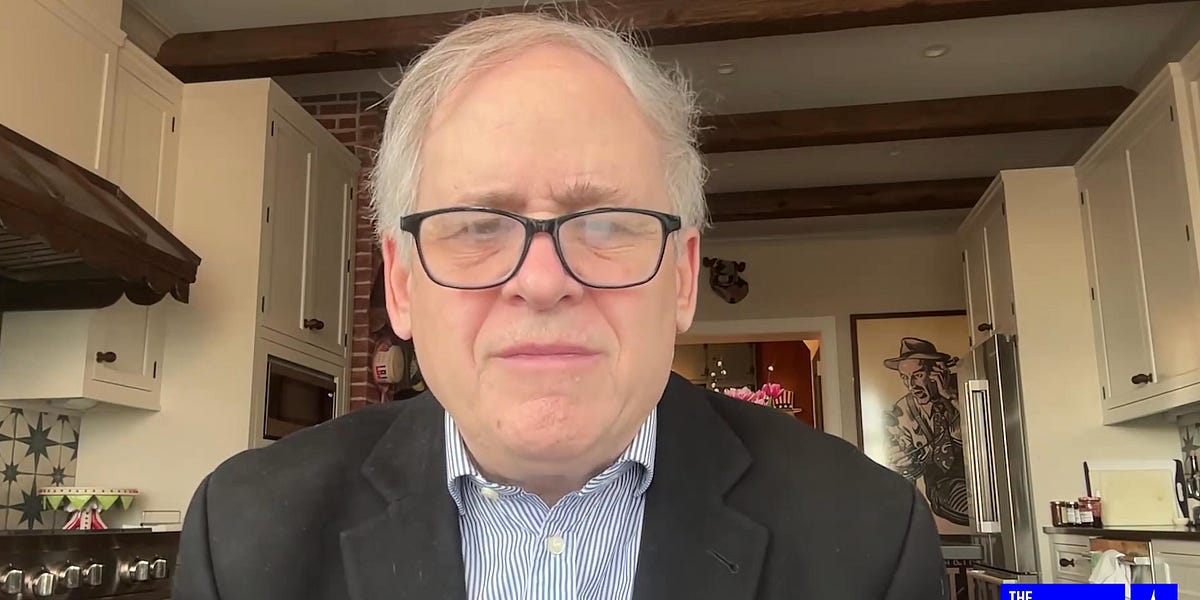
Human perception of time does not lend itself well to analyzing the historic significance of any contemporary moment. As we are experiencing it, we are unable to determine which event will be the next tipping point in America’s narrative. No one understands this enigma better than historian Jonathan Alter.
Together with Jen, Alter walks us through some key inflection points of prominent social movements: Edmund Pettus Bridge, Kent State shootings, [and] the killing George Floyd, to name a few. Alter reminds us that just because we may not see [it] immediately from our actions, it doesn’t mean they didn’t matter. Take a listen to hear why your actions are more powerful than you think.
Jonathan Alter is an award-winning author, political analyst, documentary filmmaker, columnist and television producer. A former senior editor and columnist at Newsweek, Alter is a longtime political analyst for NBC News and MSNBC. Make sure to stay connected with Alter his weekly Substack newsletter, Old Goats, Ruminating with Friends.
The following transcript has been edited for formatting.
Jen Rubin
Hi, this is Jen Rubin, Editor-in-Chief of The Contrarian. I am delighted to have back a friend of the Contrarian, and one of America’s great historians, Jonathan Alter. Hi, Jonathan, how are you?
Jonathan Alter
Hi, Jen, great to be here.
Jen Rubin
Great to be back with you, too. We’ve had such calamitous events, of late in Minnesota and elsewhere. Over at your Substack, you’ve written about how episodes and how images historically, can become pivot points. I think of, the Edmund Pettus Bridge. I think of some of those images from the Vietnam War, and, I wonder if… something in Minnesota, will be analogous to that. What do you see in terms of, inflection point, and in terms of this visual imagery that’s so important to Americans and American history?
Jonathan Alter
So, first you mentioned the Edmund Pettus Bridge, John Lewis being beaten there. What happened in the immediate aftermath of that is that Lyndon Johnson gave this, speech, where he said, and we too shall overcome, and then the Voting Rights Act of 1965, quickly passed after Bloody Sunday. And this is, I think the Voting Rights Act is obviously very relevant for our thinking right now, but I think what a lot of people don’t understand is that before 1965, we didn’t have a democracy in the United States, because you had many southern states with majority black counties, where there were only a handful of, Black voters in those counties. That’s not a democracy. So that’s how impactful the Voting Rights Act was, and it grew out of these images.
And we’ve seen other examples of this, which I, I lay out in my Substack piece. So, in 1970, there were 4 students at Kent State University who were killed by Ohio National Guardsmen, and they were protesting, or actually. one of them was a passerby, but three of them were protesting, the invasion of Cambodia by President Nixon. And there was a famous photograph by a guy named John Filo, who later became my colleague at Newsweek, of a young woman with her arms outstretched over the dead. And, did that have an immediate effect on American politics? Not immediate, but 8 weeks later, the Senate passed something called the Cooper-Church Amendment, which began to wind down funding for the war in Vietnam. The House didn’t pass it. It was a while before they actually cut funding for that war. Nixon was re-elected.
So change doesn’t happen right away, but the beginning of the end of the Vietnam War, you can indirectly trace to that image coming out of Kent State. And then look, to use a couple of more modern, more recent examples, look at, the Trayvon Martin case, in 2012, where an unarmed teenager in Sanford, Florida, was killed by a security guard. And there was a tremendous amount of publicity coming out of that, and the establishment of the Black Lives Matter movement. With chapters now in all 50 states. That came out of Trayvon Martin. Now, in that case, you know, there wasn’t video of the event itself, but the image of Trayvon Martin in that hoodie. became indelibly, embedded in the American psyche. And then I think we all know, not 2020, George Floyd, exactly. You know, when… that after, George Floyd was killed, 30 states enacted, new laws on police conduct. So, do we know yet what the effect of, Renee Good’s murder will be? The answer is no. History unfolds in unpredictable ways, but I do think we will see it as the beginning of, more sustained, resistance to, Trump’s, private army: ICE agents.
And the idea that this is going to scare people off the streets, that they’re no longer going to put up their cell phones when ICE agents are around is not true. I think that’s what Trump wants to have happen, is to scare everybody that, you know. They’ll investigate them the way they’re investigating this dead woman, which is just unconscionable. But it’s not gonna work. And we have, some very challenging times ahead, not just more broadly, but on this ICE issue in particular, because there are 22,000 agents, and they’re minting a bunch of new ones, poorly trained, in some cases, white supremacists. Every day.
Jen Rubin
Absolutely. And, we hate to say it, because every human life is sacred, and we should be as outraged when it is a poor Honduran refugee, or whether it is a white woman. But the fact that it was a white woman, and people can no longer write this off as, it’s not about me, it’s about somebody else. How powerful is that when people realize, oh, people who look like me, who behave like me, I could be next, or someone who looks like me could be next? It shouldn’t be that way, but I tend to think it is.
Jonathan Alter
Yeah, no, there’s no question that that plays a role, and just thinking back to, the Civil Rights Movement, in 1964, there were three, young men who went south, students, Schwerner, Chaney, and Goodman, and, Chaney was black, but Schwarner and Goodman were white, and they were killed in Mississippi, on their first day in Teshoba County, Mississippi, trying to work in the civil rights movement, and I think that had the same kind of effect that you’re talking about here on the conscience of America. We are even more deeply divided, today than we were on race in those days, because, you know, most of the North was sympathetic to the Civil Rights Movement, at least broadly, even if they were hypocrites and sometimes racists in their own communities. You know, this is more divisive, but there are things coming out of it that I think haven’t been properly recognized because, events are moving so quickly. So, just take, setting aside white voters, let’s just look at Hispanic voters for a minute.
So, you know, the reason that Trump won in 2024 was that there was a very significant. I mean, there were a number of reasons, but one of the biggest was that 47% of Latino men voted for Donald Trump. And this is a dramatic increase that he experienced. And, you know, these were, American citizens, they wouldn’t have been voting, and they were… some of them were a little, like, pull-up-the-ladder crowd. They voted for Trump, maybe on some… for some economic reasons. But in, last year’s elections in Virginia, and especially in New Jersey. the Latino vote for Republicans just fell off the table. Right.
It’s declined so much that these three new districts that, Governor Abbott carved out in, in Texas that were supposed to all go Republican, they might go Democratic. Why? Because what’s happened is these Latinos who voted for Trump, and all Latinos, they’re not really cool with their cousin getting spread-eagled at Home Depot, you know? And so what’s happened here is a very, very significant change, and what the murder of Renee Good does is it broadens, as you said, broadens the universe of people who are, I’m not traumatized. But, appalled and driven to action by what ICE is doing on the streets of this country.
Jen Rubin
Absolutely. One of the things that, we were chatting about just before we went on was that, of course, we don’t know when history is made. We just act, and then certain events, for a whole variety of reasons, take root and become something. It does seem that the American people have been activated over the last year or so, in a way we’ve not seen in recent years. Talk to us a little bit about how critical that is. And what the activation of 7 million people on the street last year at one point, and of course millions separately before that, does to the political landscape and to our own perception of our own agency. One of the things authoritarians thrive on, of course, is this sense that it’s all hopeless, you can’t do anything, just stay in your house and hide under your bed.
Jonathan Alter
Yeah, see, this was the thing that, most disturbed me, when I would see, Democrats last year, and they would talk about, oh, I’ve got a passport, you know, I’m ready to go, I, you know, I think I might move, or, Trump always wins, what’s the point? He always wins. And that’s what they want. That’s what they want. If they can extinguish hope, nobody’s talking about optimism here, but if they can extinguish hope and get people to give up, they’ve won. So, what the No Kings protest last year, which I think will be looked back upon as a historic event, was the second largest single-day demonstration in American history, just after Earth Day 1970, which led to the cleaning up of the environment. we didn’t all know it when we were out there for No Kings. It was just, you know, it was a nice day, we were taking part in something important, but it will be looked back upon as the beginning of when the sleeping giant was roused. The silent majority, as Nixon called it, in this country, was silent no longer.
So, you know, Churchill wrote about this, that it takes a while to rouse a democracy. But when it is, there is no mightier force in the world, because it represents the people. And so I think that’s what’s going on in this country right now. I think the, very strong opposition to ICE, and what ICE is doing is one indication. So people want a secure border, but they don’t want to see jackbooted thugs in our streets. Another indication would be, you know, Trump successfully invades another country, with a very successful military operation. Throughout American history, that has led to an increase in support for the president. There’s a kind of a rally around the flag phenomenon. That did not happen here. Trump dropped further in the polls.
So I think we’re seeing a number of different indications that something very, big is beginning to happen, and that it will lead to a significant victory for Democrats in the fall, and then when you get the House of Representatives, and maybe the Senate, which is now in place. People go, oh, you know, that’s not gonna do anything. Actually, it does a lot. They have a lot of accountability tools, when, Democrats if, and I think when, the Democrats take control. So I just say that because people need to, But focus on the fact that when they went out and demonstrated, just because nothing changed immediately, didn’t mean that they weren’t setting in motion very important events down the road.
Jen Rubin
Absolutely. We tend to think that whatever is before us is going to go on for forever, whether it’s the shift in the Hispanic vote, or one-party movement, in one direction, and in fact, reality is much more fluid than that, and we can redirect the stream. Let me ask you about, the role of disinformation and this blatant lying to our faces. Trump has gotten away with that so frequently because he has a closed media environment for his supporters. In something like this, where everyone can see the video, where everyone sees it, and they see them really gaslighting us. Does that do anything to kind of break the illusion, oh, you know, maybe he is just bullshitting us all the time? How does that kind of play into this awakening of democracy and people’s confidence that what they are seeing, what they are thinking they should trust, as opposed to what the government is telling them?
Jonathan Alter
Yeah, it’s, it reminds me of the old line, who do you believe, me or your lying eyes, you know? So I do think that’s happening here, because, you know, when, when Renee Good said, you know, I’m not mad at you, and then her wife said, why don’t you guys just go to lunch, and you see that, you know, the killer calls her a Bitch. That’s on the tape that was released by the Trump administration! That wasn’t even on the video of the bystanders. So, the videotape is not their friend.
They’re like the Wizard of Oz, you know, spinning these dials, ignore the man, you know, behind the curtain, and, you know, the rest of us are like Toto. We pull back the curtain, we see what’s really going on. What concerns me is that we’re now in an AI-generated video era where a lot of people are not believing what they see—with some good reasons—not believing videotapes.
So, recently, just a few days ago, there was a videotape of, a video of… a New York City police officer in the subway, threatening to arrest an ICE agent for exceeding his authority. And apparently, it was AI you know? And a lot of people, including me, we were kind of fooled by it. So, I’m worried that the very important phenomenon that you described, where we can make judgments with our own eyes is, is rapidly disappearing.
Jen Rubin
Absolutely. Last question, which is a big topic in U.S. history, and you’ve traced it because you’ve written about so many presidents and so many errors. We have had this accumulation of power in the executive branch to a degree the framers never, ever imagined. They were deathly afraid of a chief executive who was going to tyrannize the population, just like King George did. And some of that happened because of the growth of the federal government on domestic policies, it happened in the national security realm, and now we have had the complete capitulation of the Republican Party. They have no institutional pride, no interest in checking the executive, and that, frankly, is as responsible for where we are now as Trump is. Is that also a reversible trend? Can Democrats, when they resume power, and they will be back in power, if not in 2026 and 2028, is that a reversible trend? Have we seen that pendulum be able to be swung backwards?
Jonathan Alter
I think it is more reversible than people imagine. So, there are some presidential some powers that once Congress gives them to the President, the President’s never gonna give them back. And this is why the tariff case is likely to go against Trump. Neil Gorsuch, in the oral arguments, said, look, if we rule with Trump on this, you know, no president will ever return these powers, and because they’ll be able to veto a bill. And so, some things can’t be reversed. But I do think that you will hear the Democratic candidates for 2028 all talking about returning some, powers, and establishing the independence from the president, not just the Fed, but some of these regulatory agencies and obviously the Department of Justice, because the corruption of the Department of Justice, the politicizing of it, has been a real problem.
But remember, In 1975, after Nixon resigned and Gerald Ford, became president, Ford appointed a guy named Edward Levy, who had been the president of the University of Chicago, as the Attorney General, and Levy in very short order, restored the independence of the Department of Justice, which Nixon had totally compromised, the same way that Trump is. Trump is worse in certain ways. Nixon was worse in other ways, because he was wiretapping all kinds of people, using the Justice Department in appalling ways. So they were able to restore the independence of DOJ and enact a series of bills under Carter under Gerald Ford and then Jimmy Carter, that put up guardrails, that protected whistleblowers, that did all kinds of things that Trump is now, plowing right through.
And the next Democratic president with a Democratic Congress is going to have a big job in putting those guardrails up again, but I do think that it is, it’s possible, to do that. Will we get back to where we were, you know, in, the 1940s, where Congress issued a declaration of war. We haven’t had one since, you know? So the erosion of Congress’s ability to lead in foreign policy has, I think is mostly irreversible, but there are certain things that will be restored. So, for instance. when, trump went into Venezuela, he told a couple of Republican leaders on the Hill, like, you know, Johnson and Thune, and that was it, maybe one other, and no Democrats. So, that broke a tradition where the eight leaders, including the minority leaders in the Congress, were all informed by the President in the, hours before undertaking military, activity, and Trump said, well, they couldn’t be trusted, you know, they might leak.
Well, every other president in the past has trusted those 8 members of Congress and consulted with them, which is at least a little better than acting unilaterally with contempt for Congress. And I do believe that the next president, if it’s Democrat, will restore that.
Jen Rubin
You know, people point to the Iraq War. I’m almost nostalgic for the days we had a really robust debate on the, memorandum for armed use of armed forces, because at least it wasn’t Declaration of War, but it was a full, robust debate. We now remember it as, frankly, not presenting the facts, as they really were, but there was debate, and if we could just get back to that, hardly the model for American history and democracy, but nevertheless, way better than what we have now!
Jonathan Alter
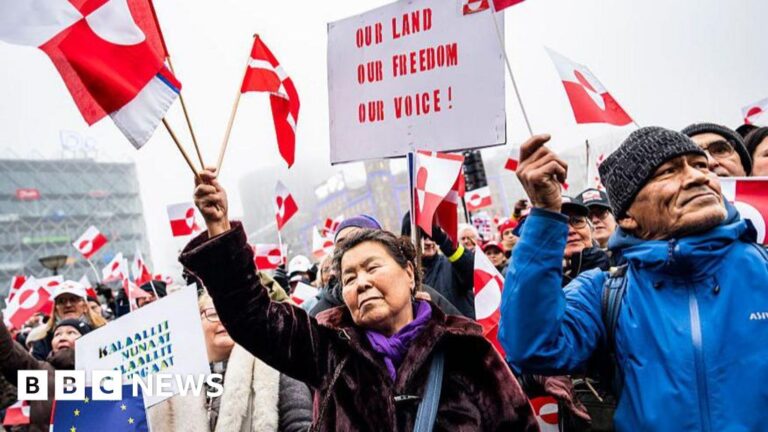
Yes, and we are getting back to that debate on Greenland. And there’s some real opposition, even in the Republican Party, to Trump with this asinine idea of taking over Greenland. So, you know, there is still room under Trump to rouse a few Republicans. And, you know, you see some of them starting to, you know, move. There have been, a few more than just, you know, Collins and Murkowski
Jen Rubin
Well, we’ve seen that with Jerome Powell, for example, that suddenly, oh, the central bank, now their ox is being gored, so suddenly they’ve woken up and are beginning to squeak up a little bit.
Jonathan Alter
Tom Tillis was out there, and those folks should be, you know, encouraged. And the other, just an answer to your basic question, can we get back to a time when, members of Congress, from the same party as the President are not just entirely lap dogs. I think we might, if we can end the physical fear that many of these legislators feel.
This is a big untold story. Mitt Romney revealed that in 2021, one of the reasons that Trump wasn’t convicted in his Senate trial and prevented from ever running for office again after his impeachment was that other senators could not afford the 24-7 security that Romney could afford. And they were worried about the same folks who showed up on January 6th, harming them or their family. And this is a little discussed, but really terrifying problem right now in American politics, and I do think we can get to a place where legislators, don’t fear that in the same way, and are more willing to do their jobs. But in many cases, it’s not even about that. It’s just that these Republicans have failed the character test of their generation. It’s binary. It’s pass-fail, and they’re failing. And I can actually understand it a little bit more on the part of legislators, because it’s their whole political career is on the line. So, you know, and they want to get re-elected. It’s the non-legislators, the people in business, the heads of law.
Jen Rubin
Law firms, universities, media outlets.
Jonathan Alter
So the people in media outlets, they are failing the character test, too. I think the universities, it’s a little bit more complicated, because they have hundreds of millions of dollars in cancer research that could save people’s lives on the line if they don’t negotiate or, you know, with Trump. So, I have more sympathy for the college presidents. They’re victims of an extortion racket being run out of the White House, and sometimes, you know, like a small business dealing with the mob, you don’t really have any choice but to, capitulate. And even Harvard. You know, I think the president of Harvard is actually handling it pretty skillfully at this point.
There’s some others who maybe capitulated too early, but the others, though I mean, take, like, Brad Karp at Paul Weiss. I mean, this guy, why did he capitulate? Because he would be removed as managing partner if he didn’t kiss the ring, like, so he’d make, like, $8 million a year instead of $14 million a year? You know, what’s at stake for these people? Or the tech bros, you know, the broligarchs? They already have so much money, why do they have to capitulate? How are they going to explain to their grandchildren that they went and bent the knee, that all the money they had didn’t prevent them from being, Craven fools in the presence, of a monster president.
Jen Rubin
Yeah, it is remarkable, and one of the things we learned, is that, billionaires are some of the weakest people, because for them, they got to be billionaires by caring about nothing other than acquisition of more, and the thought that they wouldn’t get more is… soul-killing for them if they had a soul, which most of them don’t. But at any rate, Jonathan, it is so much fun talking to you, such a delight. We will have you back more. You are working on your next book, which you tell me is about Julius Caesar. Yeah. When could we, see that out in the bookstores?
Jonathan Alte
It’s gonna be a little more than a year, so the Ides of March 2027, March 15th.
Jen Rubin
Good date, very good date for the release. That was probably an easy one for the publishing house to pick out.
Jonathan Alter
Yeah, but not easy for me to meet my deadline, so I’m absolutely right on this.
Jen Rubin
Absolutely. Well, we’ll have you back another time to talk about presidential candidates and where they come from in unexpected places, like Jimmy Carter, for example. Thank you so much for everything you do.
Jonathan Alter
I gotta, I gotta, you know, get this in. I love what you guys are doing at the Contrarian, and it’s an extraordinary accomplishment, given that you started nowhere.
Jen Rubin
Exactly, exactly. Well, we have a great team, so thank you so much, Jonathan, and have a great day. We’ll talk to you later.
Jonathan Alter
Take care.
About the Author