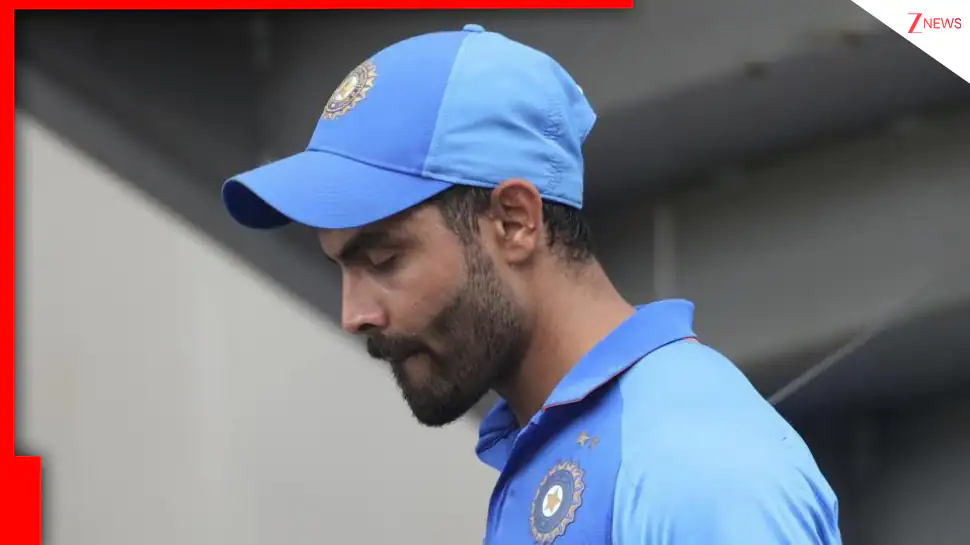
Exactly thirteen years ago today, the world was a very different place. Dr. Manmohan Singh was the Prime Minister of India, the blockbuster film Yeh Jawaani Hai Deewani had not yet been released, and the phrase “WhatsApp” was only just entering the common Indian vocabulary. On that day, January 15, 2013, at the Nehru Stadium in Kochi, Ravindra Jadeja smashed a blistering 61 off 37 balls against England. It was a match winning performance that earned him the Player of the Match award.
Remarkably, that remains the last time Ravindra Jadeja scored a fifty plus score in an ODI on Indian soil.
A Statistical Anomaly
Add Zee News as a Preferred Source

As we stand in 2026, the statistics surrounding Jadeja’s batting in the fifty over format have become a point of intense scrutiny. While he has been a pillar of the Indian side across formats, his home ODI batting record is startlingly thin. With only two half centuries in India throughout his entire career, the drought has persisted through three different Prime Ministerial terms and multiple generations of cricketers.
The concern is not just limited to home soil. Jadeja’s last ODI fifty anywhere in the world came back in December 2020 against Australia in Sydney. For a player designated as a premier all rounder, a five year global drought and a thirteen year home drought are numbers that are becoming difficult for selectors to ignore.
The Rise of Alternatives: The Axar Patel Factor
The criticism has reached a crescendo following India’s recent seven wicket defeat in the second ODI against New Zealand in Rajkot. Jadeja’s primary weapon, his bowling, also seems to be losing its edge. With only one wicket in his last five ODI outings, former legends and selectors are beginning to voice their concerns.
Former chief selector Kris Srikkanth has been particularly vocal about the need for change, specifically pointing toward Axar Patel. Speaking on his YouTube channel, Srikkanth noted, “Jadeja is one of my favourite players. But he does not seem to know what to do. He looks caught between attacking and giving the ball flight.”
Srikkanth further questioned the tactical reliance on Jadeja when Axar Patel remains on the sidelines. “It is an open secret: why not bring Axar back? Axar has a terrific record. He did well in the Champions Trophy and won us the T20 World Cup. Suddenly, he is nowhere. Where is Axar Patel? The team is suffering at the end of the day,” Srikkanth added.
Is 2027 a Bridge Too Far?
As the Indian team management begins to blueprint their strategy for the 2027 World Cup, Jadeja’s “fit” in the squad is under the microscope. At 37 years of age, the veteran’s diminishing returns with both bat and ball suggest that his role as an automatic starter is over.
While his fielding remains world class, the modern ODI game demands a sixth bowling option who can also act as a high impact finisher. With Axar Patel offering similar left arm spin and arguably more consistent recent batting returns, the pressure on Jadeja is at an all time high. If the “Saurashtra Rockstar” cannot break his thirteen year home jinx in the upcoming fixtures, the road to the 2027 World Cup may very well be closed for one of India’s most decorated servants.
About the Author