
The French motorcycle market suffered a sharp contraction in 2025, with registrations falling 20.8% year on year to 222,456 units. The downturn was triggered by the need to clear large dealer stocks self-registered at the end of 2024 ahead of new emissions regulations.
Economic Outlook
In France, the GDP growth is projected to decrease to 0.8% in 2025, before increasing to 1% in 2026 and 2027. Domestic and international uncertainty have weighed on growth in 2025, delaying consumption and investment decisions, though strong exports from the aeronautics sector have provided some offset. Assuming a new budget is adopted by late 2025, reduced uncertainty will improve growth prospects in 2026 and 2027. Inflation is expected to edge up as earlier downward pressures from energy and telecommunications prices ease, but remain contained, reaching 1.6% in 2027.
The fiscal deficit is projected to fall from 5.8% of GDP in 2024 to 5.4% of GDP in 2025. Further consolidation is planned for 2026 and 2027, bringing the fiscal deficit to 5.2% of GDP and 5% of GDP, respectively, mainly through increased revenue measures. Despite these efforts, public debt will rise to 122.5% of GDP by 2027. Stabilising debt by 2030 will require deeper fiscal adjustments and structural reforms to boost investment, especially through improved digital adoption, innovation support for SMEs, and education and training.
Elevated domestic uncertainty in 2025, marked by two Prime Ministerial resignations, has weighed on growth, though economic activity picked up in the third quarter, driven primarily by strong aeronautics exports and business investment.
Motorcycles Industry Trend and Perspectives
A combination of factors weighed heavily on the French motorcycle market in 2025, resulting in a dramatic decline in sales.
The need to sell off large volumes of vehicles self-registered by dealers at the end of 2024—ahead of the introduction of new emissions regulations—led to a shockingly weak start to the year, with market volumes falling by more than 30% in the first months.
Unlike other European markets that faced similar inventory distortions but managed at least a partial recovery later in the year, the French market failed to rebound. Full-year registrations fell to 222,456 units, down 20.8% year on year.
Beyond the inventory overhang, the market has been further penalised by restrictive policies in major cities such as Paris and Lyon, which limit two-wheeler circulation in urban centres. This has been compounded by a sluggish economic environment and the absence of a coherent national strategy to support the development and adoption of electric motorcycles and scooters.

Market Leaders and Performance
Among manufacturers, Honda regained market leadership, limiting its annual decline to -1.1%, and overtaking Yamaha, which suffered a much sharper contraction of -15.1%.
In third place, BMW saw sales decline by 8.1%, followed by Kawasaki in fourth (-12.9%) and Triumph in fifth (-6.1%).
Further down the ranking, Peugeot recorded a steep decline (-24.8%), followed by Piaggio (-35.0%), SYM (-16.5%), Kymco (-43.4%), and Suzuki (-35.3%).
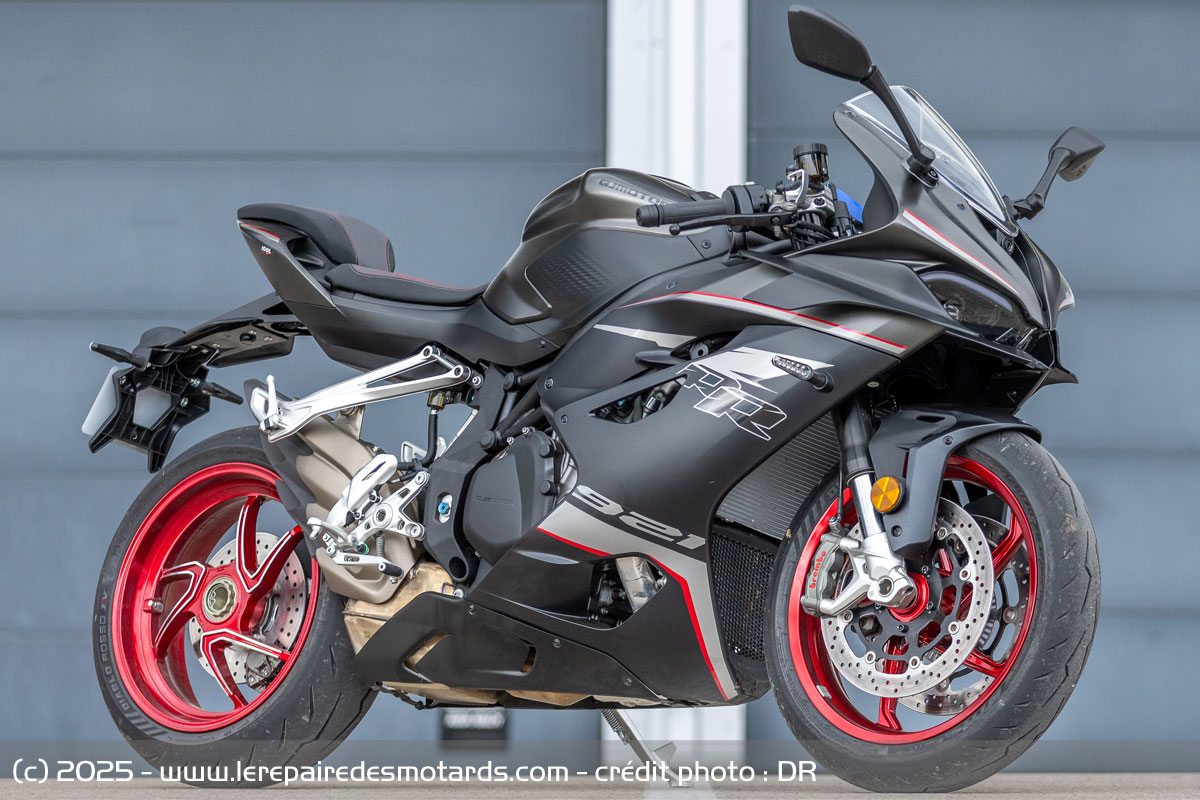
While Chinese manufacturers have not yet reached top-ranking positions in France—as they have in markets such as Spain and Italy—their presence is expanding rapidly. CFMOTO grew by 2.1%, Voge by 36.6%, and QJ Motor surged by 231.1%, highlighting a gradual but accelerating shift in competitive dynamics.


About the Author