Rabat – As the Africa Cup of Nations (AFCON) 2025 continues in Morocco, marking the country’s second time hosting since 1988, the tournament is showing that it is more than just football.
AFCON carries emotional, cultural, and political weight that goes beyond the chase for a trophy, and for Africans, in many ways rivals even global events like the World Cup.
The opening ceremony in Rabat made this clear. It presented Morocco as part of Africa’s deep history, linking the nation to the continent’s earliest human and cultural roots. This moment was not only about sport but about identity, reminding the world that AFCON is a stage where Africa celebrates itself.
The Africa Cup of Nations began with the creation of the Confederation of African Football (CAF) in 1957, formed to bring together the continent’s new national associations.
That same year, the first AFCON took place in Khartoum, Sudan. Only three teams competed: Egypt, Sudan, and Ethiopia, after South Africa was barred because of its apartheid policies. Egypt won the title, beating Ethiopia to claim the Abdel Aziz Abdallah Salem Trophy.
From those small beginnings, AFCON grew steadily into Africa’s biggest football competition. Today it includes 24 nations and stands as a strong symbol of unity and pride across the continent.
Why AFCON means more
The 2013 AFCON closing ceremony in South Africa carried a bold “Celebrate Africa” banner, showing the tournament’s spirit of pride and festivity. For millions across the continent and beyond, AFCON is more than football; it is a celebration of identity, pride, and togetherness.
As football journalist Maher Mezahi said, “there is no better time than this, when the anticipation, belief, and excitement are at their zenith and the continent’s biggest party is about to begin.”
There are clear reasons why AFCON often feels more emotional for Africans than even the World Cup.
Close to our lives : AFCON speaks to local rivalries and shared histories in ways global tournaments cannot. Neighbors and regional rivals face off with decades of bragging rights at stake, often tied to colonial histories or cultural bonds.
The competition itself was born during Africa’s independence era with strong Pan-African ideals. As journalist Elliot Ross notes in African Arguments, Afcon originally “sought to assert Africans’ equality with Europeans, who still colonised most of the continent at the time.” It gave the newly independent African nations a stage to showcase their identity.
These origins give AFCON a personal and regional weight. A Ghana-Nigeria or Morocco-Algeria match carries layers of meaning, from jollof rice debates to historical rivalries, that a random World Cup match cannot match.
The World Cup may bring global prestige, but AFCON brings personal history. It is about our neighbors, our stories, our past and future, all colliding on the pitch.
Playing as Equals: At AFCON, African teams meet on equal ground. No one is seen as a minority or an “underdog” because all are African. Unlike the World Cup, referees, officials, commentators, and stars are mostly African, and the story is told without Eurocentric filters.
This gives the tournament a strong sense of ownership: Africa is showing its talent and running the event on its own terms. As Nigerian international Alex Iwobi said, “With Afcon, you get to celebrate Africa through football… you get to see different cultures… how people from Nigeria dress… we play music… we’re celebrating our music through that as well.”
The competition is filled with African culture at every step. Success is treated as normal, not as a Cinderella story.
When a team wins the AFCON trophy, it is celebrated by African media as pride, not surprise. This homegrown representation builds deep emotional ownership. Fans feel “this is ours,” in a way global events hosted far away, with foreign officials and narratives, rarely achieve
Passing Down Stories : AFCON is more than a month of football. It is a living archive of African sporting stories passed down through generations. Many fans first experienced football by watching AFCON with parents or hearing tales of past tournaments.
Moroccan writer Brahim El Guabli recalls in “Africa Is a Country” that growing up in a remote village did not prevent him from knowing legends such as Roger Milla and Rashidi Yekini. Their performances “filled my ears, populated my imagination, and materialized in my peers’ football games… their performance gave me pride.”
These memories, shared from parent to child and celebrated in local media, create cultural continuity.
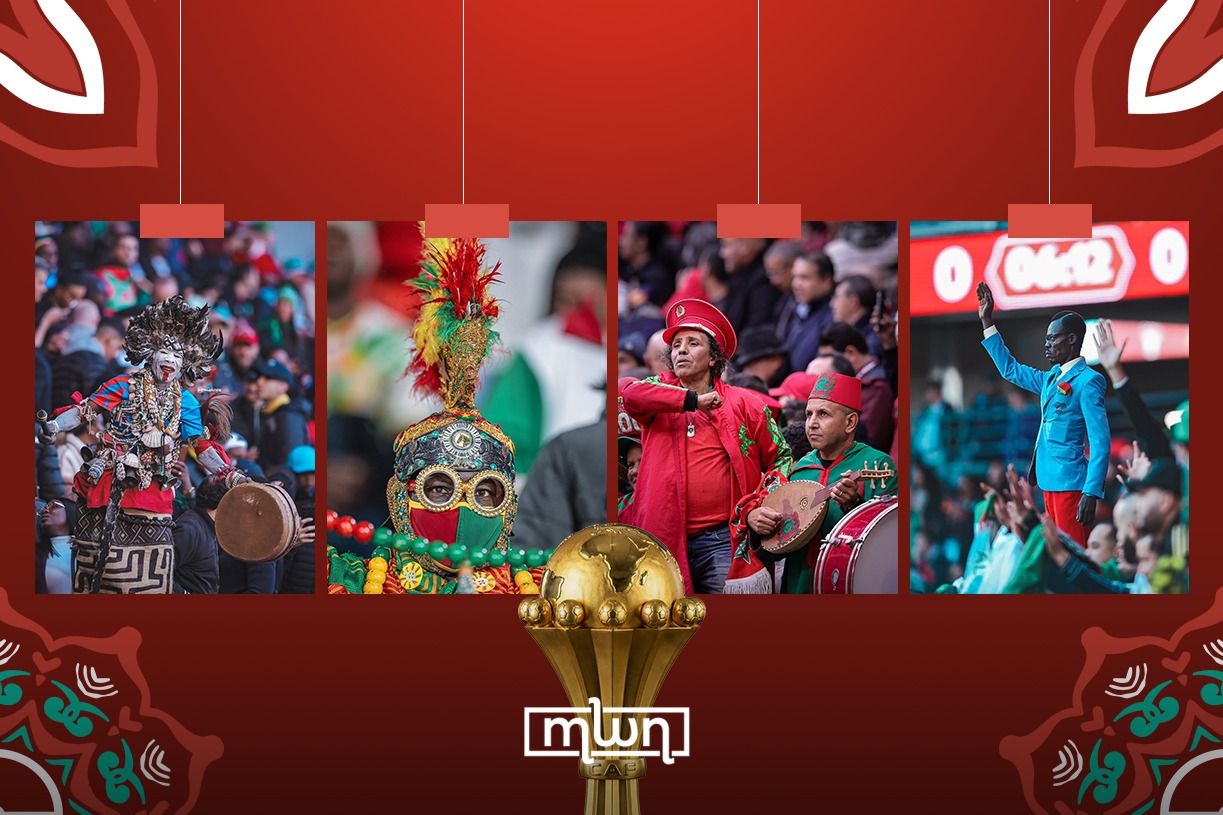
This symbolic side has stood out during AFCON 2025 in Morocco. In the stands, Democratic Republic of Congo supporter Michel Koka Mboladinga has gained wide attention by standing still through matches, copying the posture of independence leader Patrice Lumumba.
Wearing a suit and holding the same raised‑arm pose as Lumumba’s statue in Kinshasa, he turns the stadium into a place of remembrance. His silent tribute shows that AFCON is not only entertainment, but also a living archive where African memory, history, and identity are brought into the present.
These iconic moments, the players, memories, kits, celebrations, and stadiums act as collective mementos that mark the passing of time that we as Africans spent with one another, completely immersed.
AFCON as a space of internal debate and self-critique
AFCON is not seen through rose‑tinted glasses by its supporters. Instead, it is often the place where Africa debates itself to improve. The tournament provides an opportunity for open discussion about governance, infrastructure, refereeing, and professionalism. When problems arise, no one is harsher than African fans and media.
For instance, refereeing controversies can spark wide debate in the course and aftermath of an AFCON match.
Burkina Faso captain Bertrand Traore accused officials of “ruining the end of the match” after his team’s 1-0 defeat to Algeria. 1-0. While CAF rebuked Traore in the form of a disciplinary fine, the comments of the Burkinabé captain fed into already heated online discussions about AFCON officiating standards and accountability.
Even Morocco, hosting for the second time and aiming for a flawless edition, has faced criticism. Commentators questioned the scale of public spending and the state’s heavy investment in sport.
Others raised concerns about squad choices, stadium readiness, or logistics. These critiques are not hostile; they show ownership. Fans believe AFCON belongs to them and expect it to meet its promise.
This internal criticism comes from pride. Africans claim AFCON as their own, admit its flaws, and argue about fixing them. But external criticism is different. Complaints from within are seen as part of a shared effort. From the outside, they often feel like judgment. That difference touches identity and can trigger defensive reactions.
Recent examples show this sensitivity. When European commentators dismissed AFCON as not a “major tournament,” the backlash was immediate. Former players and pundits condemned what they saw as a dismissive, sometimes racialized tone.
Ian Wright strongly criticized how AFCON was spoken about, while Jamie Carragher’s remarks drew a sharp response from Emmanuel Adebayor, who called them disrespectful to AFCON and Africa as a whole.
The same dynamic appeared in Morocco during the ongoing tournament when South Africa’s coach, Hugo Broos, criticized the organization. His points sparked anger in African media, but many fans saw his words as an outsider’s verdict, shaped by colonial history and his European voice.
This shows how deeply Africans are invested in the tournament. Far from idolizing the continental showpiece, they claim it with all its imperfections. They debate its flaws openly, but defend it fiercely when its dignity is questioned abroad. That sense of responsibility strengthens its emotional and cultural bond with the continent.
A global reunion opportunity for the diaspora
AFCON holds deep importance for the African diaspora worldwide. For millions of Africans and people of African heritage living abroad, the tournament is a ritual of reconnection and belonging.
In many cases, AFCON means even more to diaspora communities than to some fans at home, because it fills the identity gap of living far from one’s roots.
During AFCON, Africans in cities like London, Paris, and New York surround themselves with the sights and sounds of home. They gather in bars, community centers, and living rooms decorated with flags, cook traditional food, and teach their children the songs of their countries.
It is a time when being African is celebrated openly. “Not only does AFCON give its diasporic communities a chance to feel closer to their roots, it also creates an opportunity for people from different backgrounds to learn about African culture,” notes African sports writer Maxwell Kablan.
CAF has recognized this passion. Ahead of Morocco 2025, it launched an “AFCON Diaspora Tour” with events in London and Paris.
These featured African football legends and musicians, bringing the atmosphere of AFCON to fans abroad. At one London event, Moroccan rapper ElGrandeToto even video‑called captain Achraf Hakimi on a big screen, showing how interlinked culture, music, and football are for Africans.
The diaspora’s role goes beyond fandom. Many players themselves are part of it. In the last tournament, about a third of all players were born outside the continent. They chose to represent their ancestral nations, often for emotional reasons.
As Sébastien Haller explained when switching from France to Côte d’Ivoire: “I needed something else. I wanted to be more important for my country… Ivory Coast needed me more than France.”
Why AFCON is sensitive
AFCON carries huge weight for identity and pride, so every success or failure feels symbolic. The tournament has always been tied to African politics and culture, which makes it sensitive. Wins are never “just about football,” they are seen as triumphs for a nation or even the continent.
Failures or problems, on the other hand, can feel like deeper disappointments. When Cameroon faced a tragic stadium crush in 2022, or when Guinea lost hosting rights for 2025 because of poor preparation, the debates went beyond event management. They became questions about governance and Africa’s image in the world.
AFCON’s meaning is so strong that even scheduling changes can spark anger. In 2019, CAF moved the tournament to the summer to fit European club calendars. Many fans saw this as bowing to outside pressure.
Playing in extreme heat or heavy rains was quickly judged as “bad news for fans and players, and the event later shifted back to winter. The backlash showed how closely people guard AFCON’s integrity.
In the age of social media, any perceived disrespect toward AFCON brings strong reactions. If a foreign journalist calls the pitches poor or a European coach complains about losing players mid‑season, African fans respond fiercely.
This is not blind nationalism; it comes from protecting something deeply valued.
The opposite is also true: praise or success lifts morale. Morocco’s smooth organization of AFCON 2025 won wide acclaim and was seen as a boost for continental pride.
Some even called it a “dress rehearsal” for Morocco’s role in co‑hosting the 2030 World Cup.
A self-defined stage for African visibility
The Africa Cup of Nations finally matters because it is one of the few big stages where Africa is central on its own terms. It is a place where African countries don’t need permission to be in the spotlight; they are the spotlight.
Players, fans, and organizers are telling their own story, not one shaped by outside views or standards. As Algerian journalist Maher Mezahi said of AFCON, “for 30 days, we learn about one another’s customs and celebrate a togetherness unequaled on any other continent.”
The tournament brings together a diverse continent in a way no other event does, creating the feeling that “this is our tournament.”
AFCON’s value goes beyond football. The matches are often high quality, with passion on the pitch second to none. But what defines AFCON is the visibility it gives to African culture, joy, and even challenges, all in an African space.
It is a showcase of Africanhood, a place where Africa can celebrate itself, critique itself, and stand proud. The 2025 edition in Morocco shows this clearly.
For Morocco, it is a chance to affirm its African identity. For the continent, it is a shared festival. At the same time, it is a mirror where Africans see themselves, debating, reconnecting, rejoicing, and sometimes lamenting, but always deeply involved.
This emotional investment makes AFCON irreplaceable. The World Cup may reach more people, but AFCON holds Africa’s heart. It is rooted in history and carried by memory, always bringing Africa back to its own story.
When an African champion lifts the trophy before thousands, it is more than sporting success. It is unity, identity, and the proud statement that Africa will celebrate itself on its own soil, under its own sky.
About the Author