There’s a new book out by a colleague, Marion Nestle, who is an emeritus professor at NYU. Dr. Nestle is a nutritionist and public health specialist who has written and spoken about the food industry for many years. She does a terrific job of simplifying complex ideas and making them clear to the general public.
What I like best about her work is the way she translates changes in the food industry to what is available in the food supply in the US. I want to share some of her ideas from her new book, What to Eat Now.
The food industry, like any other in the US economic system, wants to sell as much food as possible at as high a price as possible to as many people as possible. If they don’t, their stockholders get upset and their stock prices go down. Food companies aren’t public health agencies. They do not have your health in mind when they formulate and market their products.
While this has always been true, it has gotten worse. In the 1980s, there was an enormous increase in food production, enough so that the calories in the food supply went up to 4,000 per per person per day–including men, women and children. Most adults need only half that. Also, because of changes in the economy, publicly traded companies were expected to not only consistently make a profit, but to grow their profit.
In response, the food industry changed the availability of food, putting it everywhere. Foods and beverages are now available at places like gas stations, drugstores, and stores selling household items, like Walmart, Target, and Costco. And how about bookstores? I remember when food was not allowed in bookstores and now they sell their own food!
Another change is the huge increase in portion sizes marketed by the industry. Muffins, bagels, hamburgers, sweetened beverages and many other foods used to be sold in 25-50% smaller portions. This allows the industry to simply sell more of their products. This is not in the best interest of the American public.
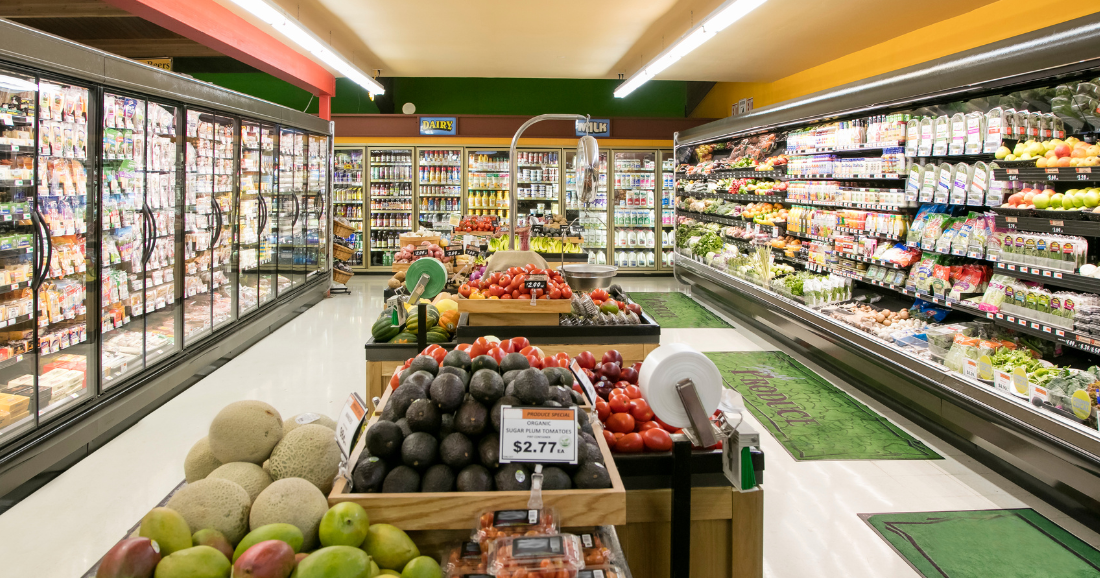
To get you to buy more food, the industry studies the marketing of every detail of things like which foods bring people into the store, which foods people look at, which foods go with other foods. Stores expose you to as many highly profitable foods as possible.
For example, marketers know that the more products you look at, the more you buy. Stores are designed to make you do as much walking as possible, so you’re exposed to as many products as possible and you’re in the store as long as possible. That’s why the milk is always on the wall that’s farthest from the entrance. Stores are set up to encourage impulse buying and companies pay fees to put their products where they know customers will look, at adult and children’s eye level. The self-checkout counters have products placed nearby, so you’ll be likely to buy.
Another strategy to sell more food is to put highly profitable products like drinks, sweets and ultra-processed foods in many places throughout the store, so you get maximum exposure. These foods are the cheapest to produce and yield the largest profit. Sellers of processed foods say they are just giving you what you want: easy-to-eat foods requiring no preparation, tasting better than anything you could make yourself, and guaranteed not to spoil.
What if stores put fruits or vegetables instead of candy at self-checkout counters? Highly processed foods are deliberately designed to be irresistibly delicious, so that once you have a bag of them in front of you, you can’t stop eating them. And they’re often laden with sugar, salt, and calories or with additives.
Let’s be clear, there are a few healthier exceptions, of course, like some commercial whole wheat bread and flavored yogurt. The industry has “normalized” these foods so that many people get most of their calories from ultra-processed foods and snacks. They have deliberately changed our ideas about what is good food.
It is possible to eat in a healthy way in supermarkets in America. There’s a much greater variety of fruits and vegetables now in supermarkets, but you need the money, you must know how to cook, and you need the time and energy to do it. To anyone on a budget, fruits and vegetables appear expensive, and they are expensive relative to other foods.
So, what’s the best diet advice? If you have been reading my column, you’ve heard this before. A varied diet of plant foods: fruits, vegetables, whole grains, dried beans, peas and lentils, and nuts and seeds. Include dairy foods, lean proteins like fish and poultry, and healthy fats such as olive oil. That doesn’t mean you can never have the more processed foods, including sweets and higher fat choices. The goal is balance, not too much of any one category of foods. This same diet advice is appropriate for preventing practically every chronic disease.
Navigating the land mine that is our modern supermarket? The same suggestions as you’ve heard before. Don’t shop when you are hungry! Pay attention. I know that grocery shopping is not everyone’s favorite activity. Go with a list in mind and consider what you will eat before it goes bad. Think about each item you put in your basket and whether you really want/need it. Remember that even the most aware shopper will succumb to being manipulated by the food industry.

Ellen Glovsky.
Ellen Glovsky is a Key Biscayne resident, published author and Registered Dietitian and Nutrition Coach. Her work focuses on helping people explore and enhance their relationship with food, using a “Health At Every Size” approach. She is also involved in the island community with her work on KBCF’s Women’s Giving Circle.
To learn more, visit Ellen online at nutrition-coach.com.
For Ellen Glovksy’s last #tasteofkb piece, click here.
About the Author