
Introduction:
The Australia wellness tourism industry has emerged as a critical segment of the country’s broader travel and hospitality sector. It reflects a growing global emphasis on health, self-care, and holistic well-being, capturing the attention of travelers seeking experiences that combine relaxation, rejuvenation, and personal growth. Australia’s diverse landscapes—from sun-drenched beaches, lush rainforests, and dramatic outback regions to serene hinterlands and mountain ranges, which offer an unmatched natural setting for wellness experiences. These environments provide opportunities for outdoor physical activities, meditation, nature therapy, and immersive retreats that promote both mental and physical health. In June 2025, Australian wellness-club operator Gurner Group announced global expansion plans for its luxury wellness brand, signalling rising international visibility of Australia’s wellness ecosystem.
Wellness tourism is far more than conventional leisure travel. It encompasses spa therapies, yoga and meditation retreats, personalized fitness programs, holistic nutrition guidance, lifestyle counseling, adventure-based wellness activities, and cultural immersion experiences. Modern travelers are increasingly seeking not just temporary escapes but long-lasting benefits that contribute to improved mental, emotional, and physical well-being. This shift in consumer behavior has motivated wellness operators in Australia to innovate and diversify their offerings, combining natural beauty, indigenous knowledge, and modern wellness facilities to create distinctive and transformative experiences.
The industry has also become an essential contributor to Australia’s tourism economy, attracting both domestic and international visitors. In August 2024, Australia’s largest experience network, Big Red Group, reported a remarkable 228.4% increase in wellness experience bookings compared to the previous year, underscoring the surging demand for wellness-focused travel. Moreover, wellness tourists tend to invest more in premium services and experiences, seeking personalized programs that address their health and lifestyle aspirations. As a result, Australia is positioning itself as a global hub for wellness tourism, capitalizing on its natural landscapes, cultural richness, health-focused expertise, and innovation in service delivery.
Explore in-depth findings for this market, Request Sample
Recent Market News & Major Research and Development:
- Growth and Innovation: The Australia wellness tourism industry has experienced significant growth, driven by innovation, research, and development. Wellness resorts and retreats increasingly integrate evidence-based health practices with traditional therapies, offering personalized programs that cater to diverse traveler needs. Digital health monitoring, wellness tracking applications, and personalized assessments allow visitors to engage actively in their wellness journey before, during, and after their stay. In September 2025, Australia expanded premium wellness offerings as Sol Elements opened in Tamborine Mountain, introducing tech-enhanced rituals, communal thermal baths, float caves, and bespoke rainforest spa experiences, exemplifying the industry’s focus on innovative and immersive wellness travel.
- Diversification of Offerings: Wellness offerings have expanded beyond traditional spa treatments to include nutrition consultations, fitness programs, mental health workshops, and lifestyle coaching. Yoga and meditation retreats often combine mindfulness practices, therapeutic massage, and guided nutrition plans, creating holistic experiences. Resorts are also focusing on preventive health and rehabilitation services, providing long-term benefits for both physical and mental well-being.
- Indigenous Practices: Integration of indigenous Australian wellness practices has become a notable trend. Traditional knowledge of bush medicine, natural therapies, and healing methods is incorporated into modern programs, offering authentic experiences and preserving cultural heritage. Travelers gain insights into ancient practices that emphasize mind-body balance and connection with the natural environment.
- Sustainability and Technology: Sustainability and technology are central to industry development. Eco-friendly designs, renewable energy, water conservation, and sustainable food sourcing meet the demand for responsible tourism. Technological innovations, including virtual consultations, wearable wellness devices, app-based programs, and AI-driven assessments, enable personalized, hybrid experiences that enhance engagement and convenience.
- Future Outlook: Collaborations between wellness providers, healthcare experts, technology partners, and research institutions are fostering evidence-based, culturally informed, and environmentally conscious solutions, positioning Australia as a leading global destination for innovative and holistic wellness tourism.
Top Companies in the Australia Wellness Tourism Industry:
The Australia wellness tourism landscape is comprised of luxury resorts, boutique retreats, and specialized service providers. These companies emphasize high-quality services, personalized experiences, and immersive wellness programs, setting global benchmarks for excellence.
Luxury and Boutique Resorts:
- Luxury wellness resorts continue to expand their offerings, blending spa therapies, fitness routines, dietary planning, and lifestyle coaching with modern science and traditional wellness practices. In 2024, Gwinganna Lifestyle Retreat introduced a new integrative wellness program combining mental health workshops, mindfulness sessions, and nutrition coaching, ensuring tangible physical and mental benefits. Fitness routines are often customized to individual needs, offering personalized approaches to stress management, strength, and mindfulness.
- Boutique retreats differentiate themselves by leveraging the natural environment and cultural heritage. Remote locations facilitate digital detox programs, forest bathing, meditation in natural landscapes, and outdoor physical activities such as guided hiking, swimming, and yoga. The emphasis is on creating immersive experiences that foster a sense of connection with nature, self-awareness, and relaxation.
Integration of Culture and Indigenous Practices:
- Top wellness operators increasingly incorporate indigenous knowledge and cultural experiences into their programs. Visitors can engage with traditional healing practices, learn about native plants and bush medicine, and participate in culturally significant rituals. These offerings provide authenticity and depth, creating transformative experiences that resonate with travelers seeking more than conventional spa services.
Collaborative Approaches:
- Collaboration is a key strategy for leading companies. Partnerships with healthcare professionals, fitness experts, nutritionists, and technology providers enhance service offerings, ensuring that programs are evidence-based, innovative, and comprehensive. These alliances enable seamless wellness journeys, integrating assessment, planning, execution, and follow-up. Furthermore, research partnerships allow operators to develop new therapies, monitor outcomes, and continuously improve services, reinforcing their position as leaders in the sector.
Customized Wellness Programs:
- Personalization is central to the success of top wellness providers. Programs are tailored to individual goals, including stress management, weight loss, mental clarity, fitness improvement, and spiritual growth. Comprehensive wellness packages may include spa therapies, yoga and meditation sessions, adventure-based activities, nutritional guidance, and lifestyle coaching. For instance, in November 2025, Eos by SkyCity Adelaide partnered with Western Australia’s Bodhi Spa to introduce luxury spa experiences featuring botanical facials, massages, wellness rituals, and access to sauna, steam, and pool facilities, catering to relaxation-focused travelers . This focus on customization enhances visitor satisfaction, encourages repeat visits, and strengthens brand loyalty.
- By offering unique combinations of nature, culture, science, and technology, top operators in the Australia wellness tourism industry provide experiences that cater to a wide range of traveler preferences, positioning Australia as a global leader in wellness tourism.
Opportunities and Challenges in the Australia Wellness Tourism Industry:
Opportunities:
- The Australia wellness tourism industry offers significant opportunities, driven by changing consumer behavior and global wellness trends. Growing awareness of mental health, preventive care, and holistic well-being has increased demand for immersive, transformative wellness experiences. Travelers are seeking programs that offer tangible improvements in physical and mental health, creating opportunities for resorts, wellness centers, and adventure-based operators to develop innovative services.
- Australia’s diverse natural environment offers a distinct competitive advantage. Coastal regions, tropical rainforests, outback retreats, and mountainous landscapes allow operators to design unique experiences such as forest therapy, guided outdoor yoga, meditation, and adventure-based wellness programs. Cultural experiences, including exposure to indigenous wellness practices, local cuisine, and traditional rituals, further enhance the authenticity and value of wellness tourism offerings.
- Technological innovation presents additional opportunities. Digital wellness platforms, wearable devices, AI-driven health assessments, and app-based mindfulness programs improve personalization, convenience, and engagement. Operators can combine in-person services with digital solutions, providing hybrid experiences that cater to modern travelers’ expectations. These innovations also enable operators to scale programs, monitor outcomes, and continuously improve service quality.
Challenges:
- Despite its potential, the industry faces challenges. Ensuring authenticity while scaling operations is critical, as modern travelers increasingly demand genuine, culturally grounded experiences. Providers must balance commercial interests with quality and authenticity to maintain credibility. Workforce expertise is also essential, requiring trained professionals in fitness, nutrition, mental health, and traditional therapies to deliver high-quality services.
- Environmental sustainability is both a challenge and a necessity. Many wellness destinations operate in ecologically sensitive areas, necessitating responsible infrastructure design, conservation practices, and low-impact programming. Ensuring that wellness experiences do not negatively affect the natural environment while maintaining service excellence is a constant balancing act.
- Market fragmentation poses another challenge. The sector encompasses a variety of offerings—from luxury resorts to boutique retreats and adventure-focused programs. Ensuring consistency, integrating services, and developing coherent branding are critical for attracting and retaining visitors in a competitive environment.
- Despite these challenges, opportunities continue to outweigh obstacles. The combination of natural beauty, cultural heritage, innovation, and consumer demand positions Australia as a leading wellness tourism destination with strong growth potential.
Future Outlook: Australia Wellness Tourism Industry
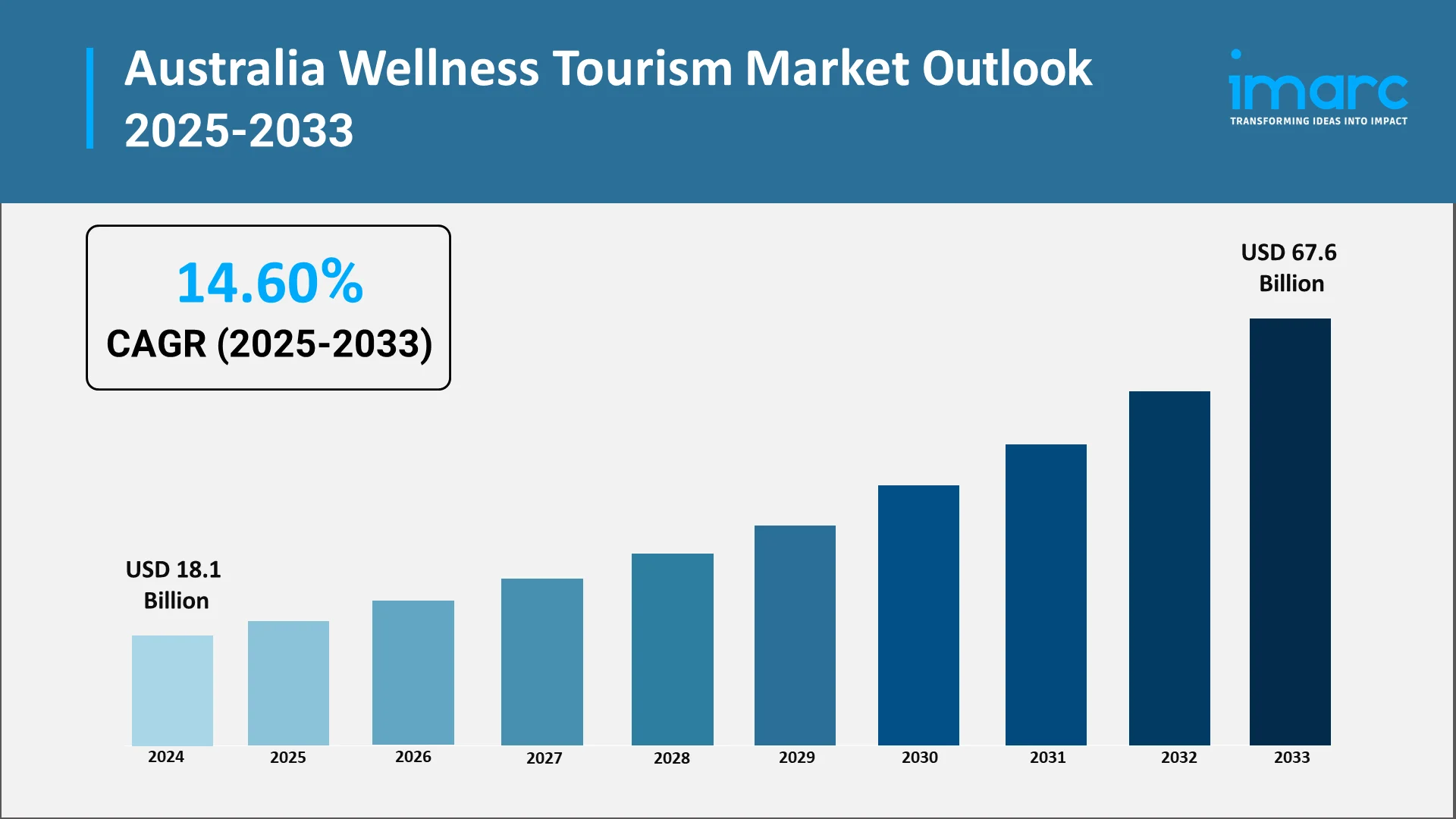
The Australia wellness tourism industry is poised for continued growth, driven by diversification, innovation, and the increasing emphasis on holistic well-being. The market size reached USD 18.1 Billion in 2024 and is projected to reach USD 67.6 Billion by 2033, exhibiting a robust CAGR of 14.60% during 2025-2033. Travelers are seeking experiences that combine relaxation, personal growth, fitness, and cultural immersion. Wellness tourism is becoming closely integrated with lifestyle enhancement, environmental consciousness, and technological engagement, providing multidimensional experiences for visitors.
Emerging Trends:
- Several trends are shaping the future of the sector. Wellness programs increasingly emphasize holistic approaches, combining mental, physical, and spiritual health interventions. Adventure-based wellness, eco-conscious tourism, mindfulness-focused retreats, and cultural immersion programs are gaining popularity. Personalized wellness programs, informed by technology and guided by experts, will likely become standard, offering tailored solutions that ensure tangible benefits for participants.
- Sustainability will remain a cornerstone of the industry. Eco-friendly accommodations, locally sourced organic food, renewable energy use, and responsible excursions are expected to become integral components of wellness offerings. Indigenous wellness traditions will continue to enrich experiences, allowing travelers to engage authentically with cultural heritage and natural landscapes.
Technological Integration:
- Technology will play an increasingly significant role in the future of wellness tourism. Virtual consultations, digital health assessments, wearable wellness devices, and app-based programs enable operators to deliver personalized and interactive experiences. Hybrid programs that combine in-person services with digital tools will cater to modern travelers’ preferences for flexibility, accessibility, and measurable outcomes.
- Data-driven insights from digital wellness solutions will enable continuous improvement of programs, helping operators optimize services, track progress, and enhance visitor satisfaction. The integration of AI, mobile applications, and immersive digital platforms will allow wellness providers to scale services while maintaining high standards of personalization and quality.
Strategic Collaborations:
- Collaborations across healthcare, hospitality, fitness, and technology sectors will continue to drive innovation. Partnerships will facilitate the development of evidence-based wellness programs, immersive digital experiences, and comprehensive health solutions tailored to different traveler demographics. Expansion of domestic wellness tourism alongside international visitation will provide stability, ensuring steady growth and resilience in an evolving market environment.
Global Competitiveness:
- Australia’s wellness tourism sector is likely to strengthen its global position due to its natural landscapes, cultural diversity, and innovative service offerings. Travelers increasingly seek destinations that provide authentic experiences, personalized programs, and environmental responsibility, all of which Australia is well-positioned to offer. The convergence of nature, culture, technology, and wellness practices creates a compelling proposition for global wellness tourists, fostering long-term growth and recognition.
- In conclusion, the Australia wellness tourism industry is evolving into a sophisticated, dynamic, and resilient sector. Innovation, sustainability, cultural integration, and technology-driven personalization are defining its growth trajectory. By offering immersive, transformative, and holistic experiences, the industry is well-positioned to meet the expectations of health-conscious travelers. The focus on authenticity, environmental responsibility, and diverse wellness offerings ensures that Australia will remain a leading global destination for wellness tourism, delivering meaningful, rejuvenating, and culturally enriching experiences to visitors.
.webp)
Choose IMARC Group as We Offer Unmatched Expertise in Australia Wellness Tourism:
- Data-Driven Market Research: Deepen your knowledge of the Australia wellness tourism sector through comprehensive market research reports that analyze resort and retreat innovations, digital health integrations, indigenous wellness practices, and traveler behavior trends.
- Strategic Growth Forecasting: Predict emerging trends in wellness tourism, from eco-friendly resort development and hybrid digital wellness programs to preventive health services and lifestyle-focused experiences across diverse Australian regions, enabling informed planning and investment decisions.
- Competitive Benchmarking: Analyze competitive forces in the wellness tourism industry, review service portfolios of leading resorts and wellness operators, monitor innovations in spa therapies, yoga and meditation programs, and assess market positioning strategies.
- Policy and Infrastructure Advisory: Stay ahead of regulatory frameworks, government-supported sustainable tourism initiatives, and environmental policies impacting wellness resort operations, program certifications, and eco-conscious service development.
- Custom Reports and Consulting: Get tailored insights aligned with your organizational objectives, whether launching new wellness retreats, integrating indigenous wellness practices, implementing digital health solutions, or enhancing sustainability initiatives across wellness tourism offerings.
At IMARC Group, our mission is to empower wellness tourism leaders with actionable intelligence and clarity to navigate the evolving landscape. Partner with us to shape Australia’s wellness tourism future—because every traveler’s journey toward health, balance, and rejuvenation matters.
About the Author