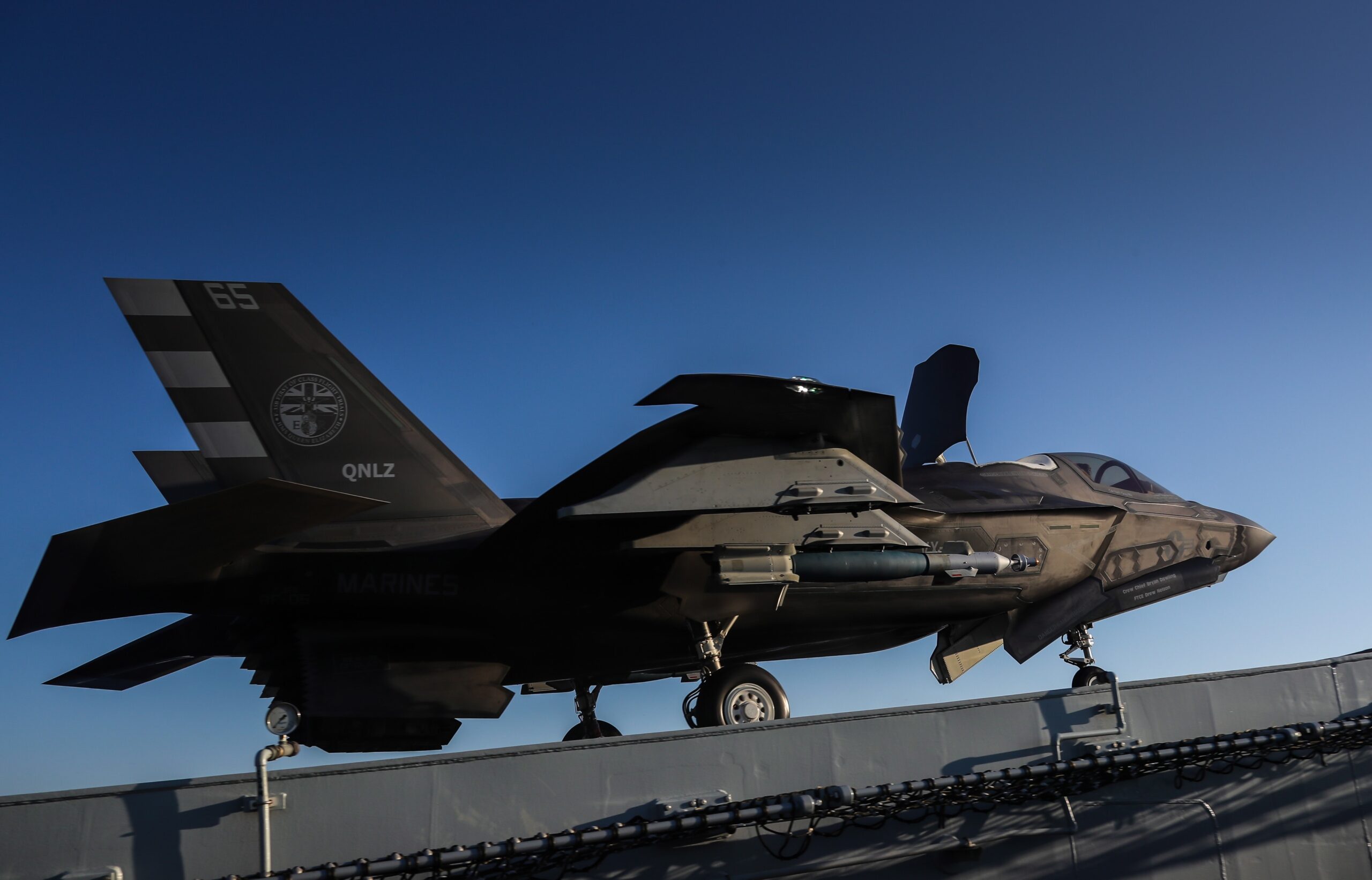
The Ministry of Defence has defended the combat effectiveness of the UK’s F-35B fleet after MPs pressed the department on how it intends to address the aircraft’s lack of a dedicated standoff strike weapon, the UK Defence Journal understands.
Ben Obese-Jecty MP asked the department what steps were being taken in response to the Public Accounts Committee’s report on the UK’s F-35 capability, which highlighted the absence of a standoff weapon for attacking ground targets from outside high-threat zones.
Responding, Defence Minister Luke Pollard said the F-35B’s fifth-generation design already provides a high level of battlefield survivability and targeting performance. He said the aircraft’s stealth, electronic warfare tools and threat-detection suite together “provide the capability to dominate a highly contested battlespace.”
Pollard argued that even without an organic standoff munition, the UK can still deliver long-range strike effects by exploiting the F-35’s data-fusion architecture and targeting feeds. He said the jet’s secure links allow it to pass “threat and advanced targeting information” to UK and allied forces in real time, coordinating with land, maritime and air platforms equipped with standoff weapons to “achieve a wider decisive Joint Fires effect.”
The Public Accounts Committee had previously warned that the lack of a standoff weapon was a material capability gap in high-threat environments, noting that integration of the planned Spear 3 missile has slipped into the early 2030s.
Pollard said future munitions planning for the F-35B will be detailed in the forthcoming Defence Investment Plan.
About the Author